Published: 29 September 2023
Last updated: 5 March 2024
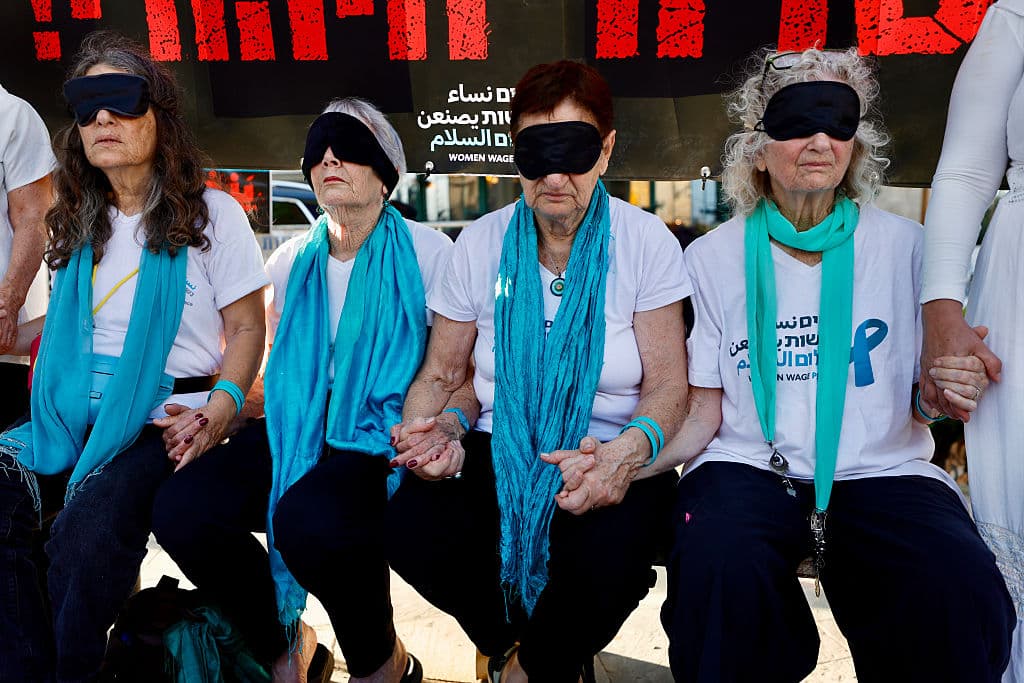
Hundreds of protesters prevented the holding of the Kol Nidre prayer in central Tel Aviv on Sunday after organisers attempted to separate men and women for the service.
Similar scenes occurred in public spaces across Israel as religious groups defied a Supreme Court order allowing municipalities to forbid gender-segregated events.
The conflict on the holiest day in the Jewish calendar has shocked Israelis across the political spectrum, with President Isaac Herzog describing it as “a shocking and painful example of how the internal struggle within us is escalating and becoming extreme.”
“I know that I speak for the absolute majority of Israeli citizens when I express deep sorrow and shock at the sight of our own people fighting one another on a day that has always been a symbol of unity,” he said.
“How did we get to this terrible situation, in which 50 years after that bitter war, sisters and brothers stand on opposite sides of the divide? Those who pour fuel onto this fire are a real threat to Israeli unity. It has to stop here and now. The division, the polarisation, the never-ending disputes — they are a true danger to Israeli society and to the security of the State of Israel.”
The skirmishes began when Rosh Yehudi, an Orthodox religious group, defying a municipality order backed up by the Supreme Court, set up an improvised gender divider for Yom Kippur prayers in Dizengoff Square. Liberal residents mounted angry protests that ended up thwarting the entire prayer service. Similar events, and similar protests, took place in public spaces across the country.
The municipality said organisation had violated the terms of the permit it was given to hold public prayers by using physical means for gender segregation, in violation of municipal policy. It has since revoked the permits it previously gave Rosh Yehudi to hold events in the city's public space during Sukkot, which starts on Friday.