Aa
  • Read, Watch, Listen
  • TJI Series
  • Community Action
  • Events
  • Zedi
Follow us and continue the conversation
  • LinkedIn
  • Instagram
  • FaceBook
  • X
  • YouTube
Test yourself with the TJI Quiz!

Adjust size of text

Aa

Follow us and continue the conversation

  • LinkedIn
  • Instagram
  • FaceBook
  • X
  • YouTube

Your saved articles

You haven't saved any articles

What are you looking for?

Original reporting, insightful analysis and diverse views, delivered straight to your inbox

  • LinkedIn
  • Instagram
  • FaceBook
  • X
  • YouTube
Your support fuels our mission to inform, entertain and inspire.

The Jewish Independent is bound by the Standards of Practice of the Australian Press Council. If you believe the Standards may have been breached, you may approach The Jewish Independent or make a complaint to the Australian Press Council in writing at www.presscouncil.org.au. The Council may also be contacted on 1800 025 712.

  • Our Story
  • Contact us
  • Our Team
  • Support us
  • Guidelines
  • Pitch your idea
  • Republishing us
  • Community Action
  • Our Awards
  • LinkedIn
  • Instagram
  • FaceBook
  • X
  • YouTube
Aboriginal FlagTorres Strait Islanders Flag

The Jewish Independent acknowledges Aboriginal and Torres Strait Islander peoples as the Traditional Owners and Custodians of Country throughout Australia. We pay our respects to Elders past and present, and strive to honour their rich history of storytelling in our work and mission.

© The Jewish Independent 2026All Rights Reserved
Website design and development by Your Creative, MelbourneTerms & ConditionsPrivacy Policy
HomeRead, Watch, ListenIsrael
ExplainerIsrael

Young Israeli voters are more right-wing, survey finds

This year's Israeli election will introduce a large cohort of new voters who have known little other than Netanyahu as prime minister.
Shahar Burla
Print this
Israel election ballot boxi Young woman putting a ballot in a ballot box

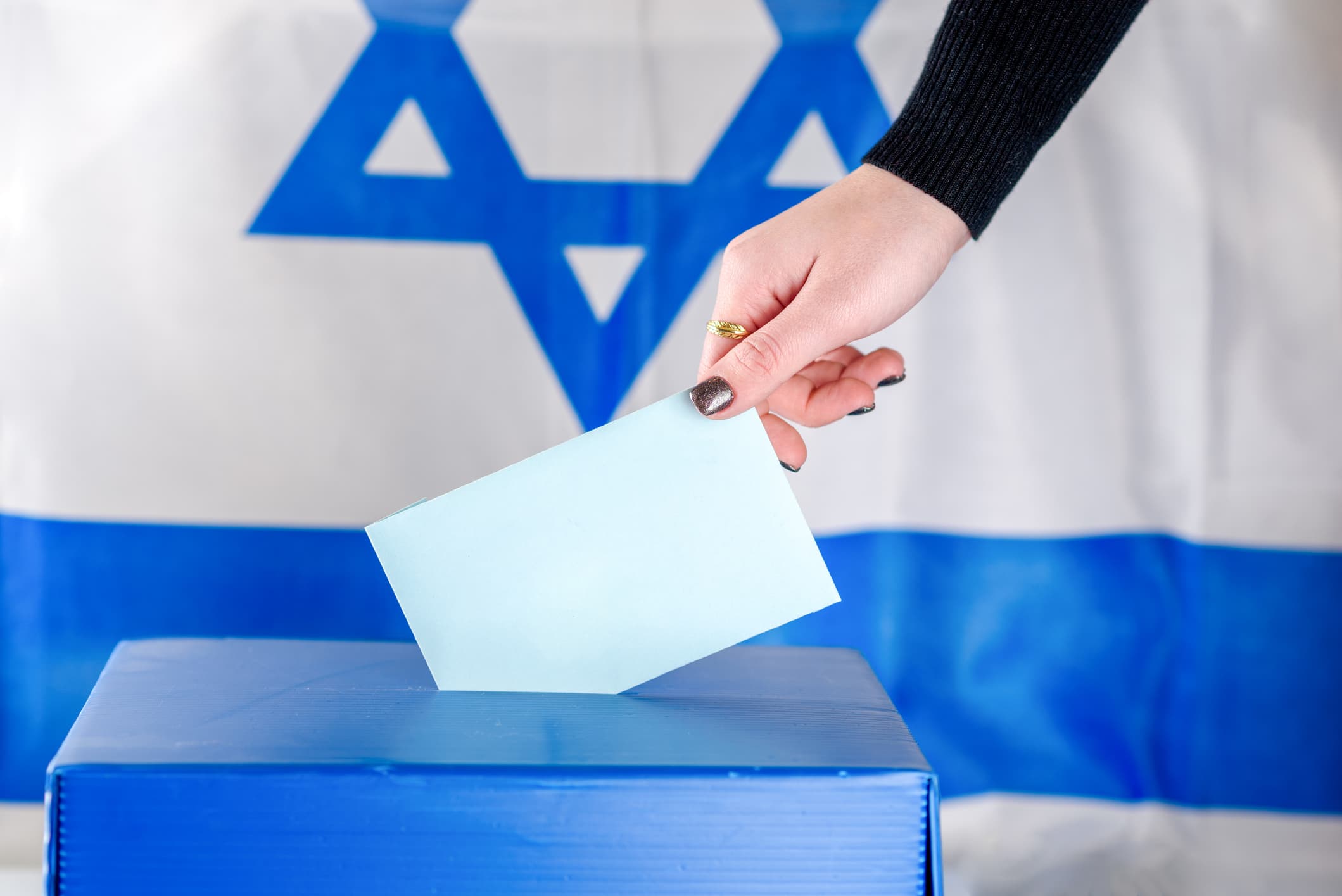
A young Israeli woman votes in a previous election (Getty)

Published: 25 February 2026

Last updated: 25 February 2026

Hundreds of thousands of Israelis aged 18 to 21 will enter the voting booth for the first time in the 2026 election. Their numbers are large enough to be politically decisive, with estimates suggesting this cohort could sway the equivalent of as many as 17 of the Knesset’s 120 seats.

They are entering the electorate more right-leaning, more religious, and more conservative than the generation before them.

For most of these voters, Benjamin Netanyahu has been the only prime minister they have known for any significant period. Apart from roughly 18 months of change, 16 of their 18 years have unfolded under his leadership. Their political memory has been shaped by two major ruptures, the Covid-19 pandemic and the 7 October 2023 Hamas attack and the war that followed.

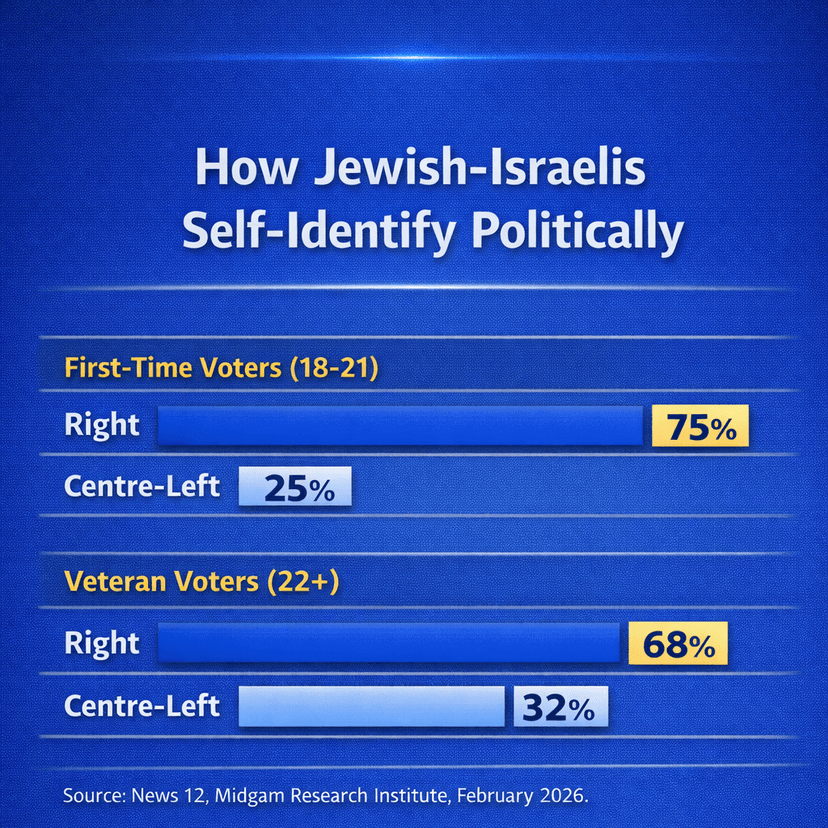
A recent News 12 survey conducted by the Midgam Research Institute offers a first snapshot of how this generation sees politics and where it may be heading.

Religion, tradition and social conservatism

The clearest pattern in the data is cultural rather than partisan: the youngest cohort entering the electorate appears more traditionally religious and socially conservative than the one it is replacing.

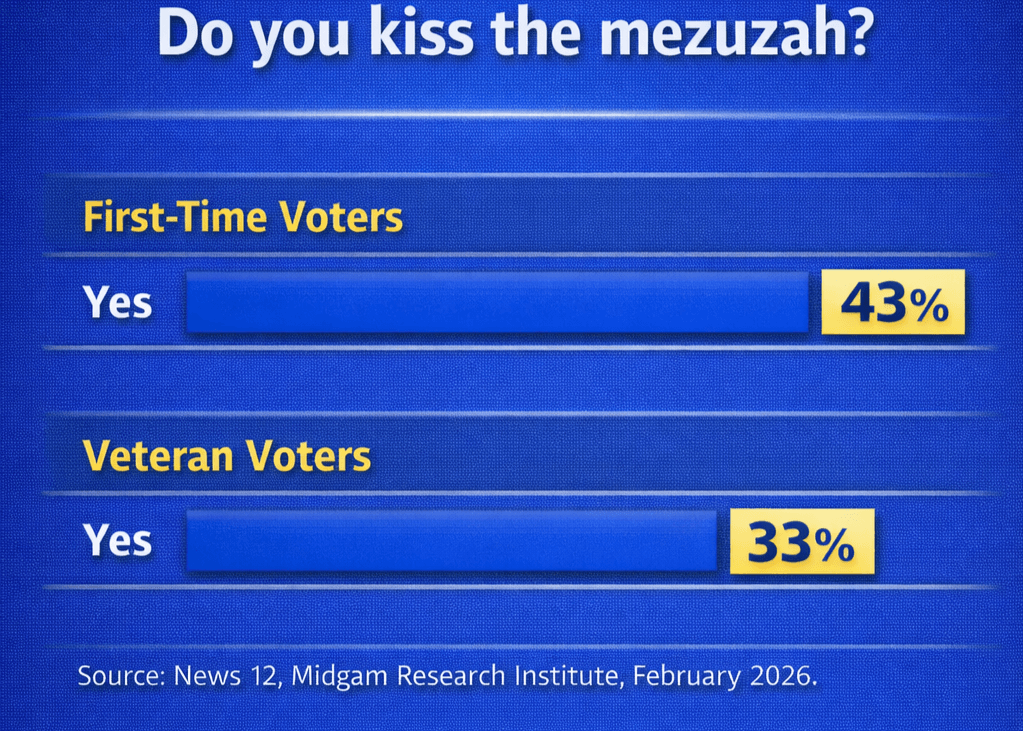
More than four in ten new voters say they kiss a mezuzah, compared with roughly one in three veteran voters. Around eighty percent say they believe in God or a higher power, slightly higher than among older voters. A slim majority believe in the coming of the Messiah, again, marginally more than veterans.
The Jewish Independent

Identity follows the same pattern. Only around five percent of first-time voters define themselves as left-wing, while roughly three-quarters place themselves on the right.

Yet this religious tilt does not automatically translate into blanket support for ultra-Orthodox political demands. Around sixty percent of both new and veteran voters say they would not vote for a party that backs maintaining the current Haredi draft exemption law.

The Jewish Independent

For a generation shaped by 7 October as lived trauma, with friends mobilised, funerals attended and months of reserve duty normalised, the question of who serves in the army carries moral weight. Politicians may treat the exemption as coalition arithmetic. Many young voters appear to experience it as a test of shared citizenship.

How are they voting — and what does it suggest?

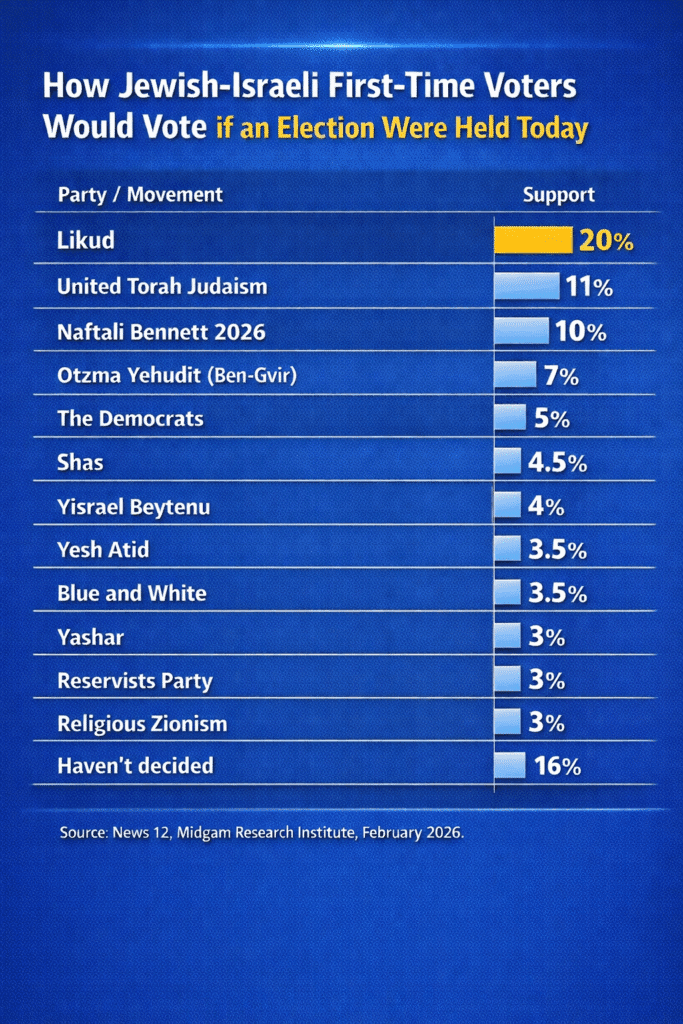
Electorally, the tilt is unmistakable. Among new voters, Likud leads with around one in five. United Torah Judaism follows at roughly one in ten, while Naftali Bennett’s new movement polls close behind. Itamar Ben-Gvir’s Otzma Yehudit attracts around seven percent. Parties associated with the centre and centre-left poll in the low single digits among this group. Sixteen percent remain undecided.

The generational lean is to the right, but it is not consolidated. A significant minority have yet to settle on a political home.

The Jewish Independent

On Netanyahu’s legal cases, nearly half of new voters accept his argument that the charges against him are politically motivated, while just over a third reject that claim. Among older voters, the pattern reverses, with more veterans doubting the prime minister’s narrative.

When it comes to establishing a state commission of inquiry into the failures surrounding 7 October, roughly two-thirds of veteran voters support such a move. Among new voters, support drops to just over half.

“Betrayal from within” and institutional distrust

One of the starkest findings concerns belief in “betrayal from within” on 7 October. Among new voters, nearly half say they believe there was internal betrayal, compared with just over a third of veteran voters. Among veteran opposition voters, that figure drops to around one in five.

Generational trauma often produces suspicion alongside resilience. For younger Israelis, that suspicion plays out in a digital environment saturated with commentary, speculation and competing narratives.

A generation that is more sceptical of establishment institutions appears more inclined to question official accounts, whether of military failure or judicial process. The scepticism is broad, but it does not amount to wholesale rejection. It is a generation wary of institutions, yet still deeply engaged in them.

The criticism: Who was left out?

The survey has also drawn criticism for what it excluded.

News 12, Israel’s largest mainstream television news outlet, presented the findings as a portrait of “new voters”. However, the representative sample was limited to Jewish respondents. Arab Israeli citizens, who make up roughly twenty percent of the country’s population and include tens of thousands of first-time voters, were not included.

Critics argue that when election polling is framed as reflecting national sentiment, excluding a fifth of the citizenry risks distorting the picture. Under the Israeli Press Council’s Code of Ethics, surveys that exclude a population group without substantive justification are considered problematic unless the issue surveyed is irrelevant to that group.

The poll included questions about Jewish religious practice, such as belief in the Messiah and kissing a mezuzah. While such questions may not apply directly to Muslim or Christian respondents, critics note that equivalent questions could have been adapted, or the survey more clearly framed as reflecting Jewish voters only.

The argument is less about methodology than representation. In an election year, who counts as a “new voter” matters.

What does it add up to?

Israel’s youngest voters are more religious, more right-leaning and more sceptical of state institutions than the cohort before them. They have grown up under prolonged political continuity, repeated national crisis and relentless digital exposure.

But they are not ideologically fixed. A substantial minority remain undecided. Majorities still support accountability. And even where their instincts lean conservative, their policy positions do not always align neatly with party platforms.

This is not a passive generation inheriting the ballot. It is a cohort shaped by war, crisis and long political dominance, now large enough to tip an election.

You might also like
  • Bennett’s balancing act: can he win over the right without losing the centre?
    Shahar Burla
  • Diaspora leadership must be candid about its disillusion with Netanyahu
    Colin Shindler
  • Netanyahu rejects Trump’s Gaza plan, testing US influence in the region
    Shahar Burla
logomark.67a07ee3
We believe in the free flow of information

Republish our articles for free, online or in print, by using our Creative Commons licence

You might also like

    Protest government election
    Israel Votes 2026FeatureIsrael

    ‘Elections are not a civil war’: the democracy threats worrying Israelis

    Shahar Burla 1
    Marwan Barghouti demonstration
    Israel Hamas WarAnalysisIsrael

    Palestinians disillusioned with Hamas and armed struggle: new survey

    Shahar Burla
    Democracy protest
    Israel Votes 2026AnalysisIsrael

    What ‘Zionism’ means in Israel:  it’s not what you think

    Ittay Flescher 1

About the author

Shahar Burla

Shahar Burla

Dr Shahar Burla is a Sydney-based researcher, lecturer and Contributing Editor of TJI. Shahar holds a Master’s degree in political science from Hebrew University and a PhD in political science from Bar-Ilan University. He is the author of Political Imagination in the Diaspora: The Construction of a Pro-Israeli Narrative (2013) and co-editor of Australia and Israel: A Diasporic, Cultural and Political Relationship (2015).

More from the author

AnalysisIsrael

Bennett’s balancing act: can he win over the right without losing the centre?

OpinionIsrael

Flying to vote is an act of love, not impudence

AnalysisIsrael

Palestinians disillusioned with Hamas and armed struggle: new survey

AnalysisIsrael

Netanyahu rejects Trump’s Gaza plan, testing US influence in the region

Comments

No comments on this article yet. Be the first to add your thoughts.