Aa
  • Read, Watch, Listen
  • TJI Series
  • Community Action
  • Events
  • Zedi
Follow us and continue the conversation
  • LinkedIn
  • Instagram
  • FaceBook
  • X
  • YouTube
Test yourself with the TJI Quiz!

Adjust size of text

Aa

Follow us and continue the conversation

  • LinkedIn
  • Instagram
  • FaceBook
  • X
  • YouTube

Your saved articles

You haven't saved any articles

What are you looking for?

Original reporting, insightful analysis and diverse views, delivered straight to your inbox

  • LinkedIn
  • Instagram
  • FaceBook
  • X
  • YouTube
Your support fuels our mission to inform, entertain and inspire.

The Jewish Independent is bound by the Standards of Practice of the Australian Press Council. If you believe the Standards may have been breached, you may approach The Jewish Independent or make a complaint to the Australian Press Council in writing at www.presscouncil.org.au. The Council may also be contacted on 1800 025 712.

  • Our Story
  • Contact us
  • Our Team
  • Support us
  • Guidelines
  • Pitch your idea
  • Republishing us
  • Community Action
  • Our Awards
  • LinkedIn
  • Instagram
  • FaceBook
  • X
  • YouTube
Aboriginal FlagTorres Strait Islanders Flag

The Jewish Independent acknowledges Aboriginal and Torres Strait Islander peoples as the Traditional Owners and Custodians of Country throughout Australia. We pay our respects to Elders past and present, and strive to honour their rich history of storytelling in our work and mission.

© The Jewish Independent 2026All Rights Reserved
Website design and development by Your Creative, MelbourneTerms & ConditionsPrivacy Policy
HomeRead, Watch, ListenAustralia
FeatureAustralia

A new path for homeless Australian Jewish youth

Questioning an ultra-Orthodox upbringing can leave young people homeless. Pathways wants to create a safe house to protect them.
Gideon Cohen
Print this
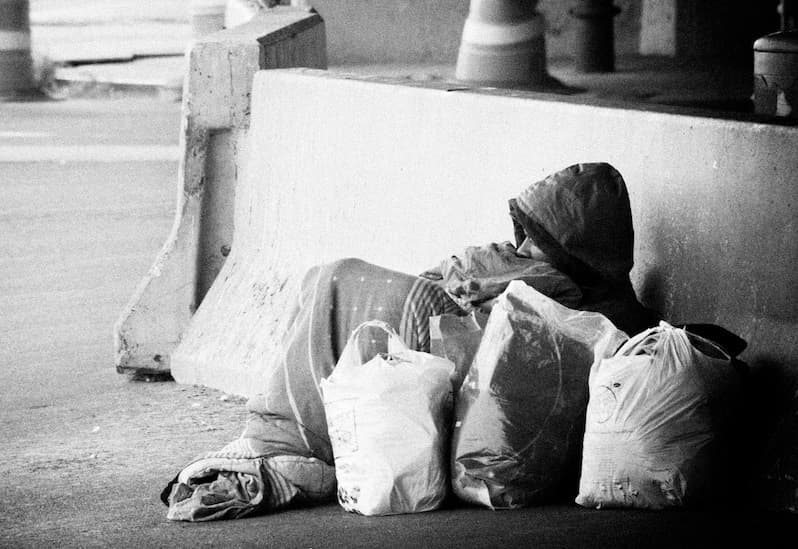
Homeless_

Image: Wikimedia

Published: 3 December 2024

Last updated: 3 December 2024

A startling statistic was unveiled at a community symposium on Jewish youth homelessness held in Melbourne recently: 37 young Jewish people, aged 12-24, are estimated to be homeless or marginally housed each year.

The symposium organised by Pathways organisation was introduced by Pathways’ CEO and founder, Leah Boulton, who presented the first-ever study on Melbourne’s Jewish youth at risk of homelessness. Pathways offers support to young people who are questioning, transitioning out of, or have already left insular religious communities, including Orthodox.

Conducted from January to July of this year, the study consulted young Jewish adults aged 17 and over with lived experience, religious parents, community leaders, and a range of support services including those from the Jewish community and local state government.

Alarmingly, the study found that little-to-no support frameworks within the community existed to support at-risk Jewish teens. Vital services such as culturally appropriate foster care or a youth safe house were not available for those under the age of 18 who were experiencing abuse or, for those in Orthodox homes, conflict over religious differences. If such crisis housing did exist, young people would be far more likely to come forward about experiencing abuse or needing assistance.

But that’s about to change, according to Pathways.

Until now, most of its services – including social gatherings, LGBTIQA+ support, mentorship and referrals to health professionals and emergency housing - have only been available to those aged 18 and over. This has left few options to vulnerable Jewish minors, especially those in Orthodox communities.

We want to work with families, work with the teenagers that are questioning religion, and their parents as well.

Dassi Erlich, Pathways, Youth and Family Program Manager

Now, Pathways is planning to launch a series of programs for teens aged 14 and over. It’s the first step in what the organisation calls a “holistic vision” for mitigating and managing the risks of youth homelessness in the Jewish community. “We’re opening up to have programs for 14+, which is a very big move for Pathways, because we've only serviced people 18 plus,” Dassi Erlich, Pathways’ Youth and Family Program Manager, told The Jewish Independent.

“What we really want to do is work with families, work with the teenagers that are questioning religion, and their parents as well. We know that that's one of the factors that puts a child at risk of homelessness, so we're hoping to really mitigate that factor.”

Pathways symposium at Glen Eira Town Hall, (Instagram)

Following Boulton’s presentation at the symposium, Erlich joined a panel of experts to discuss the issue. Also on the panel was Spiritgrow’s Rabbi Menachem Wolf, youth homelessness advocate Russell Kaye, who shared his own experiences of growing up Orthodox and experiencing abuse, and Susan Barton, founder and director of Lighthouse, a foundation that provides services and housing for homeless youth.

As the second and third steps in Pathways’ vision, the organisation will be partnering with Lighthouse to develop both a Jewish foster care and kinship program and creating a Jewish youth safe house, for which a property has already been secured.

With the shame and stigma that surrounds these issues, the program won't work without the leadership of the community endorsing it.

Dassi Erlich

During the panel discussion, Barton delivered a moving message, saying she felt compelled to help, because members of the Jewish community had always supported her work at Lighthouse, and because she was devastated by October 7 and the rise of antisemitism.

“Our main goals, of course, [is the] house,” says Erlich. “I think a big part in making sure this works is getting the whole community behind it.”

“That's something that we'll be working very hard on, because I don't think this will work in the community with the shame and stigma that surrounds these issues, without the leadership of the community endorsing it, and making it okay for young people to seek help, and really pushing that message.”

Pathways’ vison will need heavy funding. The preventative programs will require $350,000 per year, while the foster care system and safe house will require at least $350,000 in seed funding per year, for the next three years. Erlich said that following the symposium, the community was already expressing enthusiasm and asking to be involved.

“Everyone that I've spoken to thought that it was brilliantly presented, and they appreciated finding out that information,” she said. “This is the first kind of study that's been done on the youth in the community. So that was exciting for a lot of people, and very informative. I think there's quite a buzz in the community with regards to getting this up and running.”

For Erlich and the team at Pathways, it’s not a question of whether they’ll be moving forward with the vision, but how quickly.

“We've already had some people saying that they definitely would like to be a part of funding this. We've had a really good response, even a few people saying that they're thinking about being foster carers.”

You might also like
  • When the state faltered, civil society and Diaspora Jewry stepped up
    Shahar Burla
  • The case for leaving graffiti up for a while
    Adam Slonim
  • ‘To bring joy where there is no joy’: the show goes on for a lost composer
    Zeddy Lawrence
logomark.67a07ee3
We believe in the free flow of information

Republish our articles for free, online or in print, by using our Creative Commons licence

You might also like

    jiff26-cancelled.jpg
    ReflectionArts & Culture

    On despair: A reflection after watching ‘Cancelled’

    Deborah Stone
    Tame
    Australia

    Tame apologises – but with little grace

    Deborah Stone 1
    Penny Wong
    DebateAustralia

    Sanctions must influence, not just perform disapproval

    Adam Slonim 1

About the author

Gideon Cohen

Gideon Cohen

Gideon Cohen is a Melbourne-based journalist and a content creator and editorial assistant at TJI. He holds a master's degree in journalism from the University of Melbourne and his work has appeared in various publications including Broadsheet and The Jewish Chronicle.

More from the author

InterviewAustralia

Ash Densham: Building community through Humanistic Judaism

ReflectionWorld

A new generation reckons with 9/11

InterviewArts & Culture

‘L’chaim for the next 1,500’: Israeli drummer celebrates Cirque Du Soleil milestone

InterviewArts & Culture

Rachel Moshel: Creating a space for Jewish art and joy

Comments1

  • Avatar of Madeleine Begel

    Madeleine Begel3 December at 01:55 am

    Thanks for bringing attention to such an important but unspoken about issue in our community.