Published: 11 May 2026
Last updated: 11 May 2026
Being Israeli After the Destruction of Gaza
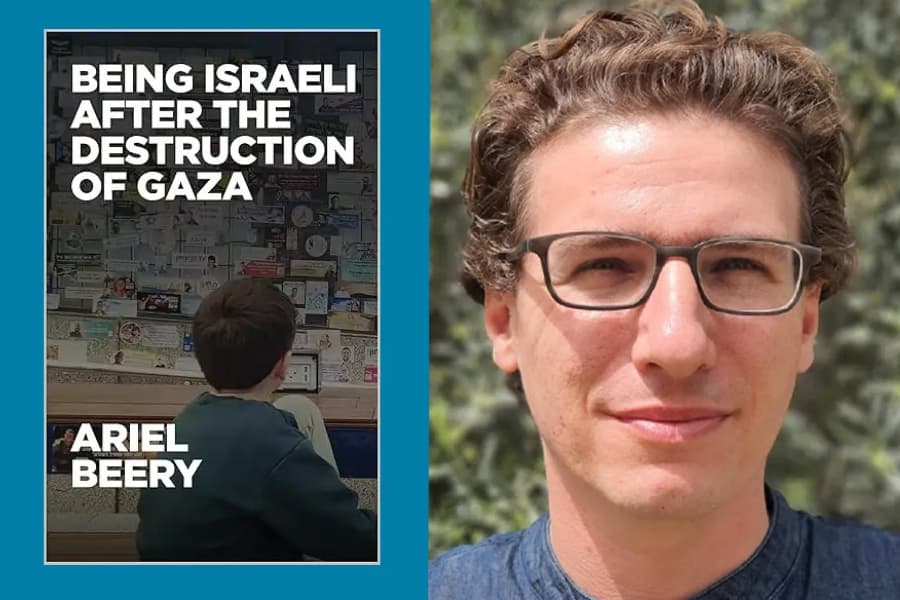
by Ariel Beery
Among liberal Israelis, there is near-unanimous agreement that we urgently need a State Commission of Inquiry into the political and intelligence failures that contributed to the October 7th massacre.
Yet, rarely does this same camp call for an inquiry into what we have done in Gaza in response over the past two years. Few want to investigate the decision-making process that led to the systematic severing of food and electricity to Jabalia, Beit Hanoun and Beit Lahia, the total flattening of neighbourhoods, or the allegations of war crimes that now hang heavy over our nation.
This dissonance, this refusal to look as unflinchingly at our own actions as we do at our failures, is the suffocating backdrop to Ariel Beery’s new book, Being Israeli After the Destruction of Gaza.
The title itself feels like a deliberate, perhaps even provocative, partner to Peter Beinart’s 2025 work, Being Jewish After the Destruction of Gaza. Much like Beinart’s inquiry into the moral integrity of the Jewish state, Beery is asking the existential questions that keep many of us up at night.
The difference lies in the destination. Where Beinart has steered his discourse toward the conclusion that the Zionist project is effectively irredeemable, Beery is attempting something far more precarious: he is trying to use these very questions to shore up, rather than dismantle, the liberal Zionist edifice. He isn't asking if Israel should exist, but rather, under what moral framework it can continue to justify its existence after the horrors of this war.
Beery is unafraid to tackle taboos, asking questions that many often avoid: How does a society that prides itself on human rights live with the destruction it has wrought? How do we hold the concurrent truths of our own trauma and the catastrophic suffering of our neighbours?