Aa
  • Read, Watch, Listen
  • TJI Series
  • Community Action
  • Events
  • Zedi
Follow us and continue the conversation
  • LinkedIn
  • Instagram
  • FaceBook
  • X
  • YouTube
Test yourself with the TJI Quiz!

Adjust size of text

Aa

Follow us and continue the conversation

  • LinkedIn
  • Instagram
  • FaceBook
  • X
  • YouTube

Your saved articles

You haven't saved any articles

What are you looking for?

Original reporting, insightful analysis and diverse views, delivered straight to your inbox

  • LinkedIn
  • Instagram
  • FaceBook
  • X
  • YouTube
Your support fuels our mission to inform, entertain and inspire.

The Jewish Independent is bound by the Standards of Practice of the Australian Press Council. If you believe the Standards may have been breached, you may approach The Jewish Independent or make a complaint to the Australian Press Council in writing at www.presscouncil.org.au. The Council may also be contacted on 1800 025 712.

  • Our Story
  • Contact us
  • Our Team
  • Support us
  • Guidelines
  • Pitch your idea
  • Republishing us
  • Community Action
  • Our Awards
  • LinkedIn
  • Instagram
  • FaceBook
  • X
  • YouTube
Aboriginal FlagTorres Strait Islanders Flag

The Jewish Independent acknowledges Aboriginal and Torres Strait Islander peoples as the Traditional Owners and Custodians of Country throughout Australia. We pay our respects to Elders past and present, and strive to honour their rich history of storytelling in our work and mission.

© The Jewish Independent 2026All Rights Reserved
Website design and development by Your Creative, MelbourneTerms & ConditionsPrivacy Policy
HomeRead, Watch, ListenIsrael
Israel Iran WarReflectionIsrael

Five days from hope to hell

France is a country I have always dreamed of visiting. Last week that dream came true, but what followed was a nightmare.
Ittay Flescher
Print this
Ittay Flescher crossing back to Israel

Ittay Flescher crossing back to Israel after being stranded at the Paris peace conference (supplied)

Published: 18 June 2025

Last updated: 19 June 2025

Thursday: A suitcase full of hope

I left Jerusalem on Thursday, June 12 with a suitcase full of hope and a heart weighed down by the ongoing war between Israel and Gaza that has no end in sight.

I had been invited by the Alliance for Middle East Peace (ALLMEP) to attend the Paris Peace Summit. The aim of the summit was to bring together leading civil society actors, mostly Israeli and Palestinian, “united in their commitment to promoting the two-state solution and a shared future based on mutual recognition, peace, and security for all.”

The Arkia flight to Paris from Tel Aviv was remarkable. The plane was filled with hundreds of Israelis and Palestinians, many of whom are close friends who work in over 180 member organisations of ALLMEP. As soon as the seatbelt sign turned off, many people stood up and began conversations across aisles on everything from our feelings about the rushed planning of the trip to discussing political ideas about how to end the suffering in Gaza.

Closer friends also shared dilemmas and challenges that arise from working in organisations that are much maligned in both Israeli and Palestinian society. I’ve been to many think tanks and brainstorming sessions in my life, but this altitude networking experience was something else.

As the plane soared over the Mediterranean, my wife Carm and I thought about our teenage children, and how they would manage during their first weekend home alone. But I also thought about the opportunity ahead, to be part of something bigger—a movement striving to ensure that all the children of this land grow up with full bellies, not heavy hearts; under skies not haunted by drones and missiles, but alive with laughter and joy.
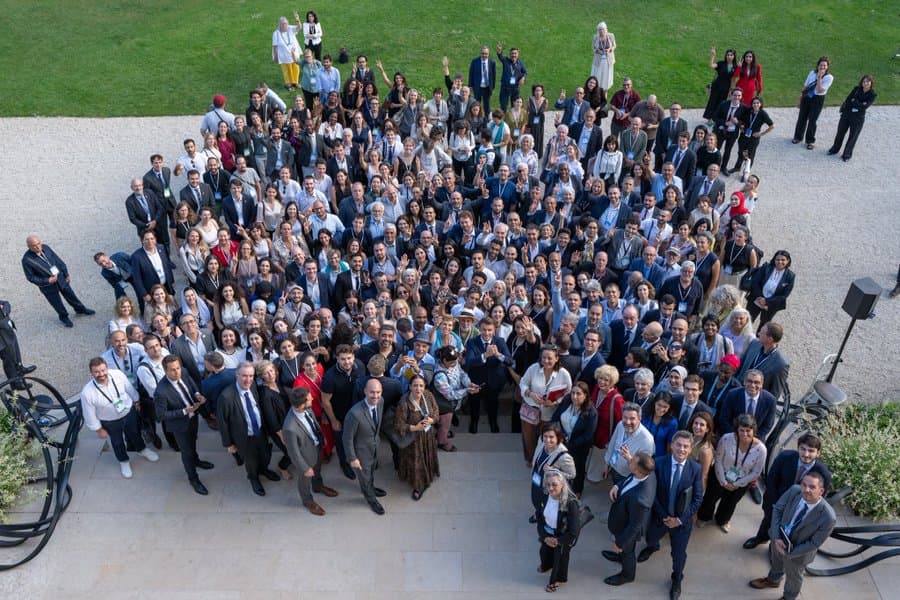
Friday: Focused on peace

The next morning, Paris was its marvellous romantic self. But between obligatory photos of the Eiffel Tower on the drive from the hotel to the conference venue, our phones were buzzing insanely with notifications that Israel had attacked Iran and that many of our loved ones had spent the night in bomb shelters. Paris, with its grand boulevards and historic monuments, felt worlds away from the chaos back home.

We focused on the purpose of our gathering. John Lyndon, ALLMEP’s director, captured the mood perfectly when he said, “The past few days have been some of the most intense in ALLMEP’s history. With just three weeks’ lead time, we brought hundreds of Israelis and Palestinians to the Paris Peace Forum to participate in a milestone conference we co-led under the patronage of President Macron. I say ‘milestone’ because it marked the realisation of something we’ve long demanded and worked toward: the integration of civil society into Israeli-Palestinian diplomatic strategy, and the implementation of the G7 policy shift we secured last year to advance that goal.”

For the first time, civil society was not just a footnote in the diplomatic process: it was at the heart of it. Hundreds of us, Israelis and Palestinians, sat together in working groups brainstorming, debating, and drafting proposals. The energy was electric, but so was the pain. Every person in that room carried stories of loss, fear, and hope. Some spoke with anger and fire, others spoke in tears.

One of the most powerful moments came when ALLMEP Regional Director, Nivine Sandouka, a Palestinian from East Jerusalem, read the vision of our collective to French Foreign Minister Jean-Noël Barrot and hundreds of attendees: “Our histories are filled with pain, but our future is still unwritten and you now hold the pen. We stand ready, not as subjects of your policies, but as partners in this essential mission. The world watches, and history will judge.”

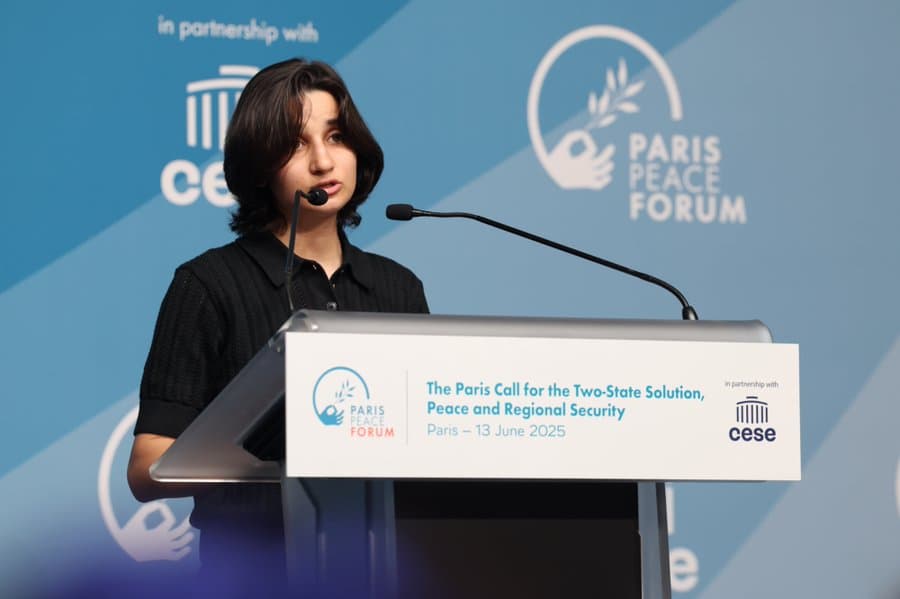
Rita Baroud, a 22-year-old journalist who got out of Gaza a month ago, was the standout speaker. “I’m Rita, but there are two million names in Gaza, two million people who want to live. So, this war must end now,” she said. “Don’t let Gaza bleed in silence. Don’t kill our hopes the way our bodies are being killed,” she concluded.

Rita Baroud addresses the Paris Peace Conference

Daniel Lifshitz, the grandson of murdered hostage Oded Liftshitz, 84, and returned hostage Yocheved, 85, spoke of the need for Israeli security as a prerequisite for peace. “The more security provided, the more long-awaited peace will come. The world must speak with a strong and unified voice, release the hostages, ease suffering, disarm Hamas and empower peace for your people and for mine, bring them home now.”

Saturday: Stranded

At the end of the conference, we had the honour of meeting with President Macron in the gardens of the Élysée Palace. It was a surreal moment, standing in such a historic place, surrounded by fellow peacebuilders, and presenting our five-point plan to end the violence and ensure a more secure future for all peoples in the region. Macron listened intently and adopted our plan, promising to bring it to the attention of the international community.

As we met with Macron, phones began buzzing with news of a massive missile barrage back home.

All flights to Israel were suspended. Hundreds of us were stranded in Paris, unable to return home. My wife Carm and I were in Paris. Our teenage children were under attack in Jerusalem.

It would have been easy to give in to despair or to spend the weekend sightseeing, but that’s not what happened. Instead, we gathered at the Ibis Hotel in Paris to brainstorm on how to build peace. I was in a working group exploring ways to share ideas in both mainstream and new media channels that could promote the values of compromise and negotiation as tools for problem-solving. The focus and determination in all the working groups was remarkable.

As John Lyndon put it, “As if to say, ‘If I’m going to be stranded thousands of miles from my family during a moment of crisis, you’d better believe I’m going to make it count—and do everything I can to ensure a safer future for my children.’”

Delegates at the peace conference

Sunday to Monday: Home to family and fear

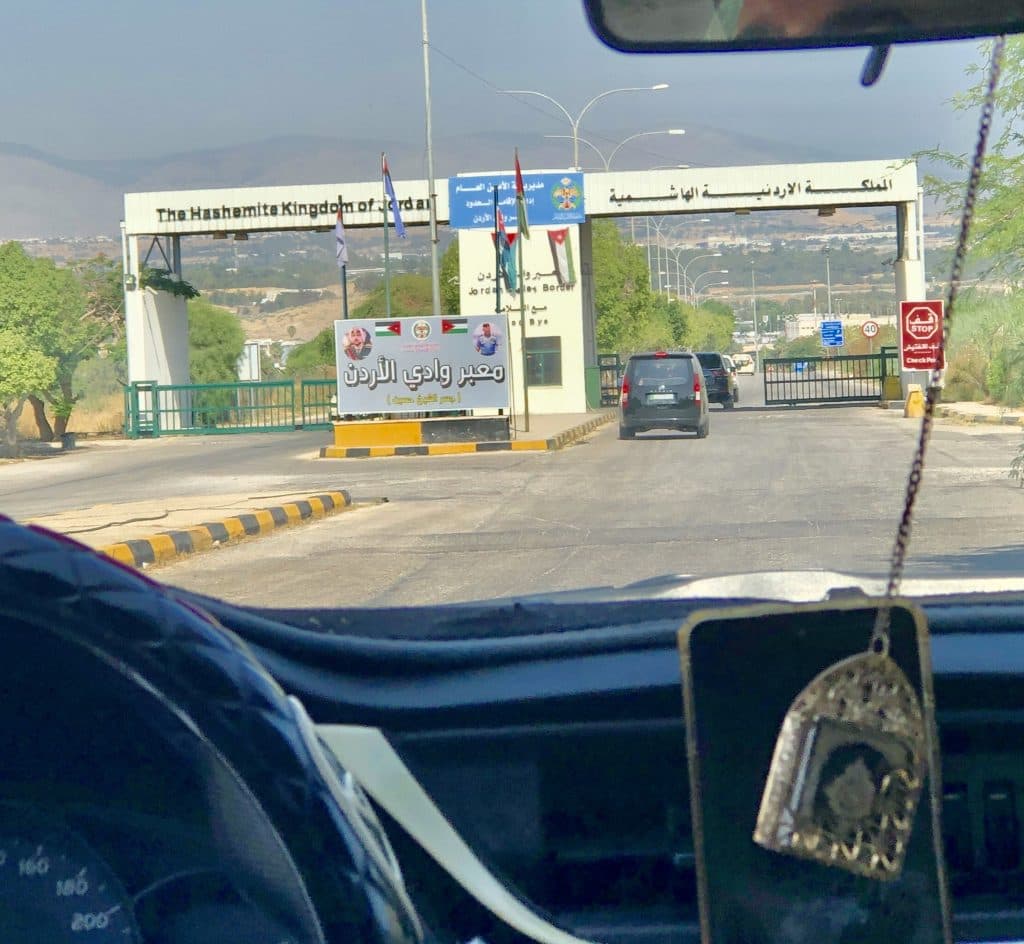
With flights to Israel still suspended, Carm and I consulted with a close Palestinian friend of mine who explained to us the process of returning to Jerusalem via Jordan. We then flew to Amman and crossed into Israel via the Sheikh Hussein bridge that spans the Jordan River. It’s one of the few ways possible to enter or leave Israel at the moment, and it only exists because of the peace agreement signed between Rabin and Hussein in 1994.

Crossing the bridge, I thought about the vision of those leaders—the understanding that the security that comes from peace is far greater than can ever be found through rockets and missiles. It was a poignant reminder of what we are fighting for.

Leaving Jordan in a taxi (Ittay Flescher)

As I entered Israel, I read more horrific news. A devastating strike on a building in Bat Yam leaves 9 dead. 42 people are injured in Rehovot, including a mother and her toddler. In Ramat Gan, the city where I was born, 74-year-old Etti Cohen Angel, a mother of four, was killed. “She was a smiling, beautiful, kind woman,” her daughter, Nurit Cohen-Elstein, said.

My Instagram feed began to fill with requests from people living in Gush Dan looking for accommodation in other cities. I wonder if any place in Israel is safer from any other in this war?

The reality of the conflict hits me hard on a personal level as well. The house that was hit in Tamra belonged to a close friend of a participant in the Kids4Peace dialogue program where I work. The mother and two of her daughters were killed. This teenager now has a whole life ahead of her without her mother and siblings. How does one comprehend such grief and loss?

After two hours in a taxi from Beit Shean to Jerusalem, I was finally reunited with my children in a moment of deep appreciation for the preciousness of family.

My WhatsApp was flooded with messages asking if I was okay. My family and I are thankfully physically fine, but none of us is actually okay. In between rocket alerts from the early morning to the middle of the night, cancelled plans, and life on hold, no one, Arab or Jew, who lives in this land will be okay until this horror ends—and maybe not for a long time after that.

You might also like
  • ‘Israel is systemically eliminating Palestinian collective life’:  B’Tselem
    Deborah Stone
  • Tame apologises – but with little grace
    Deborah Stone
  • Confronting Richard Flanagan and the myth of the Israel lobby
    Mary Garden
logomark.67a07ee3
We believe in the free flow of information

Republish our articles for free, online or in print, by using our Creative Commons licence

You might also like

    Erdogan Turkey
    AnalysisIsrael

    Turkey emerges as military threat to Israel

    Dror Doron
    Woman with land and houses behind her
    NewsAustralia

    Australia to increase sanctions against West Bank settlements

    Deborah Stone 2
    Rozana Beit Oula
    PeacebuildingOpinionIsrael

    Peacebuilding through the eyes of a sceptic

    Ron Finkel

About the author

Ittay Flescher

Ittay Flescher

Ittay Flescher is the Jerusalem Correspondent for The Jewish Independent. For over twenty years, he has worked as an educator, journalist, and peacebuilder in Melbourne and Jerusalem. His book, The Holy and the Broken: A Cry for Israeli-Palestinian Peace from a Land that Must Be Shared, was longlisted for the 2025 Walkley Book Awards.

More from the author

AnalysisIsrael

What ‘Zionism’ means in Israel:  it’s not what you think

AnalysisIsrael

From haven to hotbed: how Israel’s perception of Australia has changed

FeatureIsrael

New wave of Russian-speaking migrants may be key to Israel’s future

AnalysisIsrael

How a new International Peace Fund could make a tangible difference

Comments5

  • Avatar of Elaine Bousfield

    Elaine Bousfield20 June at 10:50 am

    Thank you for sharing this Ittay. It is good to know that there are people like you and your colleagues working for peace.

  • Avatar of Danielle Lamovie

    Danielle Lamovie20 June at 07:20 am

    Thank you for the important work that you do and for sharing your personal story. Shabbat Shalom

  • Avatar of Johnny Cash

    Johnny Cash19 June at 05:40 pm

    Out of interest, of the folks there from Gaza, how many of them referenced the immediate release of the hostages as a pathway to achieving an end to the war?

  • Avatar of Lyn Jones

    Lyn Jones19 June at 08:23 am

    What valuable work you’re doing for peace. What an inspiration this group is! Yes it consumes time – and it will take time. However, so pleased that you were eventually reunited with your children in Israel. Take care.

  • Avatar of Di Hirsh

    Di Hirsh19 June at 01:44 am

    So pleased to hear you are safely reunited with your kids. I hope Macron uses this opportunity to advance peace. Stay safe