Aa
  • Read, Watch, Listen
  • TJI Series
  • Community Action
  • Events
  • Zedi
Follow us and continue the conversation
  • LinkedIn
  • Instagram
  • FaceBook
  • X
  • YouTube
Test yourself with the TJI Quiz!

Adjust size of text

Aa

Follow us and continue the conversation

  • LinkedIn
  • Instagram
  • FaceBook
  • X
  • YouTube

Your saved articles

You haven't saved any articles

What are you looking for?

Original reporting, insightful analysis and diverse views, delivered straight to your inbox

  • LinkedIn
  • Instagram
  • FaceBook
  • X
  • YouTube
Your support fuels our mission to inform, entertain and inspire.

The Jewish Independent is bound by the Standards of Practice of the Australian Press Council. If you believe the Standards may have been breached, you may approach The Jewish Independent or make a complaint to the Australian Press Council in writing at www.presscouncil.org.au. The Council may also be contacted on 1800 025 712.

  • Our Story
  • Contact us
  • Our Team
  • Support us
  • Guidelines
  • Pitch your idea
  • Republishing us
  • Community Action
  • Our Awards
  • LinkedIn
  • Instagram
  • FaceBook
  • X
  • YouTube
Aboriginal FlagTorres Strait Islanders Flag

The Jewish Independent acknowledges Aboriginal and Torres Strait Islander peoples as the Traditional Owners and Custodians of Country throughout Australia. We pay our respects to Elders past and present, and strive to honour their rich history of storytelling in our work and mission.

© The Jewish Independent 2026All Rights Reserved
Website design and development by Your Creative, MelbourneTerms & ConditionsPrivacy Policy
HomeRead, Watch, ListenIsrael
Israel Hamas WarOpinionIsrael

After 700 days of war, we need to embrace the alternative 

Israel can’t keep destroying Gaza in pursuit of an elusive ‘total victory’. There is another way.
Ittay Flescher
Print this
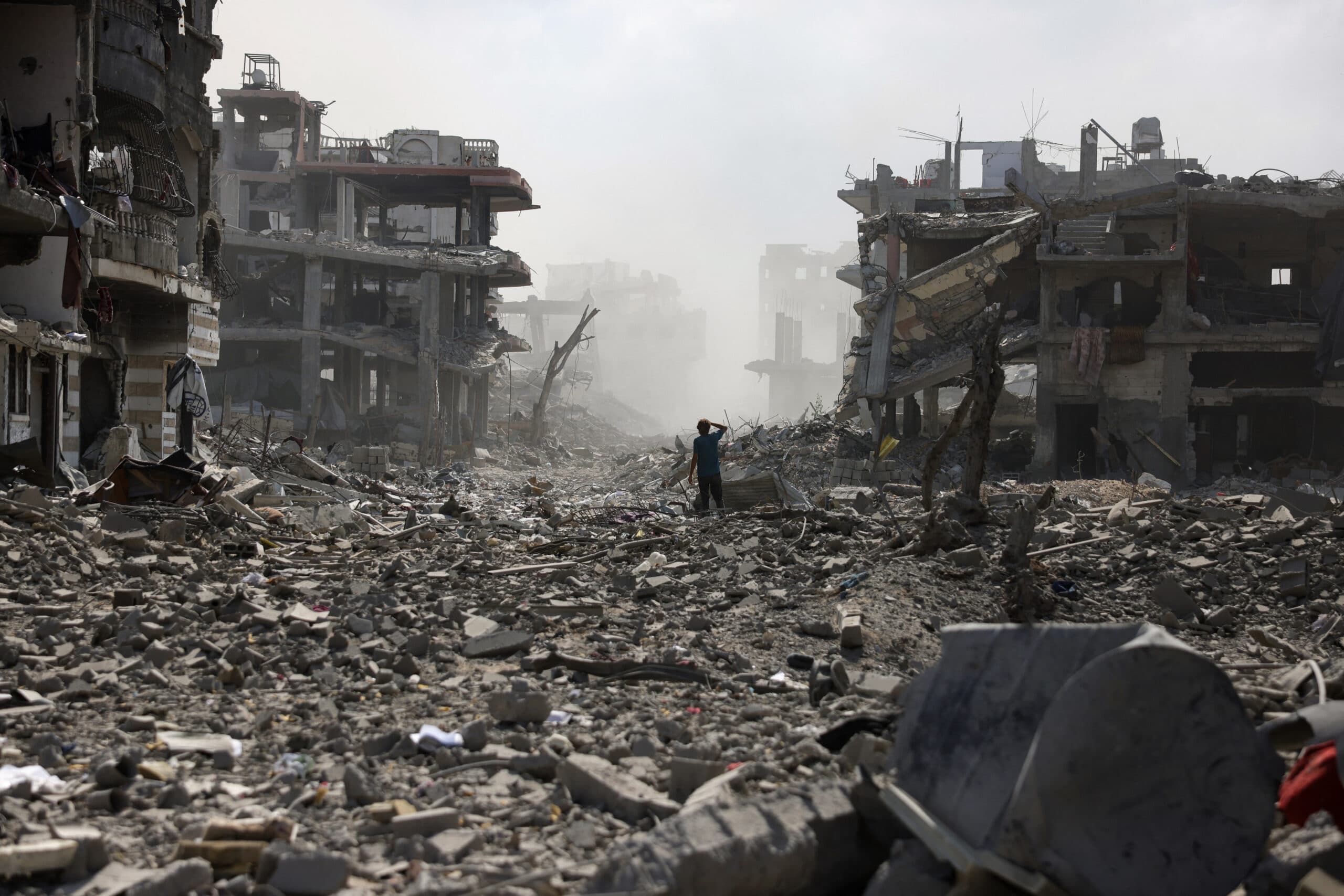
A street strewn with rubble

A street strewn with rubble following an explosion in the Saftawi neighbourhood in the northern Gaza Strip on August 25, 2025, amid the ongoing war between Israel and the Palestinian militant group Hamas (BASHAR TALEB/AFP via Getty Images)

Published: 4 September 2025

Last updated: 4 September 2025

This Saturday will mark 700 days since the October 7, 2023 Hamas attacks. Reflecting on the course of the long war that has followed, many Israelis feel deeply lied to by our government.

Tomer Persico, a research fellow at the Shalom Hartman Institute, captured the mood when he wrote recently on Facebook: 

“It was all a lie. “Total victory” was a lie, “Military pressure will bring back the hostages” was a lie. “Victory will be achieved if we destroy the four battalions in Rafah” was a lie! “Biden is preventing us from winning” was a lie, “Herzi Halevi and Gallant are preventing a deal” was a lie, “Hamas doesn't really want a deal” was a lie, “Humanitarian city” was a lie, “Voluntary immigration” was a lie. “Three countries were found to take Gazans” was a lie, “Food control through GHF will bring victory” was a lie.  

“This government has no strategy in Gaza. Meanwhile, the IDF is playing along. Over 900 soldiers have lost their lives, 48 hostages remain in captivity, there is a humanitarian disaster in Gaza, and the international situation of Israel is in an unprecedented crisis. The prime minister is on trial in Israel for fraud and bribery, and wanted by the ICC for war crimes, and has betrayed every political partner he has ever had, and now depends on fundamentalist, zealous, and anti-Zionist extremists. The results are in front of you.” 

Netanyahu’s defence 

On September 1, Netanyahu shared a video in response to all those who claimed his government has achieved nothing. 

"Just yesterday we killed a senior Hamas leader. We also erased the prime minister of Yemen’s Houthi government. In Lebanon, we are hitting them hard every time Hezbollah raises its head. We are also acting in Syria in ways I won't elaborate on now. A few weeks ago, we removed the greatest threat against Israel since its founding with our strikes on the Iranian nuclear program and stopped its plan to manufacture 20,000 ballistic missiles.

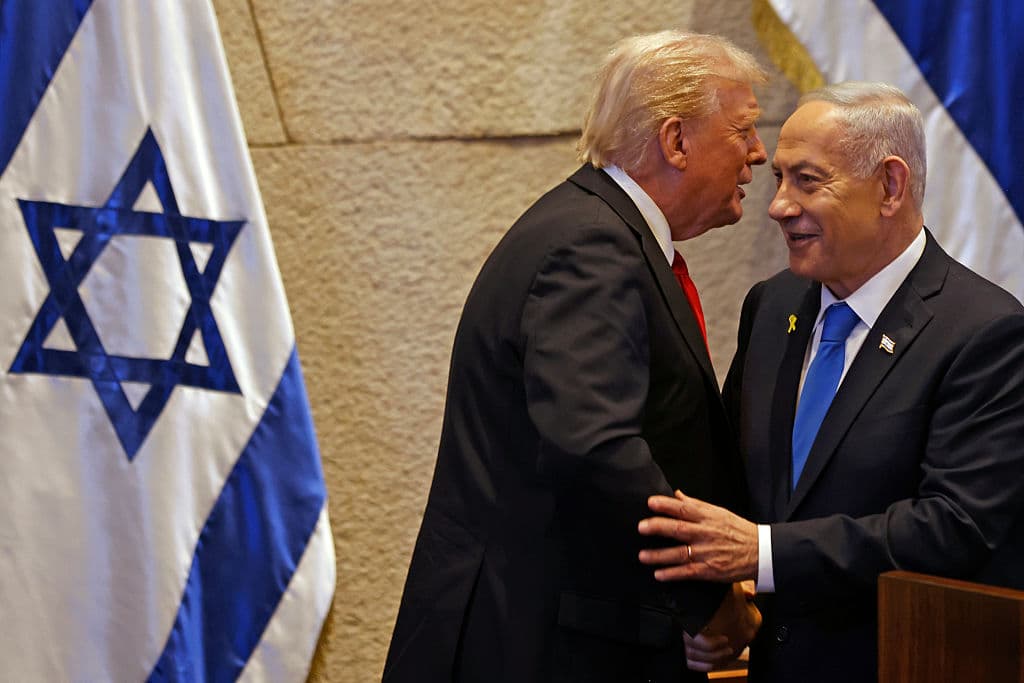
"The opposition has no victories. The only victory they want is the downfall of my government, but we will continue until we end the axis of terror led by Iran, free all the hostages, and vanquish Hamas.” 

These competing views of the past 700 days determine what Israel’s opposing camps think should happen next. 

Netanyahu claims, not for the first time, that Israel is on the verge of victory and should push on to occupy Gaza City, expelling 800,000 Palestinians from their homes by October 7, 2025, and setting up Israeli control of Gaza for the foreseeable future. 

His opponents see the Gaza occupation as just another step towards Israel becoming the apartheid South Africa of the world — one which will not end the war or free any hostages. 

What is the alternative?

Recent speeches by Opposition Leader Yair Lapid and Democrats leader Yair Golan reveal a seven-step plan that provides an alternative to continuing the war and occupying Gaza. The recent protests in support of a ceasefire suggest many Israelis would be behind this plan. 

  1. Prioritise a hostage deal and ceasefire: This is the immediate priority to save lives and de-escalate the conflict. 
  1. Establish a clear "day after" plan: A structured post-war framework would involve a temporary, multi-national force — potentially led by Arab states — to manage Gaza's security and humanitarian needs. 
  1. Empower a reformed Palestinian Authority: A crucial part of the plan is to transfer civil and, eventually, security control of Gaza to a reformed Palestinian Authority. This is intended to create a legitimate Palestinian governing body and prevent a power vacuum. 
  1. Shift to targeted, intelligence-driven military operations: The military strategy would move away from large-scale ground invasions and instead focus on precise, intelligence-based strikes to dismantle Hamas' military capabilities and leadership. This approach aims to minimise civilian casualties and long-term entanglements. 
  1. Secure international and regional cooperation: Any lasting solution requires international support. It would involve working with the United States and key Arab partners to fund Gaza's reconstruction, politically isolate Hamas, and ensure the demilitarisation of the territory. 
  1. Address root causes of violence through creating a political horizon for Palestinian self-determination: The left recognises that a permanent defeat of Hamas is not possible without a political solution. A two-state solution, which would provide a path to statehood and dignity for Palestinians, would dramatically erode Hamas' appeal as a resistance movement. 
  1. Maintain Israel's right to self-defence: Even with a two-state solution, Israel must be prepared to respond forcefully to any terror attacks. However, these responses would be within a framework of international law and in close security cooperation with the new Palestinian state. 

I would add an eighth step that is essential for long-term peace: 

  1. Reform the Israeli and Palestinian education systems: Palestinian children must be taught that Jews in Israel are not colonisers and that they have a deep historical and religious connection to this land. Jewish children should be taught that Palestinians are a genuine nation with deep roots in this land with the undeniable right to self-determination and freedom in their only homeland. Beyond these historic facts, both should learn about the culture, food and religious traditions of the other, beginning a long process of humanisation that needs to occur after the trauma of the past 700 days.  

Risks and rewards 

The plans of both the left and the right have risks. Pushing on and occupying Gaza risks the lives and wellbeing of millions of Palestinians; soldiers' deaths; hostage deaths; and growing international isolation of Israel.

Negotiating a deal risks Hamas remaining in power if diplomacy fails or the PA-led Arab forces are unable to take control of Gaza, leading Hamas to carry out further October 7-style attacks on Israel. 

Ultimately, only a long-term solution that gives Palestinians a horizon for self-determination can move us towards a future of co-existence and mutual recognition.

Where they differ is that the right's strategy is rooted in a "total victory" that appears increasingly unattainable. It relies on military force and a zero-sum mentality that has historically failed to achieve lasting security. This approach escalates humanitarian suffering, fuels international condemnation, and isolates Israel from its allies, all while providing no clear "day after" plan for governance in Gaza. It maintains the status quo of endless conflict, creating fertile ground for future extremist movements. 

In contrast, the left's plan offers a strategic, long-term vision. It prioritises a political solution, international cooperation, and a realistic "day after" framework. By focusing on a two-state solution and empowering a reformed Palestinian Authority, it seeks to address the fundamental grievances that drive support for groups like Hamas. 

The risk of empowering a weak Palestinian Authority is significant, but it is a calculated risk aimed at achieving a stable, diplomatic resolution. A successful implementation of this plan could lead to a durable peace, ending the cycle of violence and providing a path to genuine security for both Israelis and Palestinians.  

Ultimately, only a long-term solution that gives Palestinians a horizon for self-determination can move us towards a future of co-existence and mutual recognition. That is a more sustainable and moral outcome than indefinite military entanglement and isolation. 

You might also like
  • ‘Israel is systemically eliminating Palestinian collective life’:  B’Tselem
    Deborah Stone
  • Tame apologises – but with little grace
    Deborah Stone
  • Confronting Richard Flanagan and the myth of the Israel lobby
    Mary Garden
logomark.67a07ee3
We believe in the free flow of information

Republish our articles for free, online or in print, by using our Creative Commons licence

You might also like

    Erdogan Turkey
    AnalysisIsrael

    Turkey emerges as military threat to Israel

    Dror Doron
    altalena
    Israel Votes 2026OpinionIsrael

    The Altalena should be a warning, not a political weapon

    Shahar Burla 1
    Woman with land and houses behind her
    NewsAustralia

    Australia to increase sanctions against West Bank settlements

    Deborah Stone 2

About the author

Ittay Flescher

Ittay Flescher

Ittay Flescher is the Jerusalem Correspondent for The Jewish Independent. For over twenty years, he has worked as an educator, journalist, and peacebuilder in Melbourne and Jerusalem. His book, The Holy and the Broken: A Cry for Israeli-Palestinian Peace from a Land that Must Be Shared, was longlisted for the 2025 Walkley Book Awards.

More from the author

AnalysisIsrael

What ‘Zionism’ means in Israel:  it’s not what you think

AnalysisIsrael

From haven to hotbed: how Israel’s perception of Australia has changed

FeatureIsrael

New wave of Russian-speaking migrants may be key to Israel’s future

AnalysisIsrael

How a new International Peace Fund could make a tangible difference

Comments2

  • Avatar of Elliot Gingold

    Elliot Gingold5 September at 09:33 am

    An excellent piece of analysis by Ittay.

  • Avatar of David Jackson

    David Jackson4 September at 03:28 am

    Itay, I love your work, but the events of Oct 7 said we, the Palestinian children, don’t want what you are offering, however well intentioned. Only when the Palestinians love their children more than they hate us (jews, israelis) will there be peace.(Golda Meir).