Aa
  • Read, Watch, Listen
  • TJI Series
  • Community Action
  • Events
  • Zedi
Follow us and continue the conversation
  • LinkedIn
  • Instagram
  • FaceBook
  • X
  • YouTube
Test yourself with the TJI Quiz!

Adjust size of text

Aa

Follow us and continue the conversation

  • LinkedIn
  • Instagram
  • FaceBook
  • X
  • YouTube

Your saved articles

You haven't saved any articles

What are you looking for?

Original reporting, insightful analysis and diverse views, delivered straight to your inbox

  • LinkedIn
  • Instagram
  • FaceBook
  • X
  • YouTube
Your support fuels our mission to inform, entertain and inspire.

The Jewish Independent is bound by the Standards of Practice of the Australian Press Council. If you believe the Standards may have been breached, you may approach The Jewish Independent or make a complaint to the Australian Press Council in writing at www.presscouncil.org.au. The Council may also be contacted on 1800 025 712.

  • Our Story
  • Contact us
  • Our Team
  • Support us
  • Guidelines
  • Pitch your idea
  • Republishing us
  • Community Action
  • Our Awards
  • LinkedIn
  • Instagram
  • FaceBook
  • X
  • YouTube
Aboriginal FlagTorres Strait Islanders Flag

The Jewish Independent acknowledges Aboriginal and Torres Strait Islander peoples as the Traditional Owners and Custodians of Country throughout Australia. We pay our respects to Elders past and present, and strive to honour their rich history of storytelling in our work and mission.

© The Jewish Independent 2026All Rights Reserved
Website design and development by Your Creative, MelbourneTerms & ConditionsPrivacy Policy
HomeRead, Watch, ListenArts & Culture
OpinionArts & CultureAustralia

I would have attended Bendigo Writers Festival… and said anything I liked

The real issue behind the mass withdrawal of authors is a knee-jerk reaction and a badly worded document issued too late, giving participants little room to move.
Isabelle Oderberg
Print this
Bendigo Writers fest 2024

Bendigo Writers Festival 2024

Published: 19 August 2025

Last updated: 19 August 2025

As an author and a journalist, I’ve appeared at many writers festivals. Here, in no particular order, are a list of things I’ve said that might be considered offensive to some:

“Australia is an inherently racist country, built on a foundation of disenfranchisement, genocide and theft."

"Our health system and the medical research space is intrinsically misogynistic and racist, and results in the worst outcomes for our most marginalised communities."

"Toddlers would make excellent politicians because they both lie to your face (with a few exceptions)."

"Mistakes were made in the founding of the state of Israel which require reparations and truth-telling.”

You don’t have to agree with me on any of these topics, but we live in a country where I am free to say these things. You don’t have to read my work, attend panels on which I’m speaking or engage with me on social media. That’s fine. But it won’t stop me speaking or writing my truth, nor should it stop you from doing the same. 

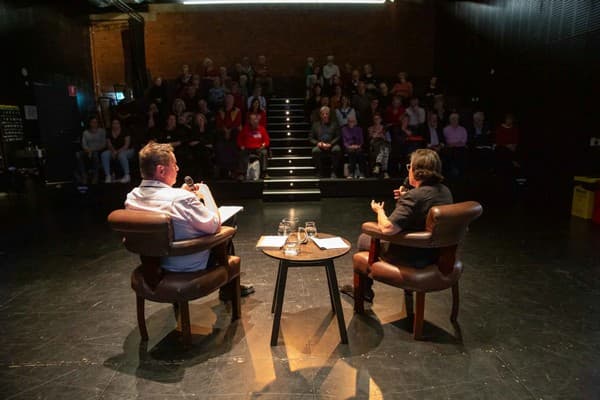
Bendigo Writers Festival became the centre of a free speech controversy last week when more than 50 writers and hosts withdrew by Friday afternoon, leading to 21 sessions being cancelled and a further eight affected. The crisis followed a decision by the Bendigo City Council to issue a code of conduct to writers two days before the festival's opening night gala. The gala was cancelled, but the truncated festival went ahead last weekend.  

Consider the following statements directly taken from the code of conduct, which I have read in full: 
  • Avoid language or topics that could be considered inflammatory, divisive, or disrespectful.
  • Ensure your content is appropriate for a general audience and sensitive to cultural, social, and personal differences.

Who gets to decide what is inflammatory, divisive or disrespectful? Who makes the decision on what is considered “appropriate for a general audience”? 

When I talk in my work about people miscarrying in emergency room toilets because there is no doctor to see them and they see a fetus floating in a toilet bowl, many would say it’s “not appropriate for a public audience”. But how can I change the system if I can’t tell the truth about the reality and horror of what I’ve seen and heard?

Writers festivals are designed to be a place where people can talk about their books, essays, plays, movies or anything else that requires putting pen to paper. 

Many of those books contain topics that may, to some, be considered controversial and therefore result in debate that may offend. This is part of living in an open society; it is constructive to have our views tested and, within reason, to listen to people who have a different (though hopefully informed) perspective. 

Debate changes minds

Indeed I have watched many authors, with whom I don’t agree, discuss topics at writers festival panels and found I’ve walked away with a different way of seeing an issue, especially when listening to people with a different cultural, religious and political background to my own, or indeed a lived experience that brings a new dimension to a debate. 

The crisis in Israel/Palestine is by no means the only controversial issue that gets people’s blood boiling.

Consider some of the debate around gender identity and trans exclusionary radical feminism (TERFs). Or around racism, and in particular, Aboriginal people being incarcerated and dying at a much higher rate than any other demographic in this stolen land. Or cultural appropriation in literature.

The code of conduct in question went against the very essence of what a writer’s festival should be; free and open debate. 

Make no mistake, free and open debate comes with limitations. We have laws that prohibit hate speech. Those regulations have been strengthened in recent times and put to the test and passed.

Codes of conduct are not a new concept for writers festivals. Melbourne Writers Festival has issued them in the past, as have others. 

The problem with the code of conduct issued to Bendigo Writers Festival participants was not just in the content (limiting) and the tone (patronising), but in the timing. 

It was sent to participants of the "La Trobe Presents" events on Wednesday. The remaining participants were sent the document on Thursday. The festival’s gala opening was on Friday. Writers and panellists were preparing to board planes when the document hit their inboxes.

There was no time to reach out to festival organisers, to have a conversation, explain issues or offence taken, and seek remediation or even potentially an apology.

I have no doubt that complaints were made to festival organisers or La Trobe University about invitations issued to controversial figures. It’s been quite a period of explosive, divisive and indeed violent rhetoric from a number of quarters.

Again, I emphasise, we live in a free and open society. If someone wants to express concern, they should have that right, as much as I have the right to sit on a stage and offer my views for the benefit of attendees.

Attempt to minimise risk backfires

The real issue here is a seemingly knee-jerk reaction and a badly worded document that left no time for engagement, issued to participants in hindsight, not at the time of invitation, leaving little room to move. As a crisis manager, this reeks of a quest to minimise risk, without considering the introduction of risk by the very action seeking to mitigate the original issue. 

I wonder whether other festivals were contacted for input or even to share existing codes of conduct, or whether anyone reached out to peak bodies like the Australian Society of Authors for review and or input. 

Irrespective, this problematic edict, issued at the 11th hour, has brought an important regional writers festival to its knees, and authors or invitees who felt they could not, in good conscience, attend have lost an invaluable opportunity to promote their work, supplement their income and engage with their peers and audiences. My heart also goes out to the many volunteers who donated their time and energy to help the festival run. 

There are no winners and it really didn’t have to be this way. Everyone has to slow down, take a breath, and stop allowing fear and/or trauma to drive knee-jerk responses that exacerbate existing tensions. And oh boy, are there tensions.

However, I’m not aware of any Australian writers festival events that have resulted in legal complaints around on-stage antisemitism or Islamophobia. These issues being singled out in the code was in itself problematic, irrespective of your view of which definition of antisemitism is most appropriate (it's a slippery little sucker and defining it is no doubt a challenge).  

Had I been included in the program, upon reading the code, I would have immediately raced to my local t-shirt printing shop and attended my panel with the words “I DID NOT SIGN THE CODE OF CONDUCT” printed across my chest, got up, and said anything I damned well pleased. Not every form of activism is the same. There is room for variation and indeed, there must be. 

And yet, even now, I see social media posts from high profile writers trying to identify authors who didn’t pull out, accusing them of crimes for which there is zero evidence.

I see people saying “Zionists have no claim or right to cultural safety”. The very people decrying the cancellation of views they support are many of the people who are looking to cancel anyone and everyone with whom they don’t agree. “This person didn’t pull out of the festival, ipso facto they’re a genocidal maniac” is nothing short of unhinged. In the words of Funkmaster Flex: do you and I’ll do me.

Free speech for Zionists

I was forced to assist in organising additional security for a small literary event at which I appeared, after one writer called a boycott against me for something I didn’t do and didn’t say, sparking a sector-wide pile-on. These are some of the same people now rallying against censorship. 

I know Jewish authors who’ve had Jewish books or publishing deals cancelled (“it’s just not a good time for Jewish stories”). I’ve fielded calls from people working in the publishing industry asking me to identify Zionists so they can avoid programming them in festivals or events (for the record, I declined, taking the time to explain what the word “Zionist” actually means beyond its bastardisation). 

Some of those who cried censorship when Khaled Sabsabi was (temporarily) cancelled as Australia’s representative to the next Venice Biennale are the same people who called for the banning of Israel’s Biennale artist last year.

My parents always taught me to behave in a way that allows you to sleep at night.

I know my moral and ethical framework. I believe in humanity and the human rights of all people. I believe in the right to free speech, within the framework of the law, and I believe in debate and discourse, even when it makes us uncomfortable, or indeed, when it hurts. 

So as I stand in solidarity with those who felt they had to take a moral stand against the nature of the document and its inclusions, as I lie my head on my pillow tonight, hoping that when it’s time to defend the free speech rights of someone with whom they don’t agree, that they live by the standards they’ve espoused this week.

I wouldn’t say I’m full to the brim with confidence, but I can hope.

You might also like
  • Social media regulation is a necessary brake on harmful speech
    Dean Sherr
  • Traditional antisemitic myths dominate online antisemitism: new study
    Deborah Stone
  • When security clashes with hospitality
    Jarod Rhine-Davis
logomark.67a07ee3
We believe in the free flow of information

Republish our articles for free, online or in print, by using our Creative Commons licence

You might also like

    Freedom Rides – Stills__MAIN___2.83.1.POST
    ReflectionArts & Culture

    Freedom Rides: Allyship for dark times

    Eliezer Rubenstein Sturgess 1
    Zoe Better pillars of light crop
    FeatureAustralia

    NDIS changes threaten disabled participation in community life

    Jarod Rhine-Davis
    Adelaide Hermann magicianHarvard_Theatre_Collection_-_Hermann_TCS_28
    FeatureArts & Culture

    Legendary magicians who made their Jewish identities disappear

    Nina Siegal

About the author

Isabelle Oderberg

Isabelle Oderberg

Isabelle Oderberg's journalism has appeared in The Age/SMH, Guardian, ABC, Meanjin and elsewhere. She also worked as a media and communications strategist across the not-for-profit sector. She is the author of Hard to Bear: Investigating the science and silence of miscarriage (Ultimo Press), and Chair of the Early Pregnancy Loss Coalition. Learn more at eplc.au.

More from the author

OpinionAustralia

The new McCarthyism: Anti-Zionist witch hunts

OpinionAustralia

‘Australian values’ – an immigration test with no answer

OpinionArts & Culture

Randa Abdel-Fattah is a perverse poster child for free speech