Published: 20 January 2026
Last updated: 21 January 2026
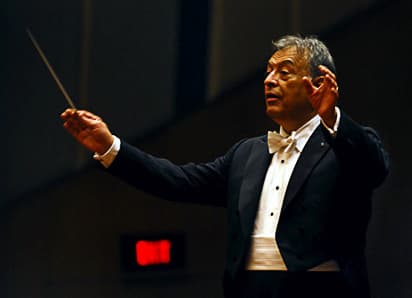
Last week, one of the most symbolically loaded voices in Israel’s cultural life broke ranks in a way that landed like a warning siren. Zubin Mehta, the legendary maestro who led the Israel Philharmonic for decades, and a conductor who rushed to Israel during the anxious days of 1967 and then led a string of “victory” concerts as a statement of solidarity, told India Today he has cancelled all his performances in Israel in protest of Prime Minister Benjamin Netanyahu’s policies regarding the Palestinians.
Mehta said he can no longer separate music from politics. Musicians, he argued, must take a stand, even on the most controversial issues, including the war involving Israel. It was a striking tonal shift from a figure who has rarely spoken in political terms, and who in the past warned about Israel’s isolation while opposing artistic boycotts and speaking of his personal identification with the country. From his seat in Los Angeles, the message sounded different: the cultural bond that once felt unconditional now comes with conditions.
Mehta’s remarks matter not only because of who he is — a global symbol of non-Jewish affinity with Israel — but because they capture the emerging logic of Israel’s boycott moment, particularly in the arts and academia. The argument is no longer simply that the government should be punished. It is that Israel itself is indivisible: that there is no meaningful separation between the politics of the Israeli government and ordinary Israelis. The bitter irony, of course, is that the people most likely to be hit first are often those most loudly opposed to government policy: artists, academics, civil society figures and cultural institutions that have spent years insisting on pluralism, dissent and self-critique.
Mehta’s decision is also a warning sign for those in Israel who assumed the ceasefire agreements would bring an easing of cultural and institutional pressure. The opposite may be true: boycotts do not always recede when the guns fall silent. They can linger, mutate, and in some arenas even accelerate — because they are powered less by a specific military operation than by a broader moral narrative that outlives any single agreement.
![[[:fr:Fez (coiffure)|Fez]] rouge à gland noir, en feutre.](/_next/image/?url=https%3A%2F%2Fjewishindependent.yourcreativeagency.com.au%2Fwp-content%2Fuploads%2F2026%2F10%2Ffez-cap-eisenkot-netanyahu.jpg&w=3840&q=75)
