Aa
  • Read, Watch, Listen
  • TJI Series
  • Community Action
  • Events
  • Zedi
Follow us and continue the conversation
  • LinkedIn
  • Instagram
  • FaceBook
  • X
  • YouTube
Test yourself with the TJI Quiz!

Adjust size of text

Aa

Follow us and continue the conversation

  • LinkedIn
  • Instagram
  • FaceBook
  • X
  • YouTube

Your saved articles

You haven't saved any articles

What are you looking for?

Original reporting, insightful analysis and diverse views, delivered straight to your inbox

  • LinkedIn
  • Instagram
  • FaceBook
  • X
  • YouTube
Your support fuels our mission to inform, entertain and inspire.

The Jewish Independent is bound by the Standards of Practice of the Australian Press Council. If you believe the Standards may have been breached, you may approach The Jewish Independent or make a complaint to the Australian Press Council in writing at www.presscouncil.org.au. The Council may also be contacted on 1800 025 712.

  • Our Story
  • Contact us
  • Our Team
  • Support us
  • Guidelines
  • Pitch your idea
  • Republishing us
  • Community Action
  • Our Awards
  • LinkedIn
  • Instagram
  • FaceBook
  • X
  • YouTube
Aboriginal FlagTorres Strait Islanders Flag

The Jewish Independent acknowledges Aboriginal and Torres Strait Islander peoples as the Traditional Owners and Custodians of Country throughout Australia. We pay our respects to Elders past and present, and strive to honour their rich history of storytelling in our work and mission.

© The Jewish Independent 2026All Rights Reserved
Website design and development by Your Creative, MelbourneTerms & ConditionsPrivacy Policy
HomeRead, Watch, ListenIsrael
ReflectionIsrael

Amid tears, the last hostage body gives Israel a moment of hope

Israel has been swept by both joy and grief at the return of the remains of Ran Gvili, a reminder of the power of humanising victims of war.
Ittay Flescher
Print this
Body of last Israeli hostage brought to Tel Aviv

People gather as vehicle, carrying the body of the last Israeli hostage remaining in Gaza Ran Gvili, arrives the Abu Kabir Forensic Institute prior to the funeral ceremony in Tel Aviv, Israel on January 26, 2026. (Photo by Mostafa Alkharouf/Anadolu via Getty Images)

Published: 27 January 2026

Last updated: 27 January 2026

I never thought I would feel joy at the announcement of a funeral, yet today is that day. It is a strange, heavy emotion shared across Israel.

The remains of Ran Gvili, the last Israeli hostage taken to Gaza on October 2023 has come home. 

The return of this final body is the culmination 843 days of one of the most remarkable civil society campaigns in Israeli history. It mobilised millions of Israelis, Jews across the world, and their allies in many governments with a singular bipartisan goal to “bring them home.” Today, that goal was realised, in full. 

Many voices had dismissed this possibility, certain that Hamas would never find or release our people and that the necessary deals would fall apart. They believed that no amount of protest or pressure could move the most right-wing government in our history, especially one so dismissive of the hostage families' pain. 

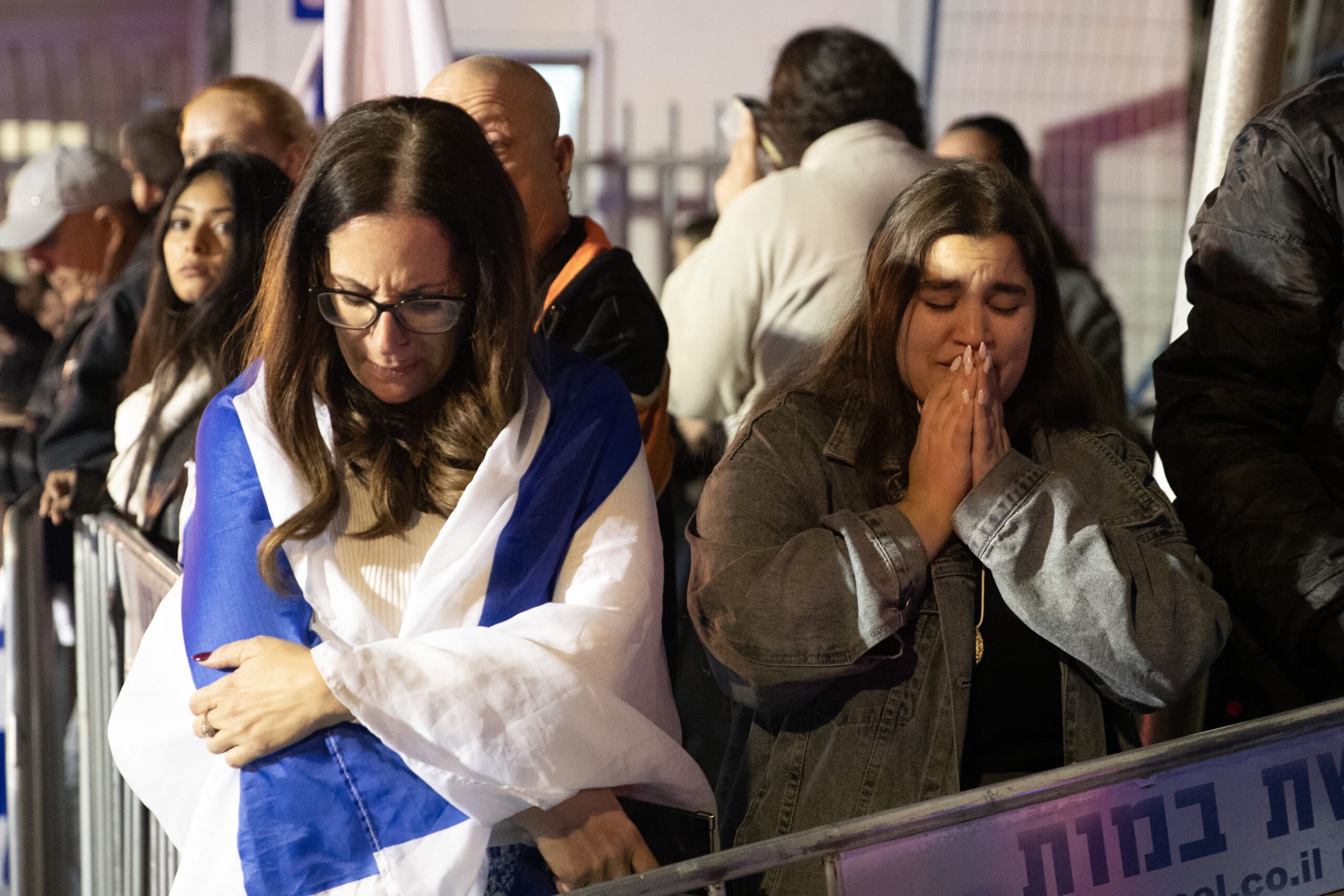
At the same time, the reality of this news is a funeral, a shiva, and a period of national mourning. In the coming days, millions of Israelis and Jews across the world will watch the funeral of Ran Givili and empathise with the nightmare of his parents, feeling their pain as they do for any friend or loved one.

That is the power of humanisation. Not just for Ran, but for all the 251 hostages and their families who suffered so much.
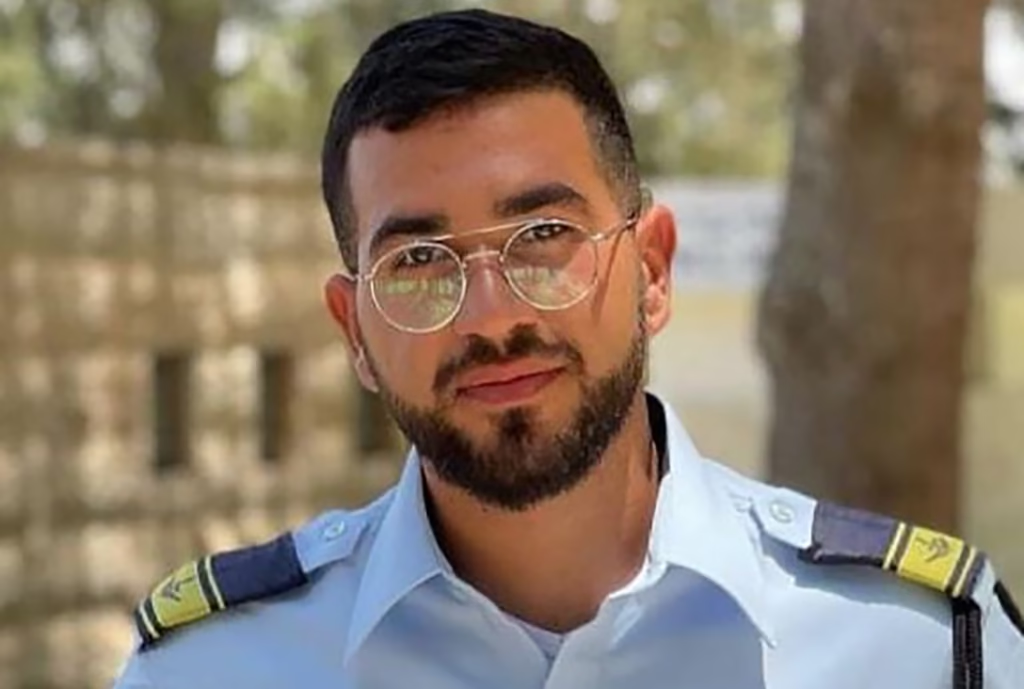
Ran Gvili (Hostages and Missing Families Forum)

As I’m processing this news, I’m returned to October 13, 2025, the day the last 20 living hostages were returned. 

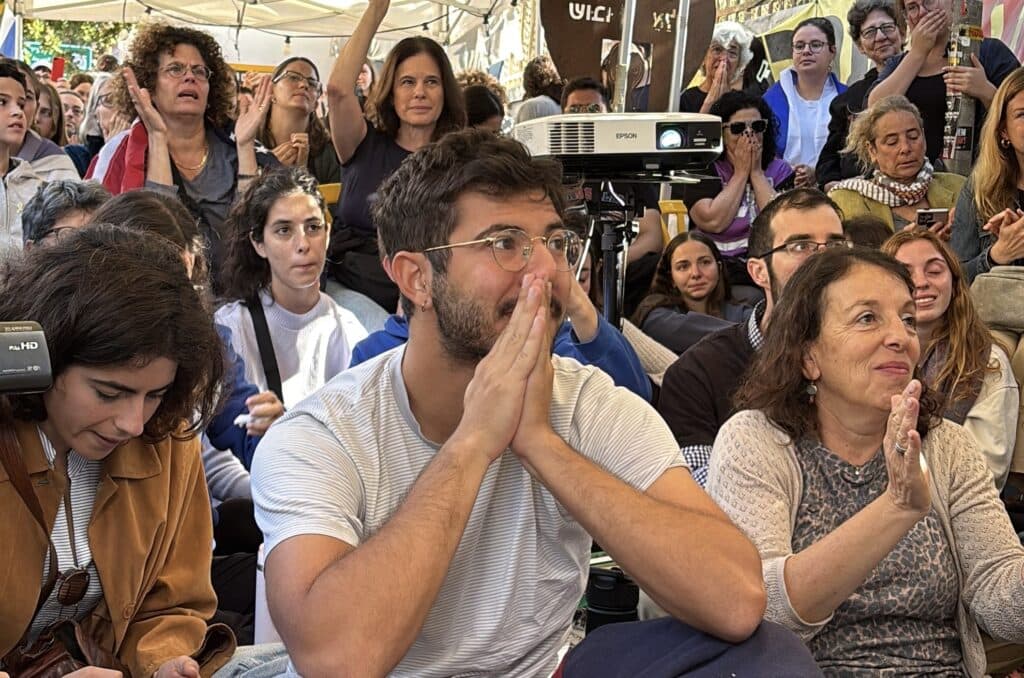
I woke before dawn that Monday to watch the live broadcast of the Israeli hostages returning home from Gaza. By eight in the morning, I was at the Hostage Families’ Tent in Jerusalem, a place that had been the location of a determined and anguished protest for two long years. More than a thousand people had taken the day off work to be there, joined in spirit by countless others watching from Hostage Square in Tel Aviv or from screenings across the country. The atmosphere was electric, like a World Cup final, only the stakes were infinitely higher.

Each time the camera revealed a familiar face, the crowd erupted. None of us had met these people, yet it felt as though our own sons and daughters were coming home. That’s what watching thousands of hours of footage about these people did to us. Whether we saw them on billboards, in newspapers, on TV or on our phones, a whole nation came to know the hostages’ parents, siblings, school friends, kindergarten teachers, and even their favourite football teams. They had become part of our extended national family. When they finally returned from the darkness, the joy and relief that swept through the country were those of a people reunited.

First came Eitan Mor, and the crowd burst into applause. Then came cheers for Gali and Ziv Berman, followed by an audible sigh of relief when Guy Gilboa Dalal appeared on screen. 

The loudest roar was reserved for the moment when Matan Zangauker fell into the arms of his lion-hearted mother, Einav. For two years, she had been the public face of the hostages’ struggle, blocking roads, giving thousands of interviews, and even locking herself in a cage suspended over a Tel Aviv highway to demand the government bring her son home. When she finally embraced him, she wept the words every Israeli longed to say: “Haim sheli, haim sheli, ein milchama” — “My life, my life, there is no more war.”

And so, on that day back in October when the last living hostages came home and again today when the last coffin was returned, our nation exhaled. The lesson was clear: empathy, our capacity to feel another’s pain and joy as our own, was the force that had unified us. And it’s also the force that can finally end this war. 

As I watched the news of Ran Givili’s body draped in an Israeli flag in Gaza, I was deeply moved by the soldiers singing Hatikvah as they saluted the coffin. At the same time, I noticed the buzzing of the drone overhead, a sound that accompanies so many of the videos I see from Gaza, which for Palestinians signals the fear of an imminent attack. Around the scene where the soldiers were singing in tears at Ran’s return, there were destroyed buildings as far as the eye can see. Ran’s body was found in a mass grave of 250 people in a Gaza City cemetery. Of the people buried there, I know none of their names, their hopes, dreams, or if the families who could mourn them are even alive. Yet I feel their pain.  

Acknowledging the presence of loss and grief from Gaza to Jerusalem is essential if we are ever to build a shared future. Humanisation is not a sentimental goal; it is a necessary, realistic tool for political survival.

 Israeli campaigners watch the release of the last living hostages on October 13 2025 (Ittay Flescher)
 Israeli campaigners watch the release of the last living hostages on October 13 2025 (Ittay Flescher)

The path to peace is brutal, demanding painful compromises on many core beliefs. No leader can ask their public to make such sacrifices without a fundamental shift in perception. That shift requires us to apply the same intense, personal lens we used for our hostages to the suffering of our homeless neighbours in Gaza and to those displaced by settler violence in the West Bank. 

When a critical mass of Israelis can internalise the immense, generation-deep loss of Palestinian families in Rafah and Khan Younis the same way we internalised the grief of Ran Gvili’s parents, nothing will be the same. For this to happen, Palestinians too must come to see the pain of Israelis, acknowledging that our fate is to till this soil, to grow the olives and harvest the strawberries of this land together.

The next step toward peace isn't hope; it's the difficult, necessary work of loving our neighbour as we do ourselves. Only this way can the memory of all who suffered so much be honoured in a manner that allows this land to be shared in peace.

You might also like
  • Arab women topple politician accused of sexual harassment in landmark case
    Ben Lynfield
  • Netanyahu’s lightning UN visit reveals his growing isolation
    Shahar Burla
  • The leadership a wounded society needs
    Esther Takac
logomark.67a07ee3
We believe in the free flow of information

Republish our articles for free, online or in print, by using our Creative Commons licence

You might also like

    Knesset divided
    Israel Votes 2026ExplainerIsrael

    Israel election explainer: the main parties

    Shahar Burla 2
    Netanyahu
    Israel Hamas WarFeatureIsrael

    New evidence Netanyahu was warned about October 7

    Shahar Burla 2
    Fauda
    Israel Hamas WarAnalysisArts & Culture

    Fauda and the illusion of vengeance

    Ittay Flescher 1

About the author

Ittay Flescher

Ittay Flescher

Ittay Flescher is the Jerusalem Correspondent for The Jewish Independent. For over twenty years, he has worked as an educator, journalist, and peacebuilder in Melbourne and Jerusalem. His book, The Holy and the Broken: A Cry for Israeli-Palestinian Peace from a Land that Must Be Shared, was longlisted for the 2025 Walkley Book Awards.

More from the author

AnalysisArts & Culture

Fauda and the illusion of vengeance

AnalysisIsrael

What ‘Zionism’ means in Israel:  it’s not what you think

AnalysisIsrael

From haven to hotbed: how Israel’s perception of Australia has changed

FeatureIsrael

New wave of Russian-speaking migrants may be key to Israel’s future

Comments

No comments on this article yet. Be the first to add your thoughts.