Aa
  • Read, Watch, Listen
  • TJI Series
  • Community Action
  • Events
  • Zedi
Follow us and continue the conversation
  • LinkedIn
  • Instagram
  • FaceBook
  • X
  • YouTube
Test yourself with the TJI Quiz!

Adjust size of text

Aa

Follow us and continue the conversation

  • LinkedIn
  • Instagram
  • FaceBook
  • X
  • YouTube

Your saved articles

You haven't saved any articles

What are you looking for?

Original reporting, insightful analysis and diverse views, delivered straight to your inbox

  • LinkedIn
  • Instagram
  • FaceBook
  • X
  • YouTube
Your support fuels our mission to inform, entertain and inspire.

The Jewish Independent is bound by the Standards of Practice of the Australian Press Council. If you believe the Standards may have been breached, you may approach The Jewish Independent or make a complaint to the Australian Press Council in writing at www.presscouncil.org.au. The Council may also be contacted on 1800 025 712.

  • Our Story
  • Contact us
  • Our Team
  • Support us
  • Guidelines
  • Pitch your idea
  • Republishing us
  • Community Action
  • Our Awards
  • LinkedIn
  • Instagram
  • FaceBook
  • X
  • YouTube
Aboriginal FlagTorres Strait Islanders Flag

The Jewish Independent acknowledges Aboriginal and Torres Strait Islander peoples as the Traditional Owners and Custodians of Country throughout Australia. We pay our respects to Elders past and present, and strive to honour their rich history of storytelling in our work and mission.

© The Jewish Independent 2026All Rights Reserved
Website design and development by Your Creative, MelbourneTerms & ConditionsPrivacy Policy
HomeRead, Watch, ListenIsrael
TJI WrapIsrael

Settlers, reservists implicated in killing West Bank Palestinians

Violence in the West Bank has intensified in the past week, resulting in the deaths of six Palestinians and growing human rights concerns.
Shahar Burla
Print this
West bank settler violence Abu Falah killings

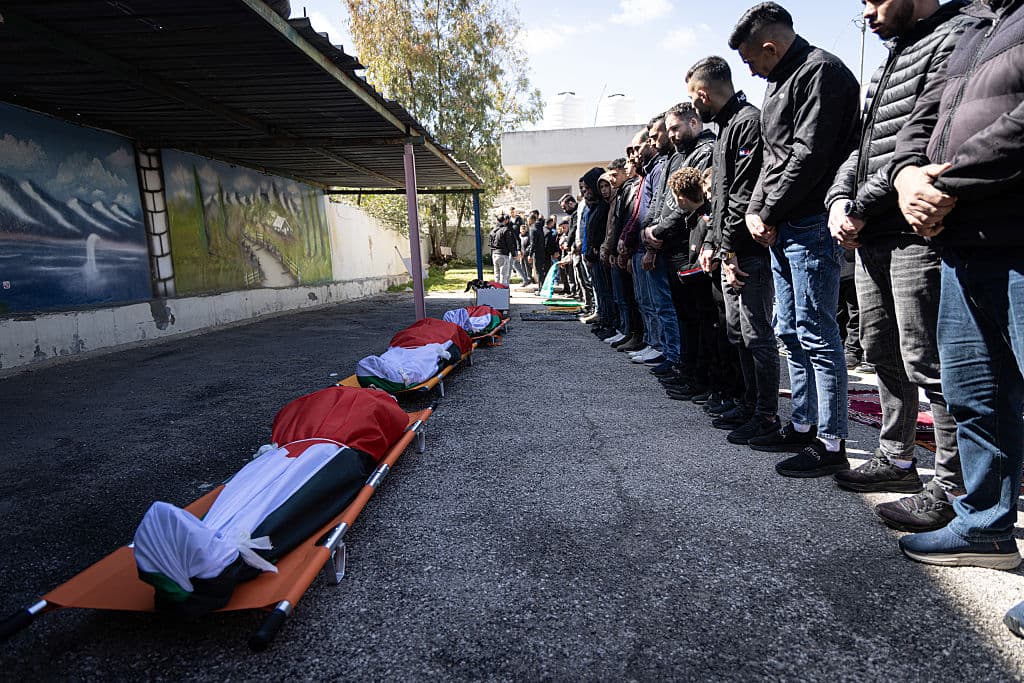
Mourners say prayers by the bodies of three Palestinians killed in a reported attack by Israeli settlers on March 8, 2026. The dead were identified as Thaer Farouq Hamayel, 24, Farea Jawdat Hamayel, 57, and Mohammad Hassan Murra, 55. ( Faiz Abu Rmeleh / Middle East Images / AFP via Getty Images)

Published: 12 March 2026

Last updated: 12 March 2026

While international attention has largely shifted to the escalating conflict between Israel, the United States and Iran, violence in the  West Bank has intensified drawing growing concern from human rights groups, Palestinian officials and parts of Israel’s own security establishment.

In the past week alone, at least six Palestinians have died in a series of incidents involving Israeli settlers and Israeli forces across the West Bank. Several of the killings occurred during confrontations over agricultural land, olive groves and grazing areas — long-standing flashpoints in the Israeli-Palestinian conflict.

Below is an overview of what has happened, in the last week, the incidents that triggered the latest wave of violence, and the wider debate over the role of settlers, soldiers and Israeli authorities in the escalating tensions.

A week of deadly confrontations

The latest deaths occurred on Saturday night in the village of Abu Falah, northeast of Ramallah. According to Palestinian reports and witness accounts, the incident began when villagers confronted a group of masked Israeli settlers who had entered nearby olive groves and were allegedly vandalising trees.

Residents said dozens of armed settlers later entered the village, leading to a violent confrontation. Two Palestinians, Thaer Faruq Hamayel, 30, and Fara Jawdat Hamayel, 57, were shot dead during the clashes. Both men were reportedly killed by gunshots to the head.

Israeli security forces arrived at the scene some time later. According to Palestinian medical authorities, soldiers fired large quantities of tear gas into the village’s narrow streets during the confrontation. Muhammad Hassan, a 54-year-old father of four, later died after inhaling the gas. Seven additional residents were reportedly wounded, including several people with gunshot injuries.
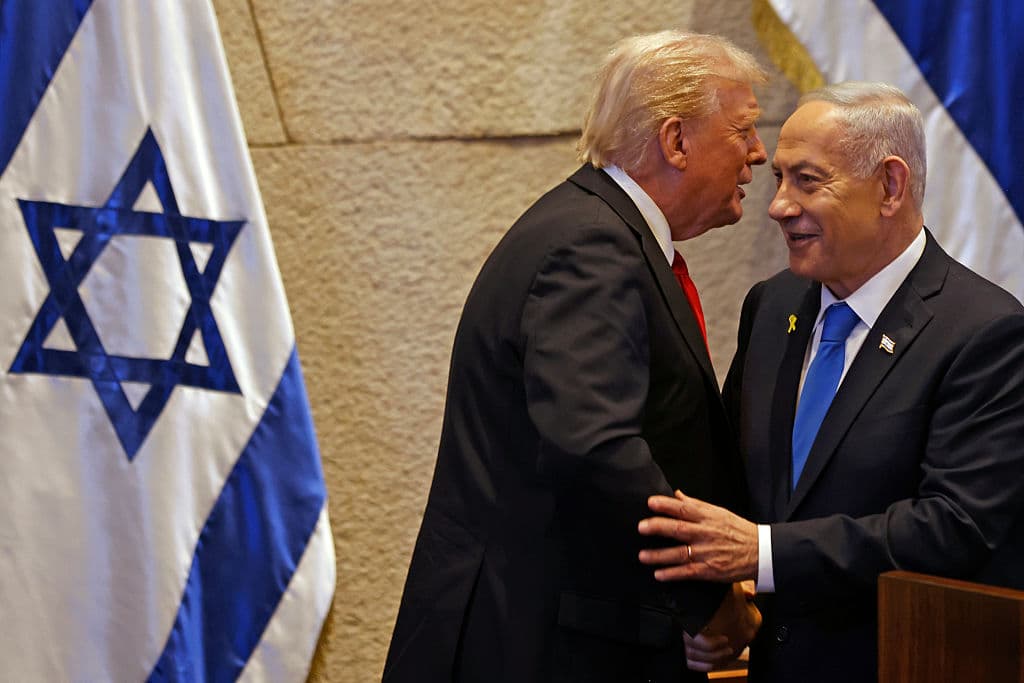
The Israeli military confirmed that an investigation had been opened into the incident. The commander of Israel’s Central Command, Maj. Gen. Avi Bluth, described the killings as “unacceptable” and said there would be “zero tolerance for civilians who take the law into their own hands”. “We are working together with all security agencies to quickly reach those responsible and bring them to justice,” Bluth said in a statement.

The Abu Falah killings were only the latest in a string of violent incidents across the West Bank in recent days.

Earlier in the week, two Palestinian brothers were shot dead in the northern West Bank village of Qaryut, near Nablus. According to Palestinian authorities, Muhammad Taha Muammar, 52, and Fahim Taha Muammar, 48, were killed after confronting settlers who had reportedly entered their olive grove with heavy machinery.

Witnesses said tensions escalated after residents attempted to force a bulldozer out of the grove. Israeli authorities later confirmed that a reservist soldier suspected of carrying out the shooting had his weapon confiscated and was being investigated by military police.

Another fatal incident took place on Saturday in the South Hebron Hills, where Palestinian officials say a settler serving in an Israeli reserve defence unit opened fire on two brothers near the hamlet of Wadi al-Rakhim.

One of the brothers, Amir Muhammad Shanaran, 27, was killed. The second, Khaled Shanaran, was critically wounded.

Witnesses said the confrontation began after settlers brought livestock into privately owned Palestinian fields near the family’s home. When villagers attempted to drive the herd away, a man wearing an Israeli army uniform reportedly opened fire.

Footage from the aftermath of the shooting circulated widely online, appearing to show a man in military uniform holding an assault rifle near the wounded victim. The Israeli military confirmed that a reservist soldier had fired during the incident and said military police had opened an investigation.

Settlers, reservists and the blurred lines of authority

Several of the recent incidents have drawn attention because the shooters were reportedly settlers serving in Israeli reserve units.

In recent years Israel has expanded the role of regional defence battalions, reserve units often made up largely of settlers who live in nearby communities. These units are designed to provide rapid security responses in the event of attacks, particularly in isolated parts of the West Bank.

However critics argue that the system has blurred the line between civilian settlers and soldiers. Human rights organisations say some settlers serving in such units have acted in ways that resemble vigilante militias. According to testimonies cited by Israeli advocacy group Breaking the Silence, some reserve units have been involved in confrontations with Palestinians during land disputes or agricultural clashes. The organisation said settler attacks have increased sharply since the outbreak of the war in Iran.

“As often happens when media attention shifts, Israel seized the moment to intensify its attacks against Palestinians,” the group said in a statement.

Israeli authorities have acknowledged several of the recent incidents and opened investigations. Military police are examining at least two of the shootings involving reservist soldiers, including the killings in Qaryut and Wadi al-Rakhim. Yet critics argue that prosecutions for settler violence remain rare.

Israeli rights group Yesh Din, which monitors law enforcement regarding settlers, has long reported that the majority of complaints filed by Palestinians about settler violence are eventually closed without indictment.

Land, conflict and the widening political debate

Many of the recent confrontations occurred around farmland, particularly olive groves, which have become recurring flashpoints across the West Bank. Olive cultivation is a major source of income for many Palestinian villages, and disputes frequently arise when settlers enter or claim land near Palestinian agricultural areas.

Human rights organisation B’Tselem said settlers have increasingly used tactics such as grazing livestock on cultivated fields, destroying crops, vandalising water infrastructure and seizing privately owned land. “Settlers deliberately graze livestock in Palestinians’ cultivated fields, destroy crops and stored food, steal livestock, and vandalise solar panels and water tanks,” the organisation said in a statement this week.

Critics argue that such incidents are part of a broader pattern of displacement in parts of the West Bank, particularly in rural areas such as the South Hebron Hills and Masafer Yatta.

The United Nations has also reported a sharp rise in settler violence since the Hamas attacks of October 7, 2023 and the subsequent Gaza war. According to Palestinian officials, at least 40 Palestinians have been killed by settlers since that date.

Some Israeli political figures have also spoken out about the latest events. Arab-Israeli MK Ayman Odeh said the violence reflects what he described as a broader political agenda within Israel’s far-right governing coalition. “Gangs of settlers move from village to village, sometimes alongside the army, and kill Palestinians simply because they are Palestinians,” Odeh wrote on social media. He argued that while the war with Iran may dominate headlines now, the underlying conflict in the West Bank continues to intensify.

For Israeli authorities, the situation is more complex. The military insists that it condemns all forms of violence by civilians and says investigations are underway into the recent killings. At the same time, the Israeli army continues to conduct operations across the West Bank. Over the weekend, the military said it carried out raids in 13 villages, arresting several suspects and seizing weapons including improvised firearms and knives.

As the regional conflict with Iran unfolds, the question facing policymakers and diplomats is whether the surge in violence in the West Bank represents a temporary escalation,or a deeper shift in the dynamics of the Israeli-Palestinian conflict.

For now, however, the violence on the ground shows little sign of subsiding. And with global attention focused elsewhere, the situation in the West Bank may be evolving largely outside the international spotlight.

READ MORE 

Israeli settlers and soldiers kill three Palestinians in West Bank village (The Guardian) 

Israeli settlers kill three Palestinians in West Bank, Palestinian officials say (Haaretz) 

IDF investigating as Palestinian man shot dead in southern West Bank (Times of Israel) 

Editorial: While all eyes are on Iran, Jewish terrorism is rising in the West Bank(Haaretz) 

You might also like
  • ‘Israel is systemically eliminating Palestinian collective life’:  B’Tselem
    Deborah Stone
  • We must not look away from settler violence in the West Bank
    The Jewish Independent
  • IDF shuts down Palestinian agriculture after settler disruption
    Ben Lynfield
logomark.67a07ee3
We believe in the free flow of information

Republish our articles for free, online or in print, by using our Creative Commons licence

You might also like

    Arab Israeli Palestinian election vote
    Israel Votes 2026FeatureIsrael

    Fear of Netanyahu victory may drive big surge in Palestinian voter turnout

    Ben Lynfield
    Segalovitz Abbas
    Israel Votes 2026AnalysisIsrael

    Segalovitz decision to join Arab party is a paradigm change for Israel

    Eetta Prince-Gibson
    Woman with land and houses behind her
    NewsAustralia

    Australia to increase sanctions against West Bank settlements

    Deborah Stone 2

About the author

Shahar Burla

Shahar Burla

Dr Shahar Burla is a Sydney-based researcher, lecturer and Contributing Editor of TJI. Shahar holds a Master’s degree in political science from Hebrew University and a PhD in political science from Bar-Ilan University. He is the author of Political Imagination in the Diaspora: The Construction of a Pro-Israeli Narrative (2013) and co-editor of Australia and Israel: A Diasporic, Cultural and Political Relationship (2015).

More from the author

FeatureIsrael

New evidence Netanyahu was warned about October 7

OpinionIsrael

The Altalena should be a warning, not a political weapon

AnalysisIsrael

Who is Ofer Winter and could he upset Netanyahu’s election?

AnalysisIsrael

Bennett’s balancing act: can he win over the right without losing the centre?

Comments

No comments on this article yet. Be the first to add your thoughts.