Aa
  • Read, Watch, Listen
  • TJI Series
  • Community Action
  • Events
  • Zedi
Follow us and continue the conversation
  • LinkedIn
  • Instagram
  • FaceBook
  • X
  • YouTube
Test yourself with the TJI Quiz!

Adjust size of text

Aa

Follow us and continue the conversation

  • LinkedIn
  • Instagram
  • FaceBook
  • X
  • YouTube

Your saved articles

You haven't saved any articles

What are you looking for?

Original reporting, insightful analysis and diverse views, delivered straight to your inbox

  • LinkedIn
  • Instagram
  • FaceBook
  • X
  • YouTube
Your support fuels our mission to inform, entertain and inspire.

The Jewish Independent is bound by the Standards of Practice of the Australian Press Council. If you believe the Standards may have been breached, you may approach The Jewish Independent or make a complaint to the Australian Press Council in writing at www.presscouncil.org.au. The Council may also be contacted on 1800 025 712.

  • Our Story
  • Contact us
  • Our Team
  • Support us
  • Guidelines
  • Pitch your idea
  • Republishing us
  • Community Action
  • Our Awards
  • LinkedIn
  • Instagram
  • FaceBook
  • X
  • YouTube
Aboriginal FlagTorres Strait Islanders Flag

The Jewish Independent acknowledges Aboriginal and Torres Strait Islander peoples as the Traditional Owners and Custodians of Country throughout Australia. We pay our respects to Elders past and present, and strive to honour their rich history of storytelling in our work and mission.

© The Jewish Independent 2026All Rights Reserved
Website design and development by Your Creative, MelbourneTerms & ConditionsPrivacy Policy
HomeRead, Watch, ListenIsrael
FeatureIsrael

The forgotten Palestinians displaced in West Bank camp destruction

A year and a half ago, the IDF destroyed the Jenin camp, a hotbed of terrorism. Thousands of civilians remain homeless as a result
Ben Lynfield
Print this
Jenin refugee expulsion

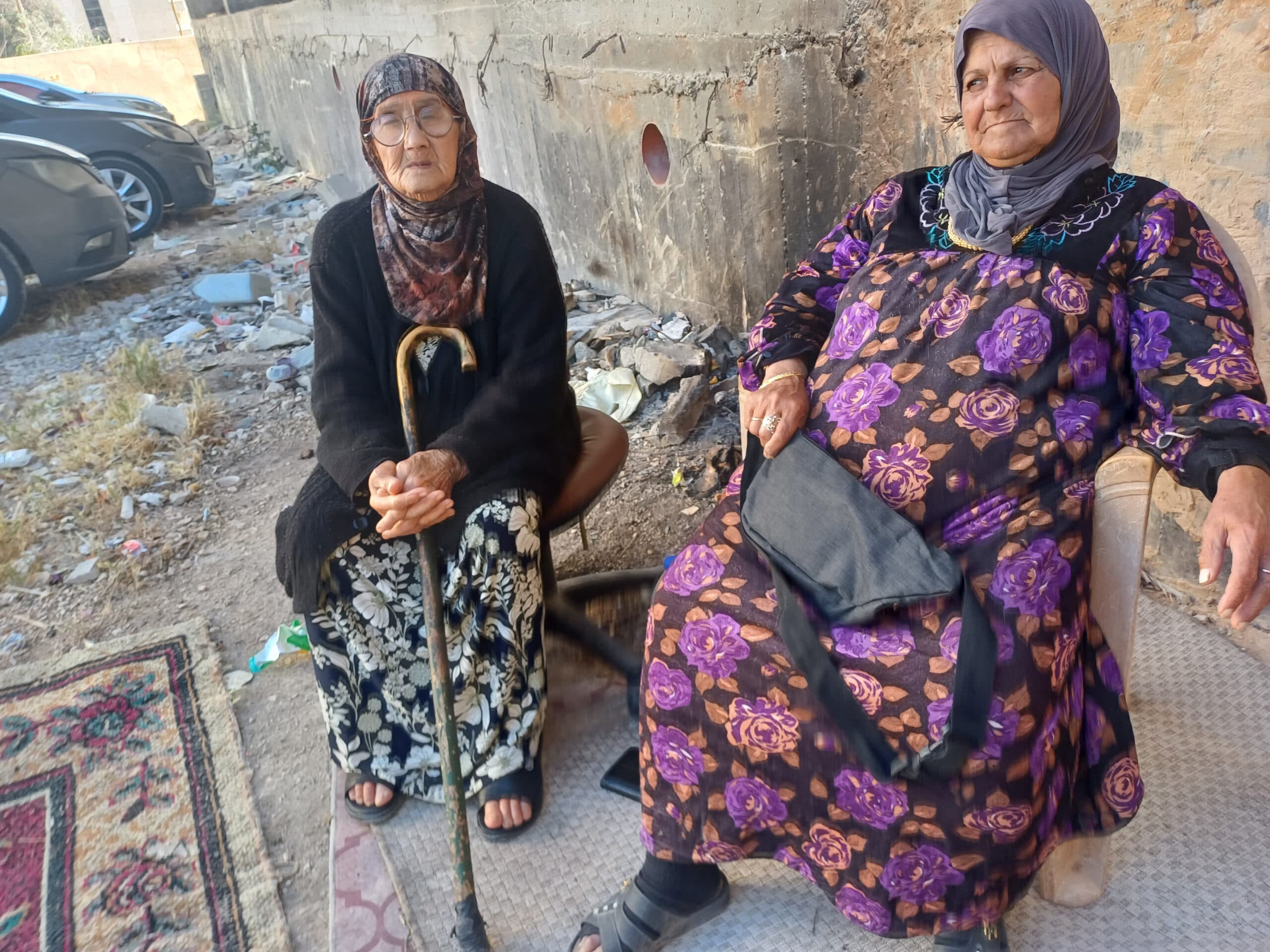
Hosniya Barakat, 75, (right) and her friend Fatima Abu Jas, in her ’90s. Both were expelled by the IDF from Jenin camp (Ben Lynfield)

Published: 11 June 2026

Last updated: 11 June 2026

When the IDF ordered all residents of Jenin refugee camp to leave after capturing it in January 2025, Mohammed Matahneh, like many of the estimated 20,000 people in the camp, assumed it would be for a few days.

“The Jews didn’t tell us we’d be able to come back tomorrow or the day after. But we thought we’d be able to return in a few days,” the Palestinian carpenter told The Jewish Independent.

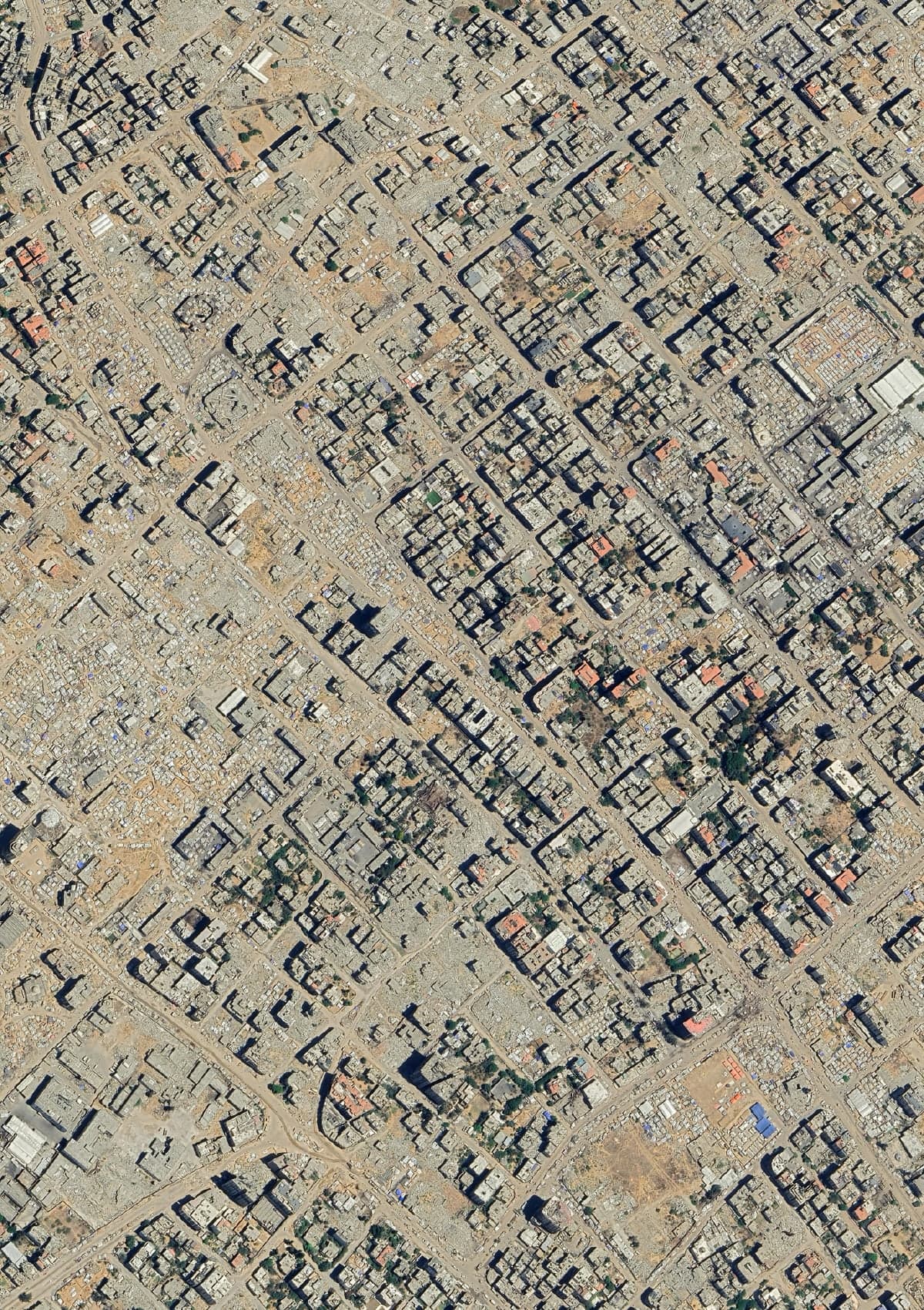
But Israel had other plans for the camp, which was known for its heated, violent and protracted resistance to occupation: emptying it and destroying it. The IDF expelled the entire camp, causing the refugees to scatter to wherever they could put a roof over their heads across the Jenin governorate.

Israeli bulldozers have since levelled most of the camp, according to the Palestinian Authority governor of the Jenin district, Kamal Abu Rub. The IDF has not admitted to levelling the camp but has stated it destroyed “a number” of structures in order to build access roads.

That the army has razed the area is a very strong indication that we’re dealing with a war crime rather than a temporary evacuation

Human rights lawyer Michael Sfard

Human Rights Watch and other human rights groups have described the destruction of the Jenin camp as a war crime, while Israeli authorities regard it as a successful blow in removing a hotbed of violence.

The dismantling of the Jenin camp has attracted little international attention with wars raging in Iran, Lebanon and Gaza. The international community, preoccupied with the Strait of Hormuz and the price of oil, has little interest in refugees who have no money, minerals, technology or strategic value.
The human cost

For those displaced from the Jenin camp, January 2025 was only the beginning. They face homelessness, overcrowding and often hunger.

Hundreds have taken refuge at the dormitories of the Arab American University in Zababdeh near Jenin, where whole families are packed into rooms designed to accommodate a single student. Everybody there mentions the problems with electricity. The bill is twice what they paid in the camp and those who cannot pay are cut off.

Hosniya Barakat, 75, is lucky. Relatives in Jordan gave her money to open a small grocery store, from which she takes the pulse of the displaced. Most are unemployed and they gather outside the store to chat with her. To those who cannot pay, she provides food on credit, relying on customers to remember how much they owe. “I’ve seen many wars, but this is the worst since 1967,” she says. “Some people here have nothing to eat.”

“We’re lucky that we haven’t gone crazy, that people kept their sanity after all they’ve been through. Ever since everyone left their homes, they are in a panic,“ she said.

The refugees are angry with the Palestinian Authority (PA), which they say has not helped them at all. They also view the PA, which had been eclipsed by the armed militants in the camp, as a collaborator with Israel for waging a crackdown just before the IDF invaded.

“People got no attention from the PA and the people who live near here were helped only in the beginning,” says Barakat. She said the only reason they are able to survive is “because we help each other.” Others also highlighted an ethos of mutual assistance that keeps them going.

Terrorists were exploiting the terrain, the dense infrastructure within the camps and the civilian population as a human shield

IDF statement on Jenin evacuation

Murad Shadi, who is well-known as the father of a “martyr” because his 18-year-old son Ashraf was killed in an Israeli air strike a year and a half ago, looked dazed. “Our situation is very difficult economically and psychologically. That’s what happens when you lose your place. It’s very hard for us. We want to go back to our homes and our memories,” he said.

Shadi, a construction worker, said that some days he has work, and others he does not. “When there’s work we work,” he said.

What disturbs him the most, however, is worry for his sons, one of whom is in an Israeli jail and the other in a PA facility. “The Israelis use torture but the PA is worse,” he says.

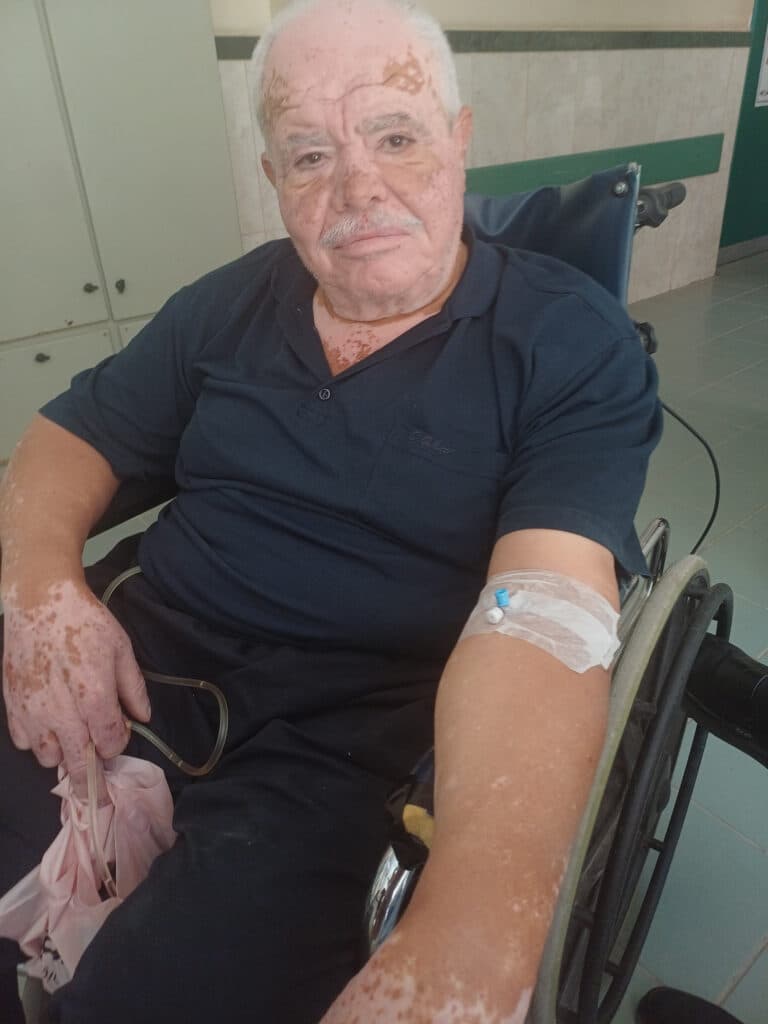
Mohammed Matahneh, 67, who is wheelchair bound from a neurological ailment, believes his medical problem was triggered by the “psychological pressure” of being forced from his home. His home in the "camp" was a four-storey building with apartments for each of his sons. Now each of those sons is in a different village. All he wants, he said, is to be able to walk again and to return to what is left of the camp. “If I can have one metre of the camp, I’ll build a house – all my memories are there,” he says.

“The camp is your birthplace, the place of your life,” he adds. “You live there 50, 60 years and then someone says ‘out’. How would you feel?”

The Jewish Independent

War crime or legitimate response to terrorism?

Operation Iron Wall, which destroyed the Jenin camp, was launched after a surge in Palestinian terrorism, including a shooting near Kedumim settlement that killed three Israelis on January 6, 2025. The IDF described it as a means of quelling the violence.

However, some analysts say the real motive is to redraw the map of the northern West Bank – without refugee camps – to facilitate permanent IDF control, and the building of new Israeli settlements. They hope that without the refugee camps the issue of descendants of Palestinian refugees from 1948 and their main advocate, the UN refugee agency for Palestinians, UNRWA, will lose impact.

Six new settlements are due to be established in the Jenin area according to a cabinet decision in March and the army has seized private land inside the Jenin city boundaries to establish one of the bases to protect them. The planned base violates existing agreements for Palestinian self-rule in the area – but that is not an issue in Israel.

UNRWA’s tally indicates that approximately 33,000 Palestinians from Jenin camp, Tulkarem camp and Nur al-Shams camp, all in the northern West Bank, are now displaced from their own refugee camps. Yossi Kuperwasser, a retired Brigadier General who heads the Jerusalem Institute for Strategy and Security, a right-wing think tank, does not believe the operation amounts to collective punishment, but says the mass expulsion was undertaken because “the terrorist actors gained admiration and perhaps cooperation from the population”.

As for those who are homeless, he says after being expelled from Jenin camp, he says, “It is impossible to know whether they will return, when or how.”

Nor would the refugees have much to return to. According to Abu Rub, the PA governor, “Jenin camp is mostly destroyed. No camp residents are there, only the Israeli army.”

The IDF did not respond to a query on whether there is any return date for the displaced.

Prominent human rights lawyer Michael Sfard says the expulsion and non-return of the inhabitants of Jenin refugee camp “definitely looks like a war crime and may amount to a crime against humanity depending on the size of the transfer and given that no assurances have been provided [of return].”

“That the army has razed the area is a very strong indication that we’re dealing with a war crime rather than a temporary evacuation,” Sfard said.

The IDF says its operations in the area aim to thwart the reemergence of “terrorist infrastructure“. Operation Iron Wall was launched “based on the understanding that terrorists were exploiting the terrain, the dense infrastructure within the camps and the civilian population as a human shield,” the IDF said, noting that the IDF “makes efforts to minimise disruptions to the daily lives of the civilian population.”

The rationale is the same that was used to justify the level of destruction in Gaza after the October 7 Hamas attack.  

Political scientist Menachem Klein says the displacement of Palestinians and eradication of most of Jenin camp are the prototype for applying the Gaza model in the occupied West Bank. “Israel has expelled 30,000 Palestinians and does not intend to allow their return. It’s the same method as the Gaza Strip. You create a zone clean of Palestinians,” said Klein, emeritus professor of political science at Bar-Ilan University.

The Palestinian Authority denies it is unsympathetic to the displaced population.

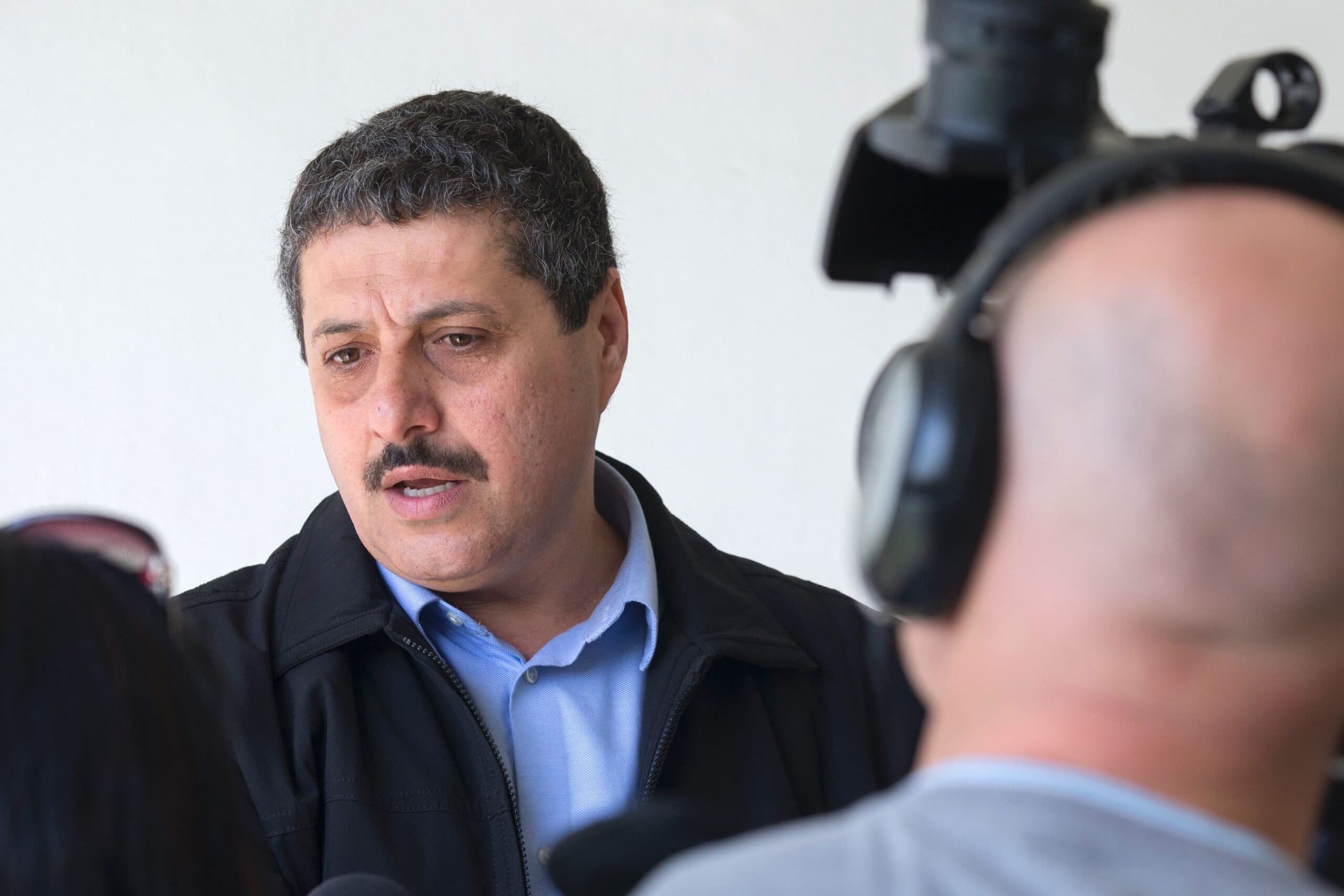
“No one has forgotten the existence of the people from Jenin Refugee camp, they are an integral part of us,” says Jenin municipality director-general, Mahmoud Assaf. “But the Palestinian Authority is suffering from years of economic crisis and doesn’t have money. The municipality is part of the authority. We have no money. How can we help?”

For the refugees, caught between Israel's occupation and the PA's inaction, there is little hope. "You go to sleep wondering how you’ll bring bread tomorrow,” says Hala, a 23-year-old single mother supporting her young children and her infirm mother, who has stopped speaking and declined physically since the shock of leaving the camp.

“If I think about what will happen I feel very bad. There is no future. We live day by day. Today is no different than yesterday.”

You might also like
  • Israel election explainer: the main parties
    Shahar Burla
  • Sanctioning settlements is a defence of Israel, not an attack
    Elisheva Madar
  • Sanctions must influence, not just perform disapproval
    Adam Slonim
logomark.67a07ee3
We believe in the free flow of information

Republish our articles for free, online or in print, by using our Creative Commons licence

You might also like

    Btselem
    NewsIsrael

    ‘Israel is systemically eliminating Palestinian collective life’:  Israeli human rights report

    Deborah Stone 1
    Rozana Beit Oula
    PeacebuildingOpinionIsrael

    Peacebuilding through the eyes of a sceptic

    Ron Finkel
    Woman with land and houses behind her
    NewsAustralia

    Australia to increase sanctions against West Bank settlements

    Deborah Stone 2

About the author

Ben Lynfield

Ben Lynfield

Ben Lynfield covered Israeli and Palestinian politics for The Independent and served as Middle Eastern affairs correspondent at The Jerusalem Post. He writes for publications in the region and has contributed to the Christian Science Monitor, Foreign Policy and the New Statesman.

More from the author

FeatureIsrael

Fear of Netanyahu victory may drive big surge in Palestinian voter turnout

NewsIsrael

Abuse by IDF soldiers humiliates Muslim Palestinians

OpinionIsrael

Qusra siege exposes shared agenda of IDF and settler extremists

AnalysisIsrael

IDF ordered to evict West Bank camp in election show of strength

Comments1

  • Avatar of Judy

    Judy12 June at 01:28 pm

    Heartbreaking.