Aa
  • Read, Watch, Listen
  • TJI Series
  • Community Action
  • Events
  • Zedi
Follow us and continue the conversation
  • LinkedIn
  • Instagram
  • FaceBook
  • X
  • YouTube
Test yourself with the TJI Quiz!

Adjust size of text

Aa

Follow us and continue the conversation

  • LinkedIn
  • Instagram
  • FaceBook
  • X
  • YouTube

Your saved articles

You haven't saved any articles

What are you looking for?

Original reporting, insightful analysis and diverse views, delivered straight to your inbox

  • LinkedIn
  • Instagram
  • FaceBook
  • X
  • YouTube
Your support fuels our mission to inform, entertain and inspire.

The Jewish Independent is bound by the Standards of Practice of the Australian Press Council. If you believe the Standards may have been breached, you may approach The Jewish Independent or make a complaint to the Australian Press Council in writing at www.presscouncil.org.au. The Council may also be contacted on 1800 025 712.

  • Our Story
  • Contact us
  • Our Team
  • Support us
  • Guidelines
  • Pitch your idea
  • Republishing us
  • Community Action
  • Our Awards
  • LinkedIn
  • Instagram
  • FaceBook
  • X
  • YouTube
Aboriginal FlagTorres Strait Islanders Flag

The Jewish Independent acknowledges Aboriginal and Torres Strait Islander peoples as the Traditional Owners and Custodians of Country throughout Australia. We pay our respects to Elders past and present, and strive to honour their rich history of storytelling in our work and mission.

© The Jewish Independent 2026All Rights Reserved
Website design and development by Your Creative, MelbourneTerms & ConditionsPrivacy Policy
HomeRead, Watch, ListenIsrael
InterviewIsraelZedi

Jewish and Palestinian university students meet in the middle

A program in Israel and the US brings Palestinian and Israeli students together to talk. After the collapse of interfaith programs in Australia, is this a model that could work here?
Gideon Cohen
Print this
AL4EP185-Elitzur-Bar-Asher-Siegal-Featured-Image

Published: 27 January 2026

Last updated: 17 February 2026

Two months after October 7, Tel Aviv University hosted a large-scale, student-led ‘hackathon’ – an event where people rapidly develop innovative solutions to major issues. Titled ‘The Day After,’ the event had students brainstorm answers to Israel’s future, post-war problems.

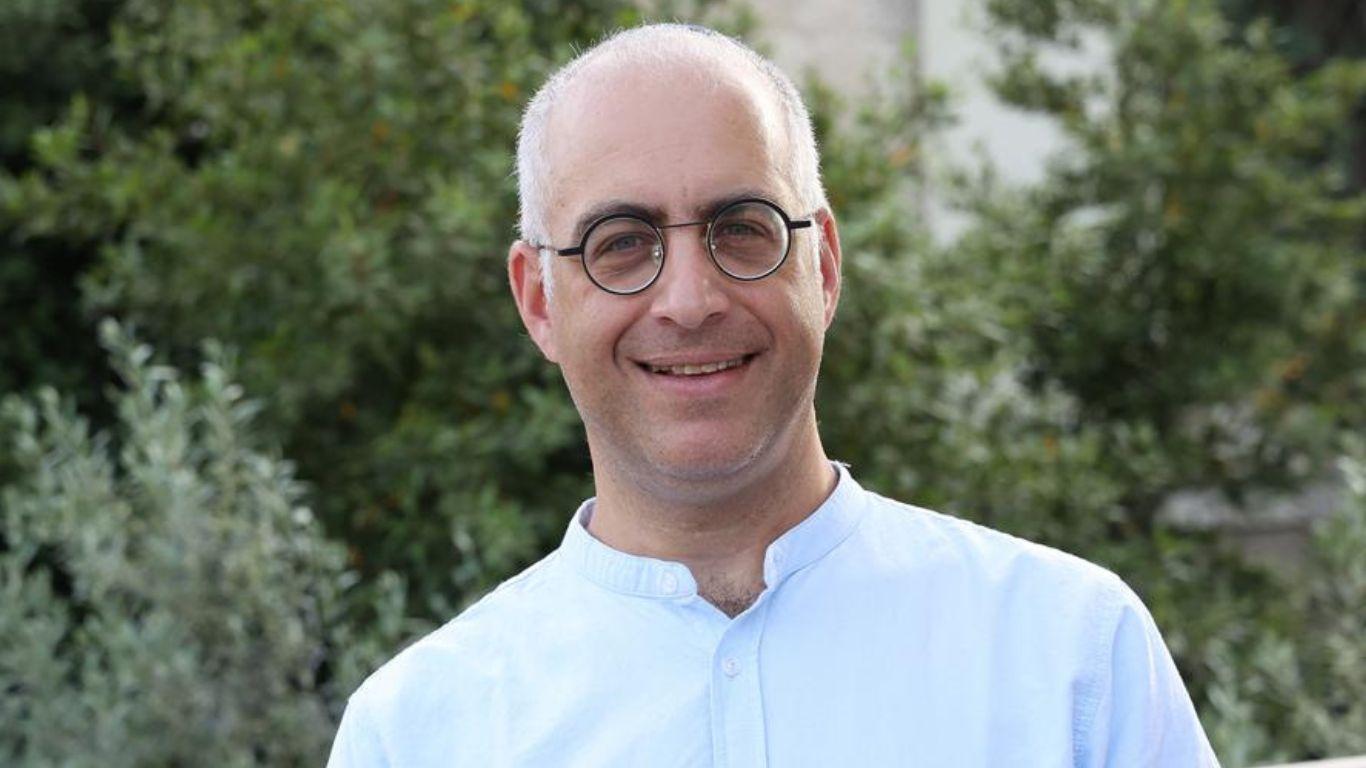
One student had the idea to bring together Jewish and Palestinian university students in Israel for facilitated, nuanced conversations. Elitzur Bar-Asher Siegal, a professor of linguistics and Hebrew language from the Hebrew University of Jerusalem, was there as an advisor. He says his interest was immediately piqued. 

“I told them after the hackathon, if you're serious and you really want to do it, be in touch.”

Shortly after, Bar-Asher Siegal sourced funding to launch the student-led program Middle Meets, of which he is now the director and academic leader. With plans to travel to New Zealand and Australia next month, he wants to introduce the program to new audiences, from community groups to university students and faculty.
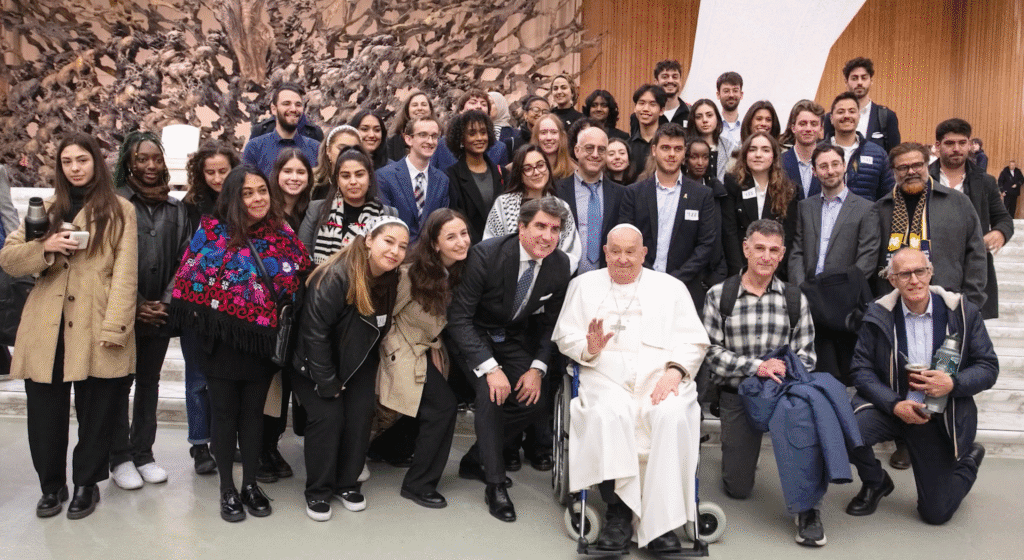
Students and faculty from the Middle Meets program meet with Pope Francis in Rome (YouTube: Scholas Occurrentes)

Starting in the hardest place

Interfaith relations in Australia broke down after October 7, as many Muslim organisations withdrew from dialogues and longstanding programs like Building Bridges collapsed.
If peacebuilding efforts can’t withstand times of crisis, it must be asked, are they even worth pursuing? For Bar-Asher Siegal, this has never been a concern. “Our organisation started at the beginning of the war,” he says. “That’s the answer.”

“We started at the hardest hour, at the hardest time, and said, ‘ok, that's how we do it.’ At the most painful time, we talk about the most painful topics.”

If this is happening in Israel, in Palestine, it can happen everywhere

Using academic tools to heal

About 30-40 students take part in each Middle Meets program, with two thirds of the cohort consisting of Jewish and Palestinian-identifying students from major universities in Israel. 

“Basically, the idea of Middle Meets is to take the problem in academia, that people stopped talking, and use academic tools to heal it,” Bar-Asher-Siegal explains.

The cohort’s remaining third are international students from universities across the US and Europe, who are neither Jewish nor Palestinian. “The conflict in Israel became an international issue. The idea is that we talk with students from around the world that also feel that this is an issue that they want to be involved in.”

The students at the Israeli campuses meet first for several guided discussions, before joining together with the international students for both online and in person sessions. Previous programs have included intensive seminars in Rome and Madrid, where students met with Popes Francis and Leo.

Over two years since its launch, Middle Meets is slowly growing, with an alumni community of about 150 people. While its success has been gradual, Bar-Asher Siegal is quietly ambitious. “I hope that every student in Israel will take part in such a program, that will be an obligatory, mandatory requirement at every university.”

“A small goal,” he jokes.

The dialogues bring together Palestinian Israelis and Israeli Jews, but even Bar-Asher Siegal cannot see a way to include Palestinians from the West Bank. 

“The idea is, in Israel, to deal with students who are at the same campus. I think now it's almost impossible to have collaboration with students from the West Bank, unfortunately.” 

Craving conversation

Middle Meets naturally attracts people who are peace-seeking, but Bar-Asher Siegal does not believe that makes it an echo chamber or an idealistic fringe. He says many students actually crave conversation, while those who reject any kind of dialogue are just a loud minority.

“They feel this loneliness that they actually they want to discuss, they want to argue, they want to understand, they want to learn. The culture became that one cannot talk, one just screams or take their sides and demonstrate in rallies.”

Demand backs up his contention. For every 30-40 who take part in each iteration, there have been about 200 who apply. The program is also supported by participating Israeli universities. In terms of any blowback, Bar-Asher Siegal says it’s been limited to “nasty stuff on social media, but that’s it.”

As he prepares to travel to Australia, he’s hoping that Middle Meets might inspire students in this country to think that dialogue is still possible. “If this is happening in Israel, in Palestine, it can happen everywhere,” he says. “Come on, kids in Australia, this is not your conflict. We are dealing with the conflict here, and we find a way to talk and converse.”

“The idea is to show the people that this is possible, and to give ideas to other universities about how to apply this method.” 

You might also like
  • Flooding and illness increase urgency of humanitarian relief in Gaza
    Shahar Burla
  • Australia’s latest sanctions raise the stakes, but stay on track
    Deborah Stone
  • Could the West be regained by an Eisenkot coalition?
    Dean Sherr
logomark.67a07ee3
We believe in the free flow of information

Republish our articles for free, online or in print, by using our Creative Commons licence

You might also like

    Joint list
    AnalysisIsrael

    Unlikely bedfellows: How Arab parties could deliver Israel’s next government

    Ben Lynfield 1
    ISRAEL-TEL AVIV-PARLIAMENT ELECTION-EXIT POLLS
    Israel Votes 2026ExplainerIsrael

    Eisenkot’s conditions for forming Israel’s next government

    Ruth Eglash 1
    Eisenkot protester
    Israel Votes 2026OpinionIsrael

    A moment of unity as rare as a minyan in Brisbane

    Rapha Manajem

About the author

Gideon Cohen

Gideon Cohen

Gideon Cohen is a Melbourne-based journalist and a content creator and editorial assistant at TJI. He holds a master's degree in journalism from the University of Melbourne and his work has appeared in various publications including Broadsheet and The Jewish Chronicle.

More from the author

FeatureAustralia

Josh Frydenberg weighs political return as he releases his new memoir

FeatureAustralia

From the footy field to the film festival: the AJAX story onscreen

FeatureAustralia

‘Our children already belong’: Petition calls Jewish schools to cooperate for disabled support

InterviewAustralia

Joni Fleischer: Connecting charities with tech talent