Aa
  • Read, Watch, Listen
  • TJI Series
  • Community Action
  • Events
  • Zedi
Follow us and continue the conversation
  • LinkedIn
  • Instagram
  • FaceBook
  • X
  • YouTube
Test yourself with the TJI Quiz!

Adjust size of text

Aa

Follow us and continue the conversation

  • LinkedIn
  • Instagram
  • FaceBook
  • X
  • YouTube

Your saved articles

You haven't saved any articles

What are you looking for?

Original reporting, insightful analysis and diverse views, delivered straight to your inbox

  • LinkedIn
  • Instagram
  • FaceBook
  • X
  • YouTube
Your support fuels our mission to inform, entertain and inspire.

The Jewish Independent is bound by the Standards of Practice of the Australian Press Council. If you believe the Standards may have been breached, you may approach The Jewish Independent or make a complaint to the Australian Press Council in writing at www.presscouncil.org.au. The Council may also be contacted on 1800 025 712.

  • Our Story
  • Contact us
  • Our Team
  • Support us
  • Guidelines
  • Pitch your idea
  • Republishing us
  • Community Action
  • Our Awards
  • LinkedIn
  • Instagram
  • FaceBook
  • X
  • YouTube
Aboriginal FlagTorres Strait Islanders Flag

The Jewish Independent acknowledges Aboriginal and Torres Strait Islander peoples as the Traditional Owners and Custodians of Country throughout Australia. We pay our respects to Elders past and present, and strive to honour their rich history of storytelling in our work and mission.

© The Jewish Independent 2026All Rights Reserved
Website design and development by Your Creative, MelbourneTerms & ConditionsPrivacy Policy
HomeRead, Watch, ListenArts & Culture
InterviewArts & Culture

Holocaust revenge story is far from pure fiction

Danny Ben-Moshe’s new book is a novel, but its roots are in the true story of a Holocaust survivor believed to have killed a Nazi he discovered in Australia.
Peter Kohn
Print this
Danny Ben-Moshe_photo credit Belle Stewart Photography_6

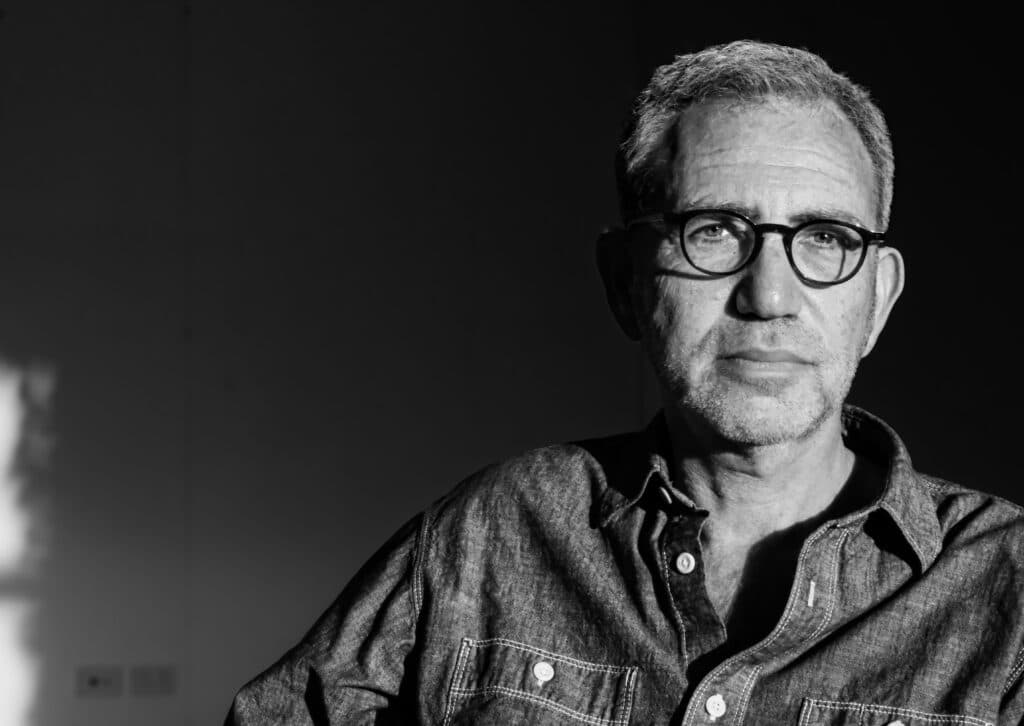
Danny Ben-Moshe, author of The Watchmaker’s War (Credit: Belle Stewart)

Published: 29 January 2026

Last updated: 29 January 2026

The comforting Jewish Australian concept of the sun-bronzed land as a sanctuary for Jews was shattered on the sands of Bondi Beach on December 14. Although it was written before the shooting, that horrific awakening somehow churns deep beneath Danny Ben-Moshe’s new post-Holocaust novel, The Watchmaker’s War.

After World War II, the far-flung continent, as geographically remote as possible from the horrors of Europe, became a place where Holocaust survivors could shelter .

But that remoteness also made it a favoured destination for Nazi war criminals; a bland backwater where they could hide in plain sight.

The Jewish Independent

Ben-Moshe’s novel is the story of how, in that Australian sanctuary, the odysseys of victim and murderer collided, and of how hunter and hunted momentarily reversed their roles.

The historical fiction, launched this week, is the first novel by the Walkley Award-winning Melbourne documentary maker, based on his landmark documentary Revenge: Our Dad, the Nazi Killer.

The documentary, which aired in 2024, traced how Melbourne Jews Jack, Jon and Sam Green pieced together the truth about their father Boris and their uncle Fima.

It comes to the conclusion that Boris had murdered a Nazi living in Sydney in the 1950s.

Boris and Fima had been partisan fighters in the forests of Lithuania during the war. In Australia, they tracked down Nazi war criminals responsible for the deaths of their extended families. These Nazi fugitives were living quiet lives in Australian suburbia, the beneficiaries of a deliberately blinkered immigration system.
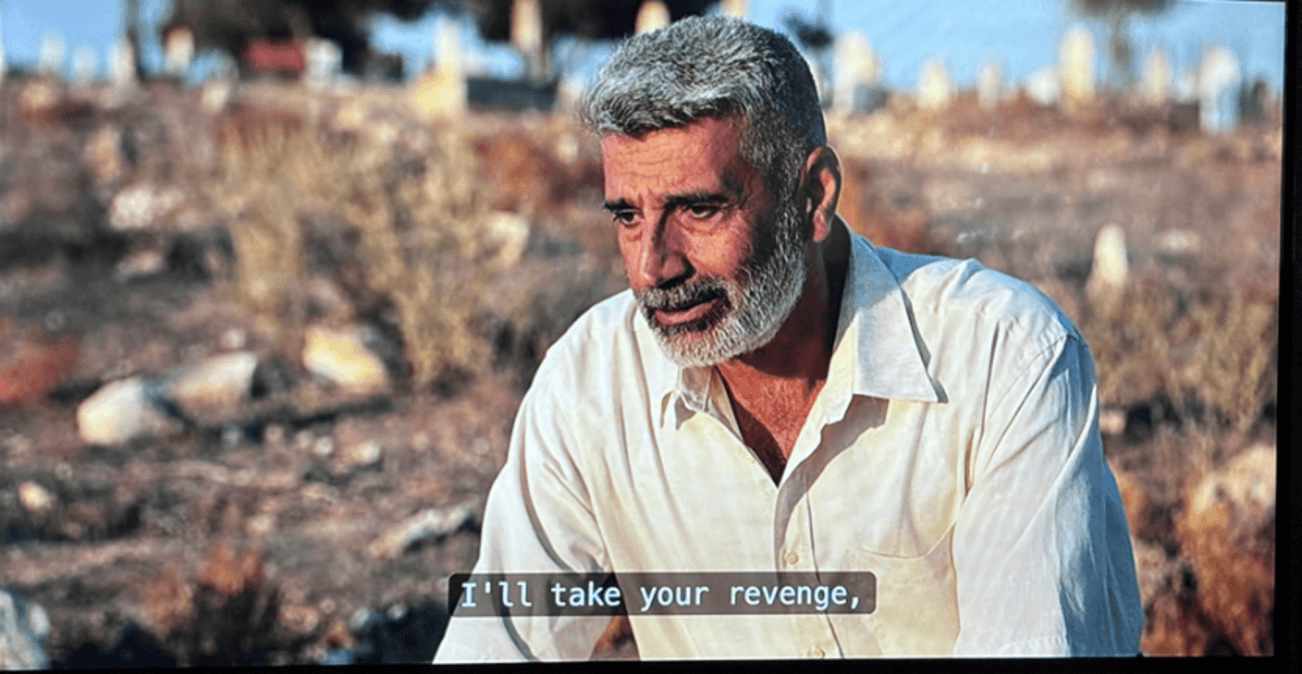
Both the documentary and the novel raise ethical issues about justifiable, extra-judicial killing. 

Ben-Moshe points out that these concerns sit astride a political mindset that would persist down the decades, defying mountains of evidence on the presence of Nazi killers in Australia.

Much of that evidence came from the investigative research of journalist Mark Aarons, culminating in his book War Criminals Welcome. Aarons also co-edited Nazis in Australia: The Special Investigations Unit, 1987-1994

National timidity about poking around in the past led to the 1994 closure, after only seven years, of the Special Investigations Unit. (Australian courts have not made a single conviction of a Nazi war criminal).

Ben-Moshe tells TJI his documentary and novel “are different beasts”. He set out to write a factual account based on the documentary, but his publisher wanted a novel. It was new ground for him. “I saw the blank page on my computer screen. I was stuck.”

Persevering at the publisher’s insistence – they initially coaxed him to write two chapters -- he eventually solidified his lead character Yakov Holtzman, partisan fighter turned Melbourne suburban watchmaker.

“I found it quite liberating because I could create composite characters, composite scenes. I could have conclusions at decisive moments that I was unable to have in the real story,” he says.

“I started writing this book way before October 7, but for us October 7 resonated so deeply because it unleashed this latent Holocaust trauma that was in so many of us”

Danny Ben-Moshe
Danny Ben-Moshe (credit: Belle Stewart)

Ben-Moshe emphasises that Boris (and his fictional surrogate Holtzman) isn’t the product of “the sunny streets of Australia in 2026” but “a trained partisan killer” discovering one of the murderers of his family. A diary note made in Yiddish by Boris in 1964 stated, “We, the last survivors, have a duty to respond and take action.”

Rich in mid-20th century Yiddish aphorisms, The Watchmaker’s War is set in locations such as the postwar Bonegilla Migrant Centre in north-eastern Victoria, where former Nazis and their Jewish victims found themselves face to face. There are the streets of postwar Jewish St Kilda, and the iconic Sheherazade, an Acland Street café that became a focal point for the haunted survivors, and was originally novelised in Arnold Zable’s Café Sheherazade.

“It’s also a family story of two brothers and their families and the trauma the Holocaust survivors lived with and struggled with. It’s a tender, human story but also a crime thriller,” notes Ben-Moshe. 

“I started writing this book way before October 7, but for us October 7 resonated so deeply because it unleashed this latent Holocaust trauma that was in so many of us.”

Was sanctuary in Australia a comfortable myth? “We all know Bondi didn’t begin at Bondi,” says Ben-Moshe. “October 9 [the antisemitic mob at the Sydney Opera House] is perhaps where that process started.”

Decades earlier, Holocaust survivors optimistically “spoke wonderfully of this new land, new life, new opportunity,” says Ben-Moshe. But at the same time, they saw the limitations that, since October 2023, are now “part of our lived experience”, he says.

The world-weary remnant of the Holocaust may have quietly feared that Australia was not the philosemitic paradise they had imagined, but recent events have removed any doubt.

Says Ben-Moshe, “Since October 9, I’ve heard so many friends, colleagues and peers say, ‘Thank God my parents aren’t alive to see this’, which is a terrible thing to say.

“The facade, the notion that somehow Australia was different and exempt, we now know is not the case.”

You might also like
  • Confronting Richard Flanagan and the myth of the Israel lobby
    Mary Garden
  • Facing a new year with the knowledge life can be better
    The Jewish Independent
  • No action to stop Hezbollah ally beaming antisemitic and anti-Israel content into Australia
    Michael Visontay
logomark.67a07ee3
We believe in the free flow of information

Republish our articles for free, online or in print, by using our Creative Commons licence

You might also like

    Wake main 2nd
    FeatureArts & Culture

    New ‘spoken word’ festival in Sydney offers stories directly from creators

    Miriam Hechtman
    Jewish word map
    FeatureArts & Culture

    Was the barmi a shemozzle? How Australians use Jewish words 

    Caroline Hendy & Emma Breslow 1
    Copy of Website books template (2)
    FeatureArts & Culture

    The winning Jewish books by Australians in the past year

    Gideon Cohen

About the author

Peter Kohn

Peter Kohn

Peter Kohn is an Australian journalist who began his career at the Herald & Weekly Times. For 43 years, he was associated with The Australian Jewish News. For the past decade, he held the title of Senior Journalist at the newspaper. He is the author of two novels. Rachel’s Chance is the story of his family’s experiences as Jewish refugees in Shanghai during World War II, and View From A Sandcastle is based on his own story, growing up in Melbourne suburbia during the 1960s and 1970s.

More from the author

FeatureWorld

‘Your help is extremely needed’: Jewish aid group on the ground after Nepal flood

NewsAustralia

Strategies for cohesion final focus of Royal Commission hearings

NewsAustralia

Evidence of declining social cohesion and the efforts to turn it around

NewsAustralia

Hate preachers, polarised debate, counter-terrorism

Comments2

  • Avatar of Michael Read

    Michael Read3 February at 04:38 am

    I don’t want to set the cat among the pigeons, but does anyone know of the Nazis secretly housed at Woomera after the war? I assume that the British sent them to Woomera with the approval of the then Australian government. I assume they all died there. There are no Department of Supply files. Then again, maybe my old mate was joking? He won’t say.

  • Avatar of Suzanne Farrington

    Suzanne Farrington30 January at 05:37 am

    Having read dozens of novels revealing the anxieties and trauma of this theme I am very much enjoying this new novel.