Aa
  • Read, Watch, Listen
  • TJI Series
  • Community Action
  • Events
  • Zedi
Follow us and continue the conversation
  • LinkedIn
  • Instagram
  • FaceBook
  • X
  • YouTube
Test yourself with the TJI Quiz!

Adjust size of text

Aa

Follow us and continue the conversation

  • LinkedIn
  • Instagram
  • FaceBook
  • X
  • YouTube

Your saved articles

You haven't saved any articles

What are you looking for?

Original reporting, insightful analysis and diverse views, delivered straight to your inbox

  • LinkedIn
  • Instagram
  • FaceBook
  • X
  • YouTube
Your support fuels our mission to inform, entertain and inspire.

The Jewish Independent is bound by the Standards of Practice of the Australian Press Council. If you believe the Standards may have been breached, you may approach The Jewish Independent or make a complaint to the Australian Press Council in writing at www.presscouncil.org.au. The Council may also be contacted on 1800 025 712.

  • Our Story
  • Contact us
  • Our Team
  • Support us
  • Guidelines
  • Pitch your idea
  • Republishing us
  • Community Action
  • Our Awards
  • LinkedIn
  • Instagram
  • FaceBook
  • X
  • YouTube
Aboriginal FlagTorres Strait Islanders Flag

The Jewish Independent acknowledges Aboriginal and Torres Strait Islander peoples as the Traditional Owners and Custodians of Country throughout Australia. We pay our respects to Elders past and present, and strive to honour their rich history of storytelling in our work and mission.

© The Jewish Independent 2026All Rights Reserved
Website design and development by Your Creative, MelbourneTerms & ConditionsPrivacy Policy
HomeRead, Watch, ListenIsrael
Israel Hamas WarOpinionIsrael

Decades delayed, Rabin’s Oslo vision is coming back to life

For decades, the Rabin assassination was seen as having killed the peace process. On the 30th anniversary, that may have changed.
Ittay Flescher
Print this
Bill_Clinton,_Yitzhak_Rabin,_Yasser_Arafat_at_the_White_House_1993-09-13

More details
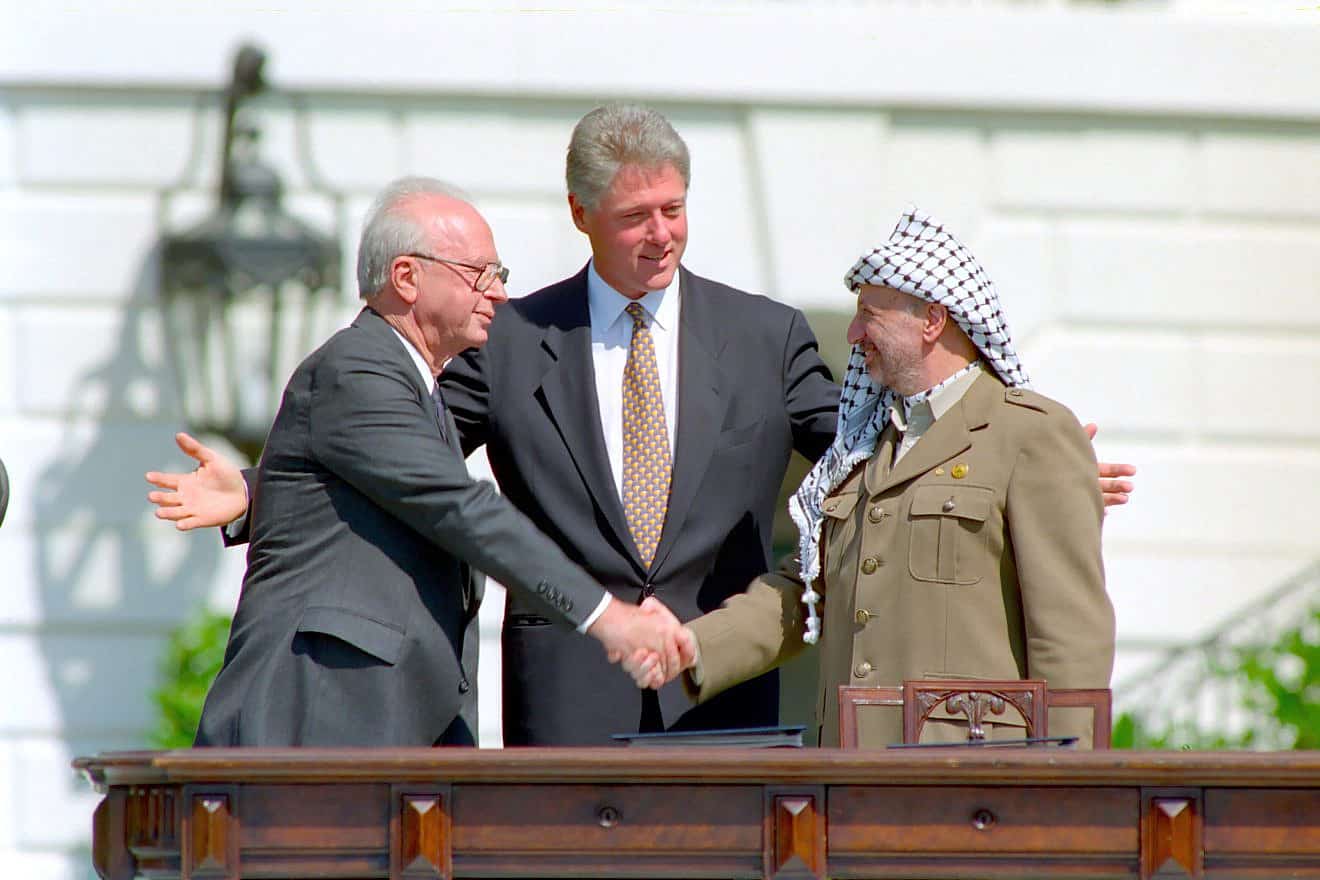
Israeli Prime Minister Yitzhak Rabin, U.S. president Bill Clinton, and PLO chairman Yasser Arafat agree to the Oslo Accords in 1993 (Vince Musi / The White House/ public domain)

Published: 29 October 2025

Last updated: 29 October 2025

Any death ends a single life, but a political assassination ends much more.

From Julius Caesar to Archduke Franz Ferdinand to Tsar Nicholas II, the assassinations of significant leaders have toppled regimes, started wars and enabled revolutions.

November 4 marks the 30th anniversary of the assassination of former Israeli Prime Minister Yitzhak Rabin.

For decades since that terrible night, the prevailing view among the peace camp was that the bullets fired by Amir didn't just kill Rabin, they extinguished the flame of Israeli-Palestinian peace.

I shared that bleak assessment until recently. In the wake of October 7, amid the near-total destruction in Gaza, the relentless settler violence driving West Bank expulsions, and the weekly rocket fire from Iranian proxies, the vision of "two states for two peoples" seemed more like a ghost than a blueprint.

Yet, after two years of devastating conflict, an improbable political shift is finally breathing life back into the core ideas Rabin championed.

A recent 20-point plan, brokered by the White House and supported by an astonishing coalition including Israel, Hamas, and regional powers like Qatar, Turkey, Egypt, and Jordan has achieved the remarkable. It has not only revived the pragmatic co-existence framework of the Oslo Accords, but also effectively extinguished the maximalist fantasies on both sides.

30 years lost

From the night he was murdered at a peace rally until today, many in the Israeli peace camp hold the political right responsible. They point to rallies where the former war hero and IDF chief of staff was labeled a traitor and even pictured in an SS uniform. These rallies took place in the context of a wave of bus bombings carried out by Hamas that sought to derail the peace process.

At Rabin’s funeral in 1995, Leah Rabin refused to shake then opposition leader Benjamin Netanyahu’s hand and told the press: “Mr Netanyahu incited against my husband and led the savage demonstrations against him”.

The prize-winning film Incitement dramatised the life of Rabin’s assassin Yigal Amir in the year leading up to the murder, arguing that the extremist language of the right drove his violence.

Since Rabin’s assassination, his Labor party – which governed Israel for most of the preceding 45 years – has been in decline, controlling the government for only two of the past 30 years.

Rabin’s opponents were able to replace his peace plan with the belief that Israel has no partner for peace and to embed occupation of the West Bank through an ever-expanding settlement program.

Reviving Rabin’s dream

To the left, the assassination was the end of a dream; to the right, the end of danger – but both agreed it had closed a pathway. That path has, surprisingly and tentatively, reopened over the past few weeks.

Trump’s 20-point plan deals a decisive blow to the most destructive narratives plaguing this region.

For Hamas, the dream of "liberation through violence" has ended, at least for the foreseeable future. The plan’s unambiguous demand that Hamas demilitarise and relinquish control of Gaza dismantles the group's foundational belief that violent resistance is the only path to statehood. It is a stark acknowledgment that the path of the gun is a dead end for the Palestinian national project.

Likewise, the Messianic Israeli right’s "Greater Israel" ambition has been firmly pushed from the mainstream to the ideological margins. The framework offers an equally forceful rejection of West Bank annexation and the forced expulsion of Palestinians from Gaza, goals openly championed by Ministers like Itamar Ben-Gvir and Bezalel Smotrich. The fact that this far-right vision was explicitly rejected, seemingly with Netanyahu's endorsement, establishes a powerful political and ideological barrier against those who believe the entire land belongs exclusively to Jews.

If someone had told me in 2023 that a document laying out this path would be tacitly accepted by both Netanyahu's Israel and Hamas after two years of war, I would have thought them delusional

What remains in the 20-point plan are pillars that echo Rabin's original vision, centred on co-existence, dialogue, and separation. The framework mandates sustained interfaith dialogue to shift mindsets by emphasising the tangible benefits of peace. Crucially, it commits to a "credible pathway to Palestinian self-determination and statehood" and the establishment of a dialogue to agree on a political horizon for peaceful co-existence.

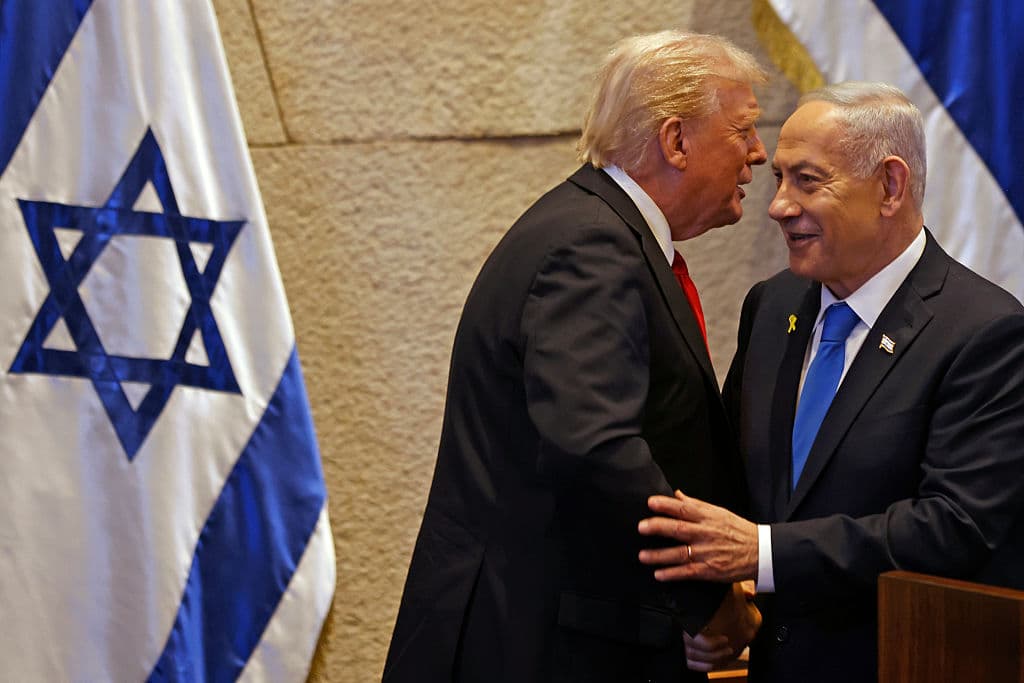
To understand how remarkable this is, we need to remember that in December 2023, Netanyahu said in a video message directed to President Biden, "I want to clarify my position: I will not allow Israel to repeat the mistake of Oslo... Gaza will not be Hamas-stan nor Fatah-stan".

If someone had told me in 2023 that a document laying out this path would be tacitly accepted by both Netanyahu's Israel and Hamas after two years of war, I would have thought them delusional. Yet, this is our reality. Whether their acceptance is born of conviction or pure exhaustion remains to be seen, but in their signatures lies the rebirth of the very idea Yigal Amir tried to extinguish.

Co-existence as security

The rationale driving the plan is the same one that motivated Rabin three decades ago. Winning a decisive 1992 election, the Labor party leader saw clearly that perpetual occupation was morally and pragmatically unsustainable; true security could never be achieved through military might alone.

Rabin understood that separation, enabling Palestinians to realise their right to self-determination next to Israel, was the most pragmatic path for preserving a secure, Jewish, and democratic state

Rabin wrote in a 1995 letter to former Chief Rabbi Jonathan Sacks: “There is no long-term answer to our security problems, and to our co-existence with our neighbours, other than peace. I have said many times that we did not pray for nearly two millennia for the return to Zion only to find ourselves ruling over two million Palestinians or creating a bi-national State.”

Rabin understood that separation, enabling Palestinians to realise their right to self-determination next to Israel, was the most pragmatic path for preserving a secure, Jewish, and democratic state. Now, in late 2025, this core vision, has returned to the international table as the only viable way forward.

In his 1993 speech on the White House lawn, Rabin quoted the book of Ecclesiastes, “To everything there is a season, and a time to every purpose under Heaven… a time for war and a time of peace. Ladies and gentlemen, the time for peace has come.”

As Rachel Goldberg-Polin reminded us on the eve of the ceasefire 30 years later, the tension between despair and hope, war and peace, remains the inescapable truth of this moment.

The 20-point plan forces a critical choice. It is a document of exhaustion, born not of idealistic hope, but of the cold, hard failure of every alternative path. The most dangerous ideas, slaughter and terror in Kibbutzim for Hamas, occupation and domination for Israel, have been politically defeated by the reality of two years of blood and devastation.

As we mark 30 years since Rabin's assassination in the heart of Tel Aviv, we must recognise that the vision he championed is finally being resurrected, not as a fragile wish, but as the only viable political path left.

Rabin may be gone, but his ultimate legacy is the forced consensus: the only way to truly defeat the assassin’s intent is to make the birth of two states he feared a strategic, moral, and historical inevitability.

You might also like
  • Tame apologises – but with little grace
    Deborah Stone
  • Confronting Richard Flanagan and the myth of the Israel lobby
    Mary Garden
  • UK’s dramatic policy change on Israel-Palestine
    Colin Shindler
logomark.67a07ee3
We believe in the free flow of information

Republish our articles for free, online or in print, by using our Creative Commons licence

You might also like

    Rozana Beit Oula
    PeacebuildingOpinionIsrael

    Peacebuilding through the eyes of a sceptic

    Ron Finkel
    haredi street guitar
    Photo EssayArts & Culture

    Jerusalemites through the lens

    Sharon Gabay
    Netanyahu
    Israel Hamas WarFeatureIsrael

    New evidence Netanyahu was warned about October 7

    Shahar Burla 2

About the author

Ittay Flescher

Ittay Flescher

Ittay Flescher is the Jerusalem Correspondent for The Jewish Independent. For over twenty years, he has worked as an educator, journalist, and peacebuilder in Melbourne and Jerusalem. His book, The Holy and the Broken: A Cry for Israeli-Palestinian Peace from a Land that Must Be Shared, was longlisted for the 2025 Walkley Book Awards.

More from the author

AnalysisIsrael

What ‘Zionism’ means in Israel:  it’s not what you think

AnalysisIsrael

From haven to hotbed: how Israel’s perception of Australia has changed

FeatureIsrael

New wave of Russian-speaking migrants may be key to Israel’s future

AnalysisIsrael

How a new International Peace Fund could make a tangible difference

Comments1

  • Avatar of Rachel Sussman

    Rachel Sussman2 November at 03:18 am

    Thank you
    I enjoyed reading your article
    I just wish I could share your sense of hope and optimism…. I can only say to it: May it come to be, Amen !