Aa
  • Read, Watch, Listen
  • TJI Series
  • Community Action
  • Events
  • Zedi
Follow us and continue the conversation
  • LinkedIn
  • Instagram
  • FaceBook
  • X
  • YouTube
Test yourself with the TJI Quiz!

Adjust size of text

Aa

Follow us and continue the conversation

  • LinkedIn
  • Instagram
  • FaceBook
  • X
  • YouTube

Your saved articles

You haven't saved any articles

What are you looking for?

Original reporting, insightful analysis and diverse views, delivered straight to your inbox

  • LinkedIn
  • Instagram
  • FaceBook
  • X
  • YouTube
Your support fuels our mission to inform, entertain and inspire.

The Jewish Independent is bound by the Standards of Practice of the Australian Press Council. If you believe the Standards may have been breached, you may approach The Jewish Independent or make a complaint to the Australian Press Council in writing at www.presscouncil.org.au. The Council may also be contacted on 1800 025 712.

  • Our Story
  • Contact us
  • Our Team
  • Support us
  • Guidelines
  • Pitch your idea
  • Republishing us
  • Community Action
  • Our Awards
  • LinkedIn
  • Instagram
  • FaceBook
  • X
  • YouTube
Aboriginal FlagTorres Strait Islanders Flag

The Jewish Independent acknowledges Aboriginal and Torres Strait Islander peoples as the Traditional Owners and Custodians of Country throughout Australia. We pay our respects to Elders past and present, and strive to honour their rich history of storytelling in our work and mission.

© The Jewish Independent 2026All Rights Reserved
Website design and development by Your Creative, MelbourneTerms & ConditionsPrivacy Policy
HomeRead, Watch, ListenIsrael
FeatureIsraelWorld

For Israel’s Sudanese refugees, grief is compounded by a ban on protest 

The Sudanese genocide has ramped up in recent weeks. For Israel’s refugee community, there are additional layers of pain.
Ben Lynfield
Print this
fouad osman sudanese

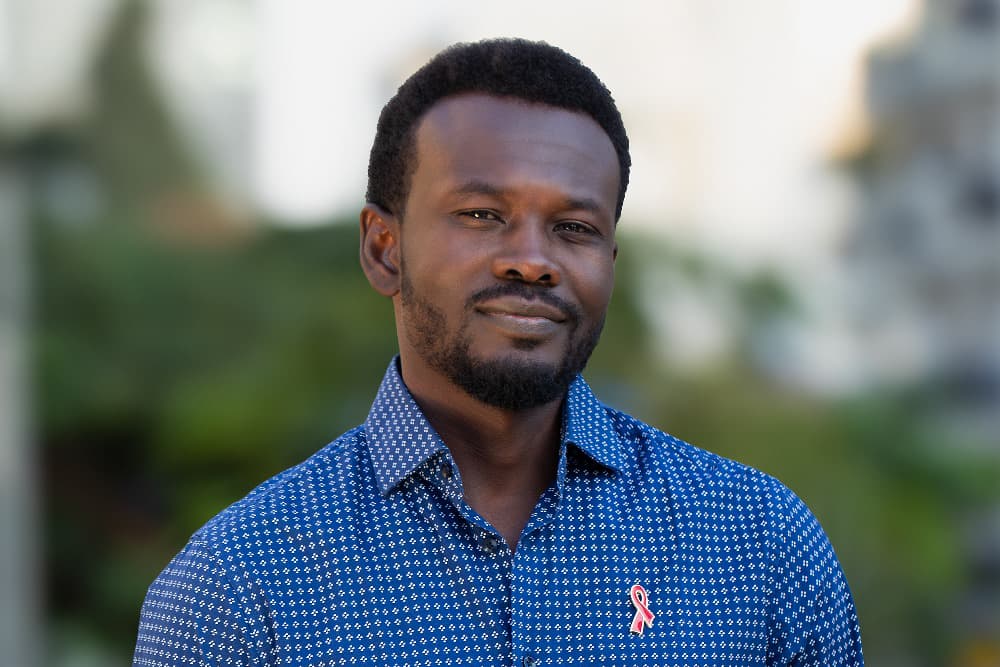
Fouad Osman, director, of the Sudanese Community Center in Tel Aviv is distressed that his community has been banned from protesting the UAE’s support for genocide in Sudan (supplied)

Published: 11 December 2025

Last updated: 12 December 2025

The massive surge of war crimes and death in Sudan has triggered international concern. 

But in Israel the Sudanese refugee community is facing not only grief and despair but also disappointment with Israel after Israeli police banned protests against the United Arab Emirates (UAE), which is supporting the Sudanese perpetrators. The ban was upheld by Israel's Supreme Court. 

“It’s a very difficult feeling. You are here, so far away and you can’t do anything or provide help,” Anwar Suliman, a leading Sudanese refugee activist who has been in Israel since 2008, told The Jewish Independent.  

Many in the community are trying desperately to find out the fates of family and friends who were in the city of El-Fasher when it was captured in a gruesome attack by the Rapid Support Forces militia in late October. The RSF is the UAE-backed group formerly known as the Janjaweed. 

Their continuing violence has been recognised as a genocide by Genocide Watch and the US State Department, with more than 150,000 people estimated killed in the past two years and an estimated 25 million affected by famine. In the most recent incident on Saturday, the RSF launched a drone strike on a kindergarten in south Kordofan, killing at least 50 people, including 33 children. 
 
 “The number of relatives and friends killed [in recent months] is unknown,” Suliman said, “Some are missing, some were taken hostage, some were taken south to [the RSF-controlled area of Niyala]. People are still making lists, trying to find out who is dead and who is alive.” 
 
Members of the community work the phones to find traces of their loved ones. “They call the north where there is reception and try to reach as many people who reached the north from El-Fasher,” Suliman says. “We ask people there to go check for the missing. There are so many in the community who don’t know what happened to their relatives.” 
How can it be that in a democratic country that provides freedom, they prevent people from protesting against murder?

Fouad Osman, director, Sudanese Community Center

 The Tel Aviv area has the largest number of Sudanese in Israel. They work mostly in cleaning streets, gardening, and in restaurants and hotels. They do not have work permits, but as part of a 2011 court case, authorities promised they would not enforce the law against them.  

Intensifying the feeling of being unable to help or stop the slaughter is that Israel has refused to give the community permission to join Sudanese communities in Europe in protesting the mass killings and publicly paying respects to the victims. At first a request for a permit to protest opposite the UAE embassy in Herzliya was rebuffed and the ban was upheld by the supreme court. Then a plan for a more modest gathering in a park was also rejected by police. 

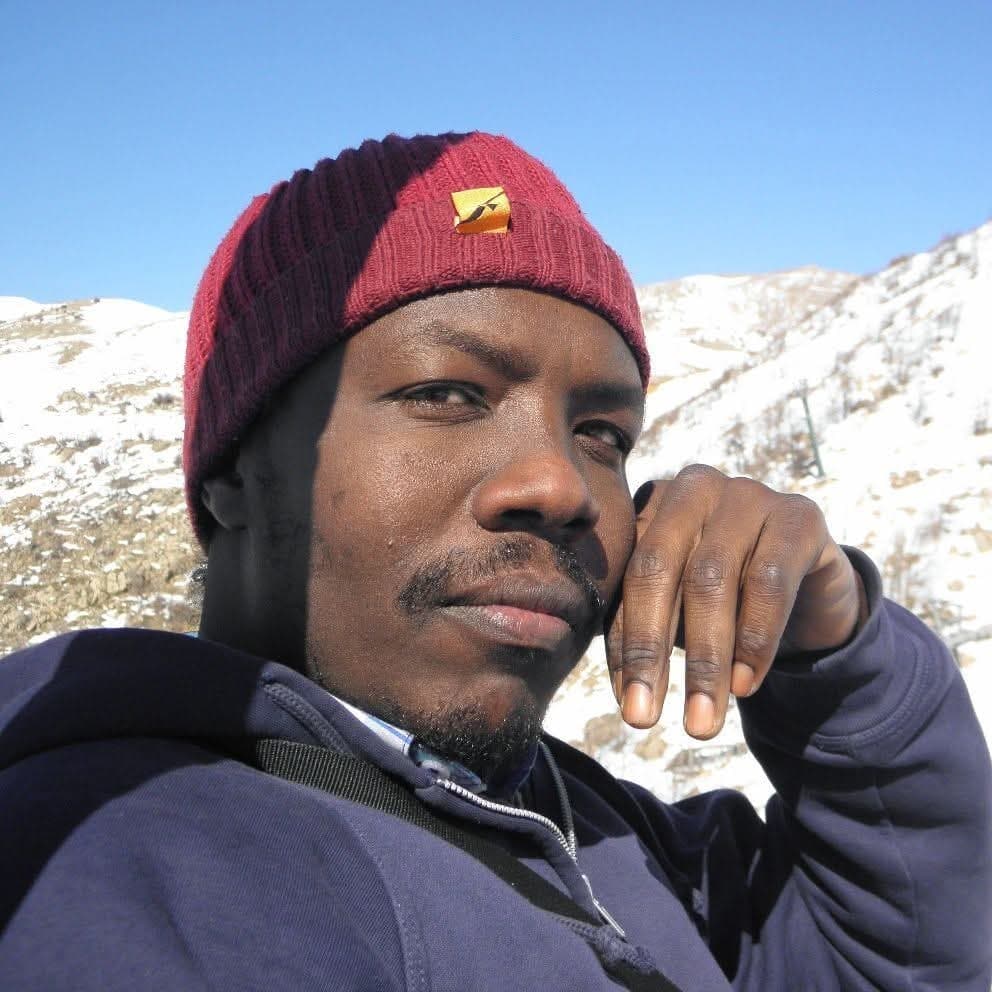
 Sudanese refugee activist Anwar Suliman
Sudanese refugee activist Anwar Suliman

Israeli authorities justify the ban by claiming protests could harm security and Israeli foreign relations. The UAE is part of the Abraham Accords and has a growing community of expatriate Israelis. 

But the ban has generated a lot of frustration, especially because the police allowed the community to hold protests on many previous occasions. 

“We can’t be silent. We want to tell people that the UAE is supporting the RSF,” said Zakaria Bongo, a construction worker and English teacher from Darfur who has been in Israel for 14 years. "All the world is silent about the crimes, so we have to get our voices out.”  

Bongo is looking for a friend who fled El-Fasher for Tina but never arrived. “Maybe he died in the desert from not having water. Maybe he was taken hostage. But when they take hostages, they call the family asking for the money. This hasn’t happened. Maybe something bad happened to him.”  

Fouad Osman, director of the Sudanese Community Center in Tel Aviv, survived an earlier escalation of the violence as a child, hidden by his father in their horse’s side basket. His father was killed but he was not found. Now he tries to spread the word through lectures and interviews about atrocities. 

He told The Jewish Independent he was very disappointed by the ban on demonstrations. “How can it be that in a democratic country that provides freedom, they prevent people from protesting against murder?” he asked. 

The court ruling was made after the judges heard a closed-door briefing by the deputy head of Israel’s National Security Council. 

The decision has been criticised by the Association for Citizens Rights in Israel, which had petitioned the court, as a major blow to freedom of expression. 

The presence of Sudanese in Israel began more than two decades ago. Sigal Rozen, public policy coordinator of the Tel Aviv based Hotline for Refugees and Migrants, said refugees from the Darfur genocide who had fled to Egypt beginning in 2003 began crossing into Israel because of safety fears after a mass shooting incident by Egyptian security forces outside the offices of the United Nations High Commisioner on Refugees on December 27, 2005. 

After people saw it was possible to survive in Israel and that they were wanted by the labour market, relatives and friends joined them, she says. This continued until 2012, when Israel erected a fence on the border. According to government figures, 300 people succeeded in crossing into Israel despite the fence during the following three years. 

The standing of the Sudanese in Israel is tenuous, with only one person granted refugee status over the years, Rozen said. 

But perhaps the biggest worry for Sudanese in Israel is that the international community does not really care how far the horrors will spread and that it is content to let history repeat itself. Osman thinks the inaction is racist. 

He notes that Al-Fashir had been under a brutal RSF siege for two years without any meaningful response, part of a pattern of ignoring conflict in Africa. “Humans were eating animal feed and no one said, ‘They are humans, let’s save them’. You see what’s going on, and it doesn’t interest you. Silence is the same as supporting murder,” said Osman.  

The Israeli foreign ministry did not respond to a query from TJI asking what Israel's position is regarding the genocide by the RSF in Sudan. 

You might also like
  • The leadership a wounded society needs
    Esther Takac
  • Fauda and the illusion of vengeance
    Ittay Flescher
  • Israel election explainer: the main parties
    Shahar Burla
logomark.67a07ee3
We believe in the free flow of information

Republish our articles for free, online or in print, by using our Creative Commons licence

You might also like

    Protest against settler violence in Jerusalem
    DebateAustralia

    Sanctioning settlements is a defence of Israel, not an attack

    Elisheva Madar 3
    JDC Joint Nepal
    FeatureWorld

    ‘Your help is extremely needed’: Jewish aid group on the ground after Nepal flood

    Peter Kohn 1
    Penny Wong
    DebateAustralia

    Sanctions must influence, not just perform disapproval

    Adam Slonim 1

About the author

Ben Lynfield

Ben Lynfield

Ben Lynfield covered Israeli and Palestinian politics for The Independent and served as Middle Eastern affairs correspondent at The Jerusalem Post. He writes for publications in the region and has contributed to the Christian Science Monitor, Foreign Policy and the New Statesman.

More from the author

FeatureIsrael

Fear of Netanyahu victory may drive big surge in Palestinian voter turnout

NewsIsrael

Abuse by IDF soldiers humiliates Muslim Palestinians

OpinionIsrael

Qusra siege exposes shared agenda of IDF and settler extremists

AnalysisIsrael

IDF ordered to evict West Bank camp in election show of strength

Comments

No comments on this article yet. Be the first to add your thoughts.