Who? What? How? Trump’s Board of Peace explained
President Trump's Board of Peace will be officially launched today. Its mission has shifted from a transitional body for Gaza to a sweeping mechanism rivalling the UN.
Shahar Burla
President Donald Trump signs the Gaza ceasefire agreement at a world leaders’ summit on October 13, 2025 in Sharm El-Sheikh, Egypt. (Suzanne Plunkett – Pool / Getty Images)
Published: 22 January 2026
Last updated: 22 January 2026
Eight major Muslim countries moved first on Wednesday, announcing they will join US President Donald Trump’s proposed Board of Peace, an initiative that began as a “day after” mechanism for Gaza but is now being pitched as something closer to a permanent, Trump-chaired alternative to existing multilateral machinery. In a joint statement, the foreign ministers of Saudi Arabia, Turkey, Egypt, Jordan, Indonesia, Pakistan, Qatar and the United Arab Emirates said each country would appoint a representative to sit on the panel.
Europe, by contrast, is split and wary. France, Denmark, Norway and Swedenhave confirmed they will not join, with Swedish Prime Minister Ulf Kristersson making the call public in Davos. Most of Europe’s major capitals, including US allies such as the UK, Germany and Italy, have not yet said whether they will sign on. Trump, acknowledging the political sensitivity of the project, noted that some governments may face hurdles joining without parliamentary approval.
The board is due to be formally launched on the sidelines of the World Economic Forum today , where member states are expected to sign its charter. That document is the source of much of the unease: it does not mention Gaza by name and frames the board’s mission in global terms, fuelling speculation that Trump sees it as a rival platform to the UN rather than a temporary tool for one conflict.
What is the Board of Peace meant to do?
The board’s mission has shifted, at least rhetorically, from a Gaza-specific transition body to a sweeping peace-brokering mechanism. When Trump first outlined the concept in his 20-point plan in late September, the Board of Peace was described as a “new international transitional body” designed to supervise postwar arrangements and help oversee Gaza’s reconstruction.
That framework then gained formal international cover in November 2025,when the UN Security Council adopted Resolution 2803, which welcomed the board and provided a time-limited Gaza mandate through 31 December 2027. The resolution envisaged the board working with governments on an international stabilisation/peacekeeping force, and helping administer a transition until the Palestinian Authority undertook reforms.
But the charter now being circulated, and slated for signing in Davos, presents a different ambition. It frames the board as a body meant to “restore dependable and lawful governance and secure enduring peace in areas affected or threatened by conflict”, language that reads like a bid to create a more nimble peace-building organisation operating alongside, and implicitly in critique of, existing UN structures.
The board is designed as a governance stack: a top-level council of leaders, an inner executive circle, and a Gaza-specific operational chain.
The Board of Peace sits at the apex, a club of heads of state invited to join a White House-designed conflict-resolution body. Trump chairs, and decisions are framed as subject to his approval. Membership terms are set at three years, with renewal tied to the chair’s discretion.
Then comes the Executive Board, tasked with setting the agenda and steering decisions. Reported members include US Secretary of State Marco Rubio, special envoy Steve Witkoff, Jared Kushner, former UK prime minister Tony Blair, businessman Marc Rowan, World Bank President Ajay Banga and US Deputy National Security Advisor Robert Gabriel, with Aryeh Lightstone and Josh Gruenbaum listed as senior advisers.
The Gaza chain begins with an Office of the High Representative, led by former UN Middle East envoy Nickolay Mladenov, described by the White House as the on-the-ground link between the board and the Palestinian technocratic administration.
Supporting that is a Gaza Executive Board, a regional and international line-up whose authority remains unclear but whose membership is politically charged. It includes Turkey’s Foreign Minister Hakan Fidan, Qatari diplomat Ali Al-Thawadi, Egypt’s intelligence chief Hassan Rashad, Emirati minister Reem/Ebrahim Al Hashimy , former UN envoy Sigrid Kaag, Cypriot-Israeli businessman Yakir Gabay, alongside Rowan, Mladenov, Blair, Witkoff and Kushner.
At the base is the National Committee for the Administration of Gaza (NCAG), a Palestinian technocratic committee intended to handle day-to-day governance, overseen by the High Representative. Reporting names Dr Nabil Ali Shaath as its head. The central question is legitimacy: whether an externally supervised committee can secure real freedom of action — and whether Gaza’s public will treat it as a governing authority or as a layer placed on top of the reality on the ground.
Gaza and “phase two”: governance is moving faster than the deal
The US announcement of the board’s composition and the first meeting of the Gaza management committee in Cairo are being read in Israel as a signal that, whatever the gaps in implementing phase one of the agreement, the “day after” apparatus is already being assembled.
The immediate flashpoint is Rafah. Regional reporting has said the United States is pressing Israel to allow the Palestinian technocratic committee to enter Gaza via Rafah, with Egypt telling members that Washington wants the crossing reopened in both directions on an accelerated timetable. At the same time, Israeli reporting has cited Palestinian sources saying Israel is currently blocking the entry of those officials.
The technocratic committee is being marketed as non-partisan, but its personnel and symbolism suggest continuity with PA-era structures, and the Palestinian Authority has welcomed its formation.
Hamas, too, has welcomed the committee’s creation, which critics interpret as confidence that the arrangement can carry the burden of civilian administration while leaving Hamas’s security activity and civil networks untouched. The fear is a Hezbollah-style model: a formal governing shell alongside an armed movement that remains the dominant force on the ground.
Israel continues to insist it can return to fighting at any stage. In practice, however, as Washington accelerates diplomatic and administrative steps, Israel’s freedom of manoeuvre risks shrinking — especially as Trump’s Gaza operational arm embeds Qatar and Turkey, and the board’s launch moves ahead despite unresolved issues at the heart of Israel’s war aims, including hostages and Hamas’s disarmament.
Who has joined — and who is staying out?
Wednesday’s joint statement from the eight Muslim countries is the most coordinated endorsement so far, and it gives the board regional weight at the very moment European resistance is hardening.
At least four countries, France, Denmark, Norway and Sweden, have explicitly ruled out joining. Others remain noncommittal, including several of Washington’s closest European allies.
Israel: yes to membership, no to the guest list
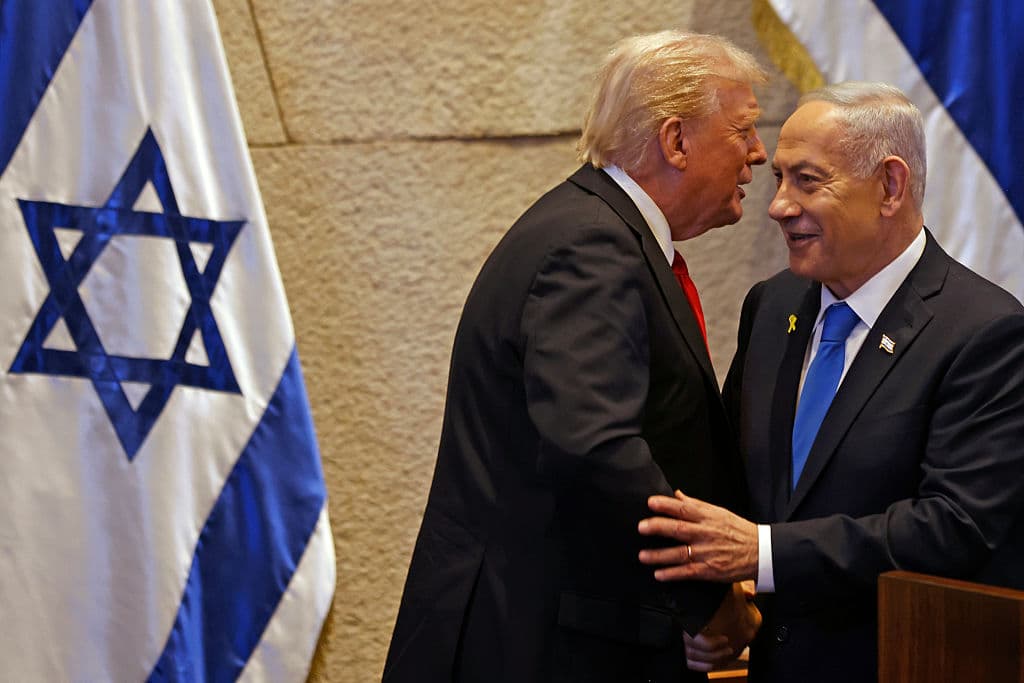
Israel’s position has been a study in pragmatism and discomfort. In the initial rollout, Netanyahu’s office objected to the composition of the Gaza Executive Board, particularly the inclusion of senior figures from Turkey and Qatar, two states Israel does not want embedded in “day after” Gaza decision-making.
Even so, Netanyahu has agreed to join the board, a decision widely read as an attempt to ensure Israel has a seat at the table, even if it dislikes who else has been seated there. That choice has also sharpened internal coalition friction, with far-right partners hostile to any framework that blocks annexation and renewed settlement in Gaza.
Netanyahu will not be physically present for the board’s launch in Davos. The inauguration is scheduled on the sidelines of the World Economic Forum in Switzerland, but Israeli media reporting says Netanyahu will stay away after Swiss authorities reiterated that, as a party to the Rome Statute, Switzerland is obliged to cooperate with the International Criminal Court — meaning it would, in principle, be required to act on an ICC arrest warrant were he to enter the country. The ICC warrant itself alleges responsibility for war crimes and crimes against humanity connected to the Gaza war, accusations Netanyahu rejects.
Australia: invited, cautious, and waiting on the fine print
Prime Minister Anthony Albanese confirmed Australia had been asked to join the Board of Peaceand promised serious consideration, particularly where proposals relate to peace efforts and reconstruction. But he also said formal correspondence arrived late and had not yet been reviewed, a telling detail given the speed at which the White House is trying to lock in signatures.
Deputy Prime Minister Richard Marles welcomed US efforts to end the conflict and support rebuilding, while stressing that Australia needs clarity on what membership actually requires. Two concerns sit beneath the diplomatic language. The first is institutional: analysts and diplomats have warned a Trump-chaired body with a bespoke charter could undercut existing multilateral mechanisms, including the UN. The second is cost: Australian reporting notes that membership would be for at least three years, with a reported requirement of US$1 billion to remain beyond that term, turning participation into a financial and political statement, not merely a diplomatic gesture.
Is this meant to replace the UN?
Trump has floated the idea that the board “might” replace the United Nations — then, when pressed, also said the UN should be allowed to “continue”. The mixed messaging has only intensified concerns in Europe that the project is designed to rival the UN Security Council’s role, or at least to create a parallel channel for global crisis management led from Washington.
A dramatic change on the ground is not expected overnight. But Trump’s desire for a visible win is well established, and the board’s early months are likely to produce highly choreographed moments: officials arriving at crossings, committees taking offices, and symbolic “proof points” meant to market a new reality — including gestures around demilitarisation.
The bigger question is whether states treat the board as a complement to the UN system, or as the first stage of a deliberate bypass.
About the author
Dr Shahar Burla is a Sydney-based researcher, lecturer and Contributing Editor of TJI. Shahar holds a Master’s degree in political science from Hebrew University and a PhD in political science from Bar-Ilan University. He is the author of Political Imagination in the Diaspora: The Construction of a Pro-Israeli Narrative (2013) and co-editor of Australia and Israel: A Diasporic, Cultural and Political Relationship (2015).