Aa
  • Read, Watch, Listen
  • TJI Series
  • Community Action
  • Events
  • Zedi
Follow us and continue the conversation
  • LinkedIn
  • Instagram
  • FaceBook
  • X
  • YouTube
Test yourself with the TJI Quiz!

Adjust size of text

Aa

Follow us and continue the conversation

  • LinkedIn
  • Instagram
  • FaceBook
  • X
  • YouTube

Your saved articles

You haven't saved any articles

What are you looking for?

Original reporting, insightful analysis and diverse views, delivered straight to your inbox

  • LinkedIn
  • Instagram
  • FaceBook
  • X
  • YouTube
Your support fuels our mission to inform, entertain and inspire.

The Jewish Independent is bound by the Standards of Practice of the Australian Press Council. If you believe the Standards may have been breached, you may approach The Jewish Independent or make a complaint to the Australian Press Council in writing at www.presscouncil.org.au. The Council may also be contacted on 1800 025 712.

  • Our Story
  • Contact us
  • Our Team
  • Support us
  • Guidelines
  • Pitch your idea
  • Republishing us
  • Community Action
  • Our Awards
  • LinkedIn
  • Instagram
  • FaceBook
  • X
  • YouTube
Aboriginal FlagTorres Strait Islanders Flag

The Jewish Independent acknowledges Aboriginal and Torres Strait Islander peoples as the Traditional Owners and Custodians of Country throughout Australia. We pay our respects to Elders past and present, and strive to honour their rich history of storytelling in our work and mission.

© The Jewish Independent 2026All Rights Reserved
Website design and development by Your Creative, MelbourneTerms & ConditionsPrivacy Policy
HomeRead, Watch, ListenIsrael
AnalysisIsrael

Expectations lower in face of Iran resistance

Despite massive damage to Iran’s military capabilities, doubts emerge over whether Netanyahu and Trump will be able to claim victory in the face of the regime’s survival.
Ben Lynfield
Print this
Mojtaba Khamenei Iran

A poster of Iran’s new leader Mojtaba Khamenei is printed in Tehran as the Iranian regime regroups in the face of continuing Israeli and US attacks (Majid Saeedi/Getty Images)

Published: 12 March 2026

Last updated: 12 March 2026

On the first day of the US-Israeli war against Iran, with the assassination of Iranian supreme leader Ali Khamenei, the collapse of the Iranian regime seemed to Israel to be an attainable goal.

With some encouragement and a lot of firepower, the crowds would turn out and topple their oppressors, it was hoped.

A week and a half later, no protests against the regime have surfaced despite parts of Iran being pulverised. What has actually collapsed, instead, is the idea that the regime will collapse during this war. At the same time, doubts are emerging over whether Israel will be able to claim victory in the face of the regime’s survival.

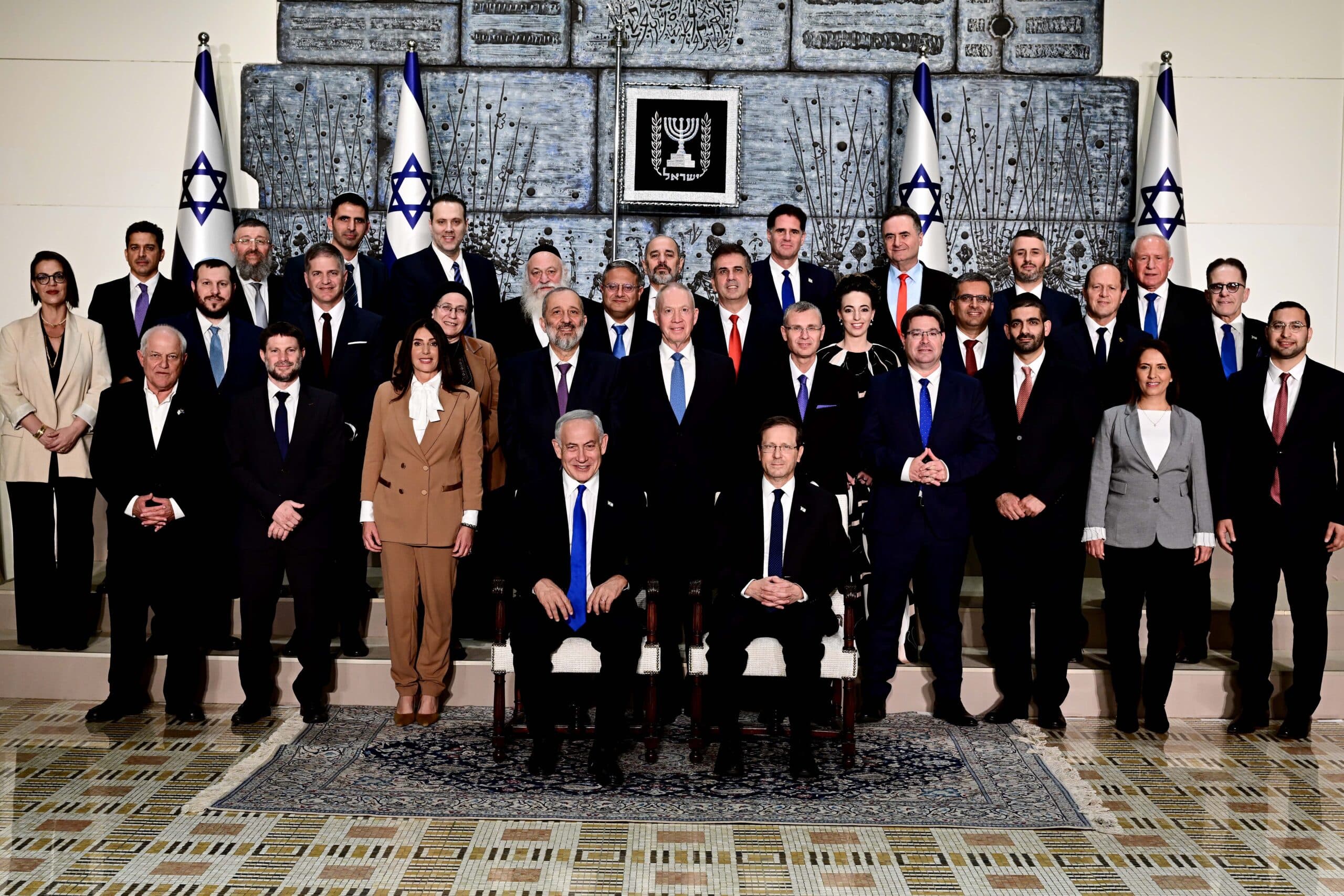
The Netanyahu coalition’s leaders are lowering expectations. “There is no one in Israel who doesn’t want a change of regime,” Culture Minister Miki Zohar told the Kan public broadcaster on Tuesday. “It’s everyone’s aspiration. But it depends on the Iranian people. The ground will be more fertile the minute they can take their fate into their hands. Whether they succeed, we will have to see.”

Meanwhile, the notion that the war will permanently disable Iran’s military and missile capabilities is also in question, especially given the fact that Donald Trump can halt the war at any time he sees fit. Indeed, some analysts are now openly saying that additional wars with Iran will be necessary to suppress a threat of Iran rebuilding its capabilities.

That is bad news for an Israeli public enduring fear, dislocation and disruption from Iranian missile attacks, which continued last night.

Zohar now outlines Israel’s goal as the near-complete degradation of Iranian military capabilities. “It could be that the war will end when the regime is equipped only with Kalashnikov rifles, not missiles or drones. We are very close to that point,” he said.
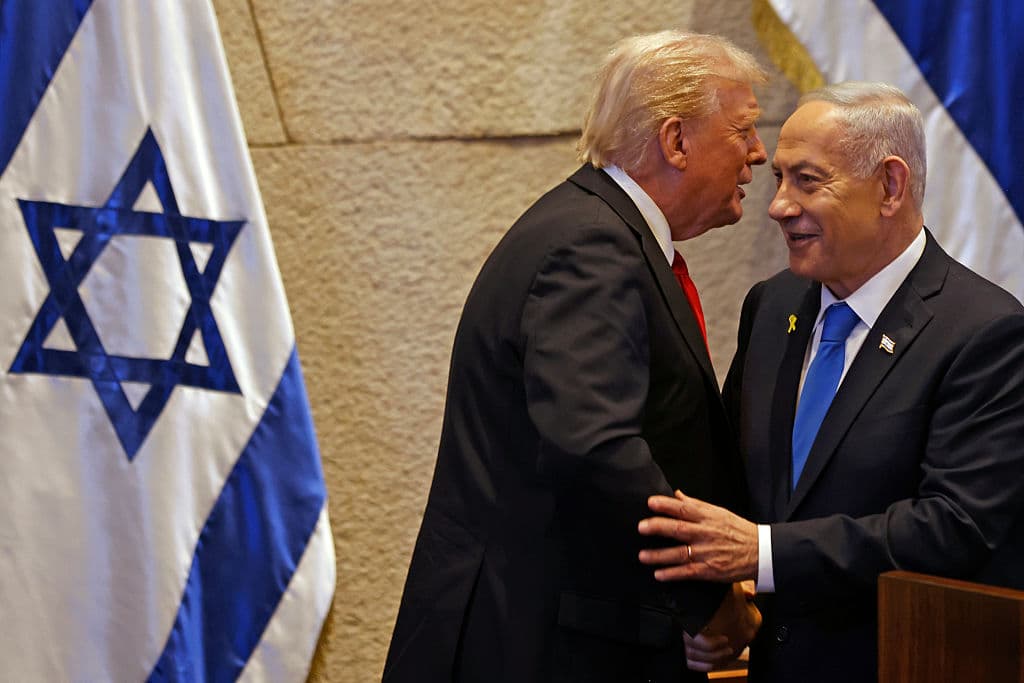
Israeli military specialists say the air force has inflicted massively destructive blows on Iran. Kan reported that 4000 targets had been struck and 200 missile launchers destroyed during the 12 days of fighting.

Iran has only a third of the launchers it had before the war, the station said. It reported that 400 Revolutionary Guard targets had been hit. Military action against Iran’s nuclear program is still to come, it added.

Euphoria misplaced, endgame changes

But somehow, there is a sense that the earlier euphoria was misplaced. Tehran’s government is still functional, Khameini’s son Mojtaba has taken over in a seemingly smooth transition, and missiles are still raining down on Israel and across the Gulf region. Meanwhile, crude oil crucial to the world economy has been cut off by the closure of the Straits of Hormuz.

Analysts and military specialists interviewed by The Jewish Independent explain that Israel’s endgame now is simply to inflict as much further destruction as possible on Iranian capabilities until the war is halted by Donald Trump. “Without an opposition, there won’t be regime change but there will be a very much weakened Iran,” says Yaakov Amidror, former director of Israel’s National Security Council.

“If Trump stops it in a week, everything will depend on what we have succeeded in doing in a week,” he said, adding that in his view it would be best if the war lasted a total of four to six weeks.

In a sense this is not shaping up as the war to end all wars. Amidror stressed that at the end of the fighting “it could be that missiles are no longer a threat but that the Iranians might want to rebuild. Then Israel alone or with the United States will have to return and destroy what the Iranians build. Every time it builds its capabilities, you attack.”

If that becomes a pattern, it could be very costly for Israel, trapping it into a state of never-ending war, further militarising and degrading its society and politics and raising the possibility of more exposure of its population to attack.

The idea of periodic rounds with Iran has a precedent in what is known as Israel’s “mowing the grass” approach towards the Hamas-ruled Gaza Strip before the onslaught of October 7, 2023.

Whenever Hamas was perceived to heighten its capabilities or armed challenges, Israel carried out devastating ground offensives or aerial bombardments that it thought would maintain the status quo in the blockaded enclave.

In a sense this war is a follow up to a 12-day conflict last June ostensibly aimed at eliminating Iran’s nuclear capability through Israeli and US airstrikes which were countered by Iranian missiles. Netanyahu falsely stated that Israel had eliminated the threat and had won a victory for generations. Trump, for his part, lied by saying Iran’s program had been “obliterated”.

It is not far-fetched to expect each of them to declare a total victory again this time — even if that is a spin.

Israel may launch another attack after this war

Tellingly, Eldad Shavit, senior researcher at the Institute for National Security Studies, also left open the possibility that Israel would resume fighting with Iran after this war ends. “It depends on the status of Iran’s capabilities the moment the war ends.

“I don’t see an endgame right now, except to deplete as much as possible the capabilities of the regime and to hope that weakening it makes it easier to replace. But there is no way to know if this will actually happen.”

Brandon Friedman, director of research at Tel Aviv University’s Moshe Dayan Center for Middle East and African Studies, believes that any possible movement towards regime change would likely come after, rather than during, the war.

“It may take the end of the military option to allow Iranian people to express themselves,” he said. “It’s hard to do that when bombs are raining down on the street. Those evaluating the war need to have in mind that this could take some time.”

There remains a major challenge over Iran’s enriched uranium stock, with Israeli media reports saying there is enough to make ten bombs. But it is unclear whether or not that can be addressed during this war because it would apparently entail a very risky commando operation.

Meanwhile, mainstream media depiction of the war as a resounding success is being questioned. Pulitzer Prize winning security analyst Ronen Bergman, writing on Tuesday on the Ynet web site, argued that “from the standpoint of the regime in Tehran, survival will constitute the necessary achievement. At the moment it looks like this achievement is not impossible.”

He quoted a security source involved in coordination with the Americans as saying: “Not everything the IDF does in Iran is a sweeping success. There are also difficulties, failed attacks, challenges that make it harder for our defences, American anger over our attacking oil installations and more.”

Bergman wrote that the determination of the Iranians had been underestimated, predictions that anti-regime protesters would surge into the streets had not materialised and that in Lebanon, Iran’s proxy Hezbollah was more active in fighting than anticipated. Nor had Israel foreseen that Iran would fire on civilians in more than ten countries, he added.

Speaking from Amman, veteran Palestinian commentator Daoud Kuttab told TJI during a phone call that Iran has by no means been vanquished. While the US and Israel had caused a lot of damage to Iran “they continue to lob missiles, show that the government is in power and after the death of an 86-year-old man who could have died from other issues, they’re standing, they’re not falling apart, they didn’t surrender.

“Iran is standing and America and Israel look much worse than they did before the war began,” Kuttab said.

You might also like
  • UK’s dramatic policy change on Israel-Palestine
    Colin Shindler
  • Fear of Netanyahu victory may drive big surge in Palestinian voter turnout
    Ben Lynfield
  • No action to stop Hezbollah ally beaming antisemitic and anti-Israel content into Australia
    Michael Visontay
logomark.67a07ee3
We believe in the free flow of information

Republish our articles for free, online or in print, by using our Creative Commons licence

You might also like

    Btselem
    NewsIsrael

    ‘Israel is systemically eliminating Palestinian collective life’:  B’Tselem

    Deborah Stone
    ISRAEL-LGBTQ-PRIDE-PARADE-PALESTINIAN-CONFLICT-HOSTAGES
    NewsIsrael

    LGBT asylum seekers caught between Palestinian violence and Israeli bureaucracy

    Jarod Rhine-Davis
    altalena
    Israel Votes 2026OpinionIsrael

    The Altalena should be a warning, not a political weapon

    Shahar Burla 1

About the author

Ben Lynfield

Ben Lynfield

Ben Lynfield covered Israeli and Palestinian politics for The Independent and served as Middle Eastern affairs correspondent at The Jerusalem Post. He writes for publications in the region and has contributed to the Christian Science Monitor, Foreign Policy and the New Statesman.

More from the author

FeatureIsrael

Fear of Netanyahu victory may drive big surge in Palestinian voter turnout

NewsIsrael

Abuse by IDF soldiers humiliates Muslim Palestinians

OpinionIsrael

Qusra siege exposes shared agenda of IDF and settler extremists

AnalysisIsrael

IDF ordered to evict West Bank camp in election show of strength

Comments1

  • Avatar of Mark Ian

    Mark Ian12 March at 06:28 am

    Regime Change is of now an impossible task as the Regime has the Arms and the tools of repression as seen by the slaughter of courageous human rights demonstrators in January 2026 . But the destruction of the Iranian Ballistic Missile Arsenal has been brilliant as well as the securing of a delay in development of nuclear weapons . The Jihadi Shia Leadership the murderers of the Human Rights Demonstrators and the Ideologist of “Death to the USA ” and “Death to Israel ” have been hit hard for their malign and corrupt agendas . The Oil supply problem persists and here Iran is gaining and there are challenges in neutralising this threat though bypasses by oil lines through land are mitigating the blockade .