Aa
  • Read, Watch, Listen
  • TJI Series
  • Community Action
  • Events
  • Zedi
Follow us and continue the conversation
  • LinkedIn
  • Instagram
  • FaceBook
  • X
  • YouTube
Test yourself with the TJI Quiz!

Adjust size of text

Aa

Follow us and continue the conversation

  • LinkedIn
  • Instagram
  • FaceBook
  • X
  • YouTube

Your saved articles

You haven't saved any articles

What are you looking for?

Original reporting, insightful analysis and diverse views, delivered straight to your inbox

  • LinkedIn
  • Instagram
  • FaceBook
  • X
  • YouTube
Your support fuels our mission to inform, entertain and inspire.

The Jewish Independent is bound by the Standards of Practice of the Australian Press Council. If you believe the Standards may have been breached, you may approach The Jewish Independent or make a complaint to the Australian Press Council in writing at www.presscouncil.org.au. The Council may also be contacted on 1800 025 712.

  • Our Story
  • Contact us
  • Our Team
  • Support us
  • Guidelines
  • Pitch your idea
  • Republishing us
  • Community Action
  • Our Awards
  • LinkedIn
  • Instagram
  • FaceBook
  • X
  • YouTube
Aboriginal FlagTorres Strait Islanders Flag

The Jewish Independent acknowledges Aboriginal and Torres Strait Islander peoples as the Traditional Owners and Custodians of Country throughout Australia. We pay our respects to Elders past and present, and strive to honour their rich history of storytelling in our work and mission.

© The Jewish Independent 2026All Rights Reserved
Website design and development by Your Creative, MelbourneTerms & ConditionsPrivacy Policy
HomeRead, Watch, ListenIsrael
AnalysisIsrael

Arab citizens fight back as Israeli government ignores rising violence in Arab communities

The murder rate in Arab communities has more than doubled but the Netanyahu government has failed to respond.
Ben Lynfield
Print this
Arab violence protest Tel Aviv

A protestor holds a placard during a protes accusing Israel’s government of neglecting its Arab citizens and allowing violence to run rampant (Eyal Warshavsky/SOPA Images/LightRocket via Getty Images)

Published: 5 February 2026

Last updated: 5 February 2026

An estimated 40,000 Arab and Jewish protesters turned out in Tel Aviv Saturday night for an unprecedented rally, accusing the government of neglecting its Arab citizens and allowing violence to run rampant in the community.

It is too early to say if the protests will advance towards center stage on Israel’s crowded agenda. But the feeling is that the Arab citizens are already breaking new ground in demanding their rights.

Their leaders are becoming more ambitious now. They hope to translate the awakening of peaceful street demonstrations during the last two weeks into an electoral springboard to change the government.

Arab Knesset members, members of a higher coordinating council, local leaders and activists are discussing how to keep up popular momentum after Saturday night's demonstration.

The murder rate has more than doubled since the avowedly racist Itamar Ben Gvir, a key ally of Netanyahu, became national security minister. Most of the deaths are caused by organised crime families, often in turf wars where the circle of victims has kept expanding to the point that the entire population feels threatened.

Some accuse Ben-Gvir of supporting the violence to cause the disintegration of Arab society while others say it expands naturally due to his neglect

Ben-Gvir appears unmoved as the Arabs he despises and incites against die at the hands of the crime families and their mercenaries The surge of killings and coercion to pay protection money has included people being abducted from their homes and shot, safe residential streets turning into zones where residents fear to leave their houses and even children getting gunned down by the crime families as they battle for territory, money and power.

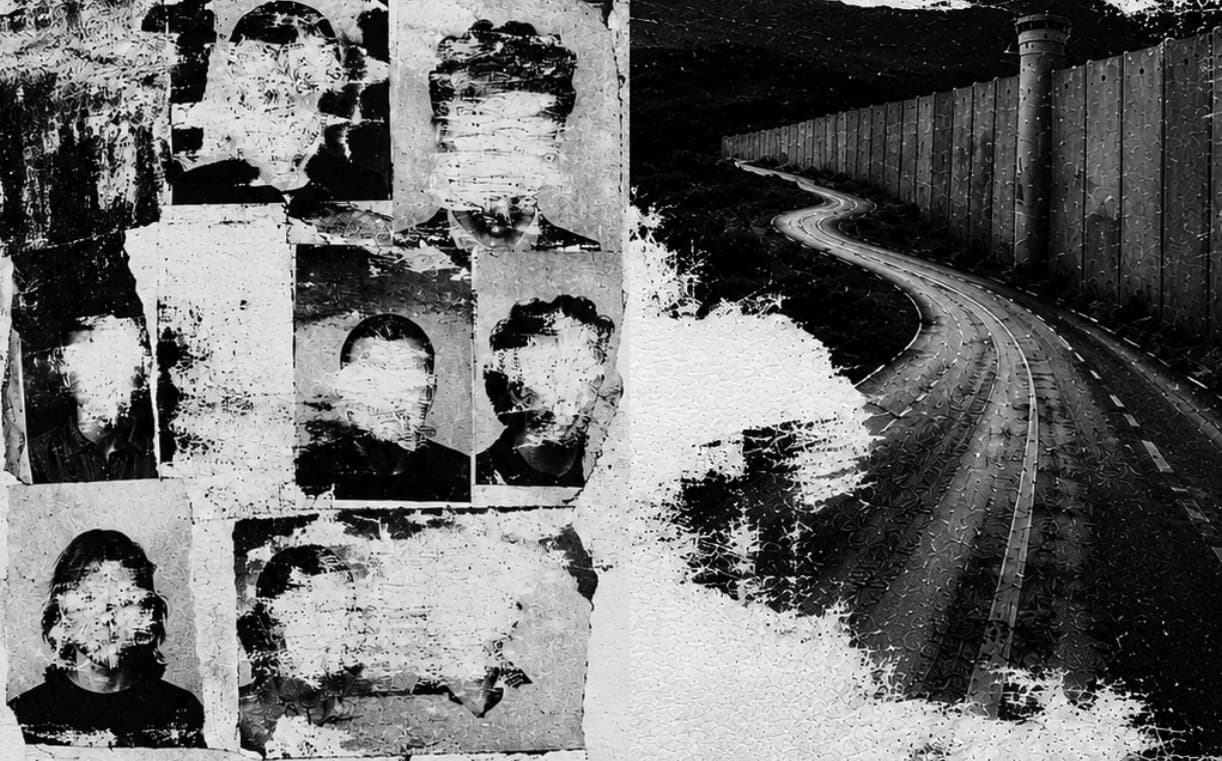
Some accuse Ben-Gvir of supporting the violence to cause the disintegration of Arab society while others say it expands naturally due to his neglect.

Arab citizens have traditionally been politically lethargic, due to a lack of faith that they can change anything. Saturday night changed that.

Young and old, rich and poor, residents of north and south, of villages and cities came together in Tel Aviv with a message of: enough is enough, we will not tolerate being ignored. They were joined by Jewish supporters to whom the Arab speakers welcomed as badly needed in a shared struggle. 

A gathering the previous week in the Galilee town of Sakhnin had also drawn a large turnout that led to the decision to take the protest into the heart of Jewish Israel.

Relatives held up pictures of their murdered loved ones, making the failure of the government's response more tangible.

“I am not here to cry but to scream,” Khatam Abu Fana, whose son Firas was killed at his workplace last year told the crowd. She sobbed and struggled to express how her life was shattered. “I demand protection for the mothers who have not yet experienced this pain.”

She added that her son’s blood should be a cry that “prevents the repetition of this crime, and not another forgotten memory”.

“This will politicise the people and make them understand that to get their security we need to remove those fascists from government”

Aida Touma-Suleiman, MK, Hadash party

But for anything to change, Ben-Gvir will have to be ousted and replaced by policymakers who prioritize addressing the calamity.

“We understand that protests by themselves cannot reduce the murders and that this struggle won’t end in a day,” Aida Touma-Suleiman, a lawmaker for the left wing Hadash party told the Jewish Independent. "We need a political struggle that will end up with large voter turnout.”

“What we need to do now is get more and more people involved in the struggle,”she said. “This will politicise the people and make them understand that to get their security we need to remove those fascists from government.”

Plans to further public activism include escalation of protests and waging strikes and work stoppages that impact Israeli Jews. Touma-Suleiman cited the example of Sakhnin residents rallying around a storeowner who refused to pay protection as a form of the social solidarity that can be built.

Politically, the top priority is maintaining a new agreement of four Arab parties to run together as The Joint List, a unity that is popular among the public and would likely increase turnout and Knesset seats.

But the path ahead is strewn with question marks:can unity be maintained among traditionally fractious factions? Will higher turnout actually materialize? Can a leadership that has in the past struggled to bring gains rise to the occasion? How will Israeli Jewish society, most  of which has become even more averse to Arabs since the Oct 7 Hamas attacks, react?

Importantly, when it comes to the formation of a new coalition, will Jewish opposition parties close the door on Arab participation in a new coalition as some of their leaders have already threatened?

There is no reason to believe the election campaign will cure racism. Veteran strategic and political analyst Yossi Alpher says the Jewish parties currently in opposition might prefer a national unity government with Likud over partnering with Arab parties. Still, he termed the agreement of Arab parties to a joint list “impressive”.

Above all other possible impediments, there is Netanyahu’s potential to successfully preserve himself in power. He will likely try every means, including fear to cause Arabs not to vote. It is even possible Netanyahu may find a way—or a war—to make sure the elections do not take place.

If the government does change, the problem can start to be solved quickly. It is not a matter of rocket science. It needs determination, expertise in law enforcement, resources and manpower.  In the longer term, social programs for youth, jobs and hope can help.

This has been done successfully before, under a more moderate government that included an Arab party, Ra’am. Then deputy internal security minister Yoav Segalovich, previously head of a police investigations unit, led an emergency campaign that brought down the death rate in 2022. It was a cross agency effort with weekly coordination meetings. Ben-Gvir did not continue these efforts.Thus the number of murders rose from 108 that year,  to more than double that annually since Ben-Gvir took over in January 2022, peaking at 249 in 2025.

The coalition blames the Arab leaders for the deaths, saying they spend their time criticizing Israel instead of dealing with the problem. Segalovich, from the Yesh Atid party, explains more convincingly that the government simply doesn’t care that the Arabs are dying. “ When there is a feeling that there is no law and no judge, crimes become much easier to execute,” he told the Israeli website Local Call recently.

Meanwhile the protests are continuing with greater passion.  Mazra’a village in northern Israel Tuesday held a demonstration to mark a year since the murder of a thirty year old pediatrician, Abdallah Awad, who was gunned down in a clinic. The crowd chanted the names of four other  villagers who were murdered and the village council pledged to “keep our voices raised high” until Mazra’a children can grow up safely.

With such sentiments coming to the fore, there is more support now than ever before for maximizing voter turnout, according to Hassan Jabareen, the veteran head of Adalah-the Legal Center for Arab Minority Rights in Israel.

“Every house and every family is feeling the violence’s impact. People are living in insecurity because the killing became spontaneous. No one knows who will be killed. So everyone views himself as being under threat. ”

“You feel insecure because guns and arms are everywhere and criminals are doing what they want to do. This is the most important matter for Palestinians in Israel,” Jabareen said. “This is a matter of life.”

You might also like
  • ‘Israel is systemically eliminating Palestinian collective life’:  B’Tselem
    Deborah Stone
  • Tame apologises – but with little grace
    Deborah Stone
  • Confronting Richard Flanagan and the myth of the Israel lobby
    Mary Garden
logomark.67a07ee3
We believe in the free flow of information

Republish our articles for free, online or in print, by using our Creative Commons licence

You might also like

    Rozana Beit Oula
    PeacebuildingOpinionIsrael

    Peacebuilding through the eyes of a sceptic

    Ron Finkel
    Arab Israeli Palestinian election vote
    Israel Votes 2026FeatureIsrael

    Fear of Netanyahu victory may drive big surge in Palestinian voter turnout

    Ben Lynfield
    haredi street guitar
    Photo EssayArts & Culture

    Jerusalemites through the lens

    Sharon Gabay

About the author

Ben Lynfield

Ben Lynfield

Ben Lynfield covered Israeli and Palestinian politics for The Independent and served as Middle Eastern affairs correspondent at The Jerusalem Post. He writes for publications in the region and has contributed to the Christian Science Monitor, Foreign Policy and the New Statesman.

More from the author

FeatureIsrael

Fear of Netanyahu victory may drive big surge in Palestinian voter turnout

NewsIsrael

Abuse by IDF soldiers humiliates Muslim Palestinians

OpinionIsrael

Qusra siege exposes shared agenda of IDF and settler extremists

AnalysisIsrael

IDF ordered to evict West Bank camp in election show of strength

Comments1

  • Avatar of Emanuella Cussel Barnes

    Emanuella Cussel Barnes16 February at 07:42 am

    Heroes.