Aa
  • Read, Watch, Listen
  • TJI Series
  • Community Action
  • Events
  • Zedi
Follow us and continue the conversation
  • LinkedIn
  • Instagram
  • FaceBook
  • X
  • YouTube
Test yourself with the TJI Quiz!

Adjust size of text

Aa

Follow us and continue the conversation

  • LinkedIn
  • Instagram
  • FaceBook
  • X
  • YouTube

Your saved articles

You haven't saved any articles

What are you looking for?

Original reporting, insightful analysis and diverse views, delivered straight to your inbox

  • LinkedIn
  • Instagram
  • FaceBook
  • X
  • YouTube
Your support fuels our mission to inform, entertain and inspire.

The Jewish Independent is bound by the Standards of Practice of the Australian Press Council. If you believe the Standards may have been breached, you may approach The Jewish Independent or make a complaint to the Australian Press Council in writing at www.presscouncil.org.au. The Council may also be contacted on 1800 025 712.

  • Our Story
  • Contact us
  • Our Team
  • Support us
  • Guidelines
  • Pitch your idea
  • Republishing us
  • Community Action
  • Our Awards
  • LinkedIn
  • Instagram
  • FaceBook
  • X
  • YouTube
Aboriginal FlagTorres Strait Islanders Flag

The Jewish Independent acknowledges Aboriginal and Torres Strait Islander peoples as the Traditional Owners and Custodians of Country throughout Australia. We pay our respects to Elders past and present, and strive to honour their rich history of storytelling in our work and mission.

© The Jewish Independent 2026All Rights Reserved
Website design and development by Your Creative, MelbourneTerms & ConditionsPrivacy Policy
HomeRead, Watch, ListenArts & Culture
FeatureArts & Culture

‘We were going through the motions …. the virus broke the force of inertia’

Aviva Lowy
Print this

Published: 2 June 2021

Last updated: 5 March 2024

Celebrated Israeli writer Etgar Keret shares with Aviva Lowy his unique take on life under Covid, the liberation of fiction, his love of Australia and the predictability of the Gaza conflict

. . . the heart that softened while you were alone will harden back up in no time.

SO ENDS ETGAR KERET’S 2020 short story Outside, written for a New York Times anthology on the pandemic, in which the central character is forced to leave home after months of Covid isolation. When they encounter a hungry man begging on the street, they avoid eye contact ‘like a pro’ and walk on by.  

Keret subsequently collaborated with Israeli choreographer Inbal Pinto to produce an eight-minute dance video based on Outside, which will be screened during a live conversation between him and Michaela Kalowski at the Randwick Ritz this Thursday, as part of the Sydney Jewish Writers Festival.

He wrote Outside as an antagonistic response to the “victim-like, fake nostalgia” that was being expressed even early on in the pandemic. “People were saying, because of the virus we will never hug each other, people will be afraid of each other’s company.”

But even before Covid struck, we were more fearful of other people, Keret argues, referring to the election of right-wing leaders like Donald Trump and Hungary’s Viktor Orban. “The xenophobic feelings we had had nothing to do with Covid. We are outsourcing our problems to the virus.”

But Covid has, nevertheless, re-opened our eyes to how we choose to live. “It broke the force of inertia. Basically, we were going through the motions: getting up in the morning, going to work, shopping on the way back, picking up the child from the nursery . . . all those things. They are not authentic, spontaneous decisions. They’re just stuff we do because we have to do it.”

When these commitments were removed, Keret says we were forced to think what we want to do and what is a good way to spend our time. “When you work, this isn’t a question you ask yourself.” 

The xenophobic feelings we had had nothing to do with Covid. We are outsourcing our problems to the virus.

As these routines dissolved, Keret was struck by new and surprising sounds during lockdown. In the Tel Aviv apartment which has been his home for 28 years, he heard birds for the first time because there was no traffic on the street. Also new was the sound of neighbours arguing. One couple is already divorced.

Parents who were used to only spending an hour a day with their children found they really loved being parents and wanted more time with their kids. And some “discovered they really hate being parents and it’s only really bearable if you work late hours”. 

Keret was keen to collaborate with Pinto for the video of Outside, because he loves opening up to the creativity of others, even if it means ceding absolute control of the artistic endeavour.

A still from Etgar Keret's dance video of Outside, that he made with Inbal Pinto

“Many writers have told me that they like to be in a position of power. One writer once told me that, unlike real life, when my character goes to the bus stop, I know for sure when the bus will arrive and if it will rain or not.  With me, it’s the other way around. I don’t go to fiction seeking control, I go to fiction to create a space where I can lose control, and by losing control I can learn things about myself.

“Sometimes I write a story and I think it’s really funny and then two pages later a bus runs down my antagonist and he becomes crippled and it becomes tragic. I’m open to that.

Many writers like to be in a position of power. With me, it’s the other way around. I go to fiction to create a space where I can lose control.

“I’m a big coward in real life, but really brave when it comes to creative processes because in real life everything you do has consequences. I can hurt myself, lose my money, offend other people, create a huge hole in the ozone layer. But when I write a text, I feel this liberation to go to places I wouldn’t dare in real life.”

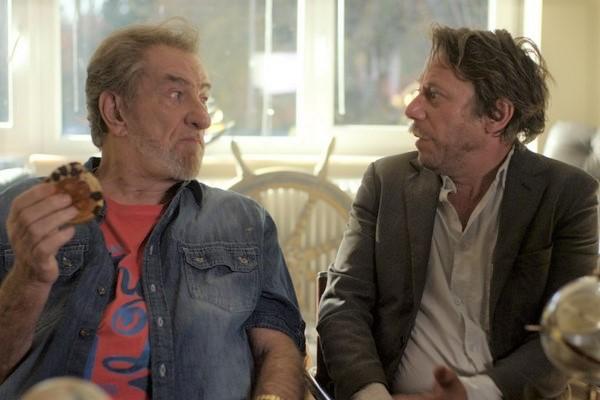
A scene from The Middle Man

Another collaborator with whom Keret is happy to share artistic control is his wife, Shira Geffen. The two produced a four-part TV show in 2019 called The Middleman, about a broke real estate agent camping out in the apartments he is meant to be selling, and whose only friend is a talking goldfish. More unusual than the script is the fact that the series, directed by Keret, is in French, a language he doesn’t speak. 

He says there are two main reasons why The Middleman was a French production. The first is that because the action is totally centred around the hero (“a grotesque version of myself”) who appears in every scene, it was crucial that they find the right actor. “I met Mathieu Amalric (best known for his role in The Diving Bell and the Butterfly, and as a villain in the James Bond film Quantum of Solace) in Paris and he read my stories.

“Immediately, my wife said, ‘He can be you!’ We have a lot in common. We are short Jews around the same age who are hyperactive and neurotic. We are kamikaze artists, dedicated to what we want. In my eyes, he is one of the five best actors living in the world.”

The second reason was pragmatic. There was more interest and financial support in France than at home in Israel. Keret and Geffen’s previous film collaboration, Jellyfish, was the winner of the Camera d’Or at the 2007 Cannes Film Festival and was viewed by larger audiences in France than Israel, even though it was in Hebrew.


It’s not uncommon for Keret to realise his works with international partners. His 2009 stop-motion animationfilm, titled $9.99, was produced in Australia by Emile Sherman (who later won an Academy Award for The King’s Speech). The title of Keret’s film refers to the price of a book which promises to provide the meaning of life. Keret says he was starstruck to have his text acted by Geoffrey Rush and Anthony La Paglia on that production.

Keret loves visiting here. “I’ve been four times and each of those visits was as long as I could stay without getting fired from the university I work in.”

I like your beautiful beaches and warm weather, and at the same time, you don’t kill each other. It looks like an upgraded version of my home.

Coming from a Mediterranean country, he likes our, “beautiful beaches and warm weather, and at the same time, you don’t kill each other. Sometimes it looks like a kind of upgraded version of my home. I like being here (in Israel) but the moment I see the beach I see that I’m sweating and I know that probably a rocket is going to hit somewhere close to me soon.”

Having made an oblique reference to the Israeli-Palestinian conflict, Keret says he finds the recent hostilities frustrating, likening it to being the passenger in a car accelerating towards an accident. You say to the driver, “slow down, slow down. Then, boom, you hit something.

“There was something slow, predictable and inevitable about the last clash. Israeli Arab parliament members, you could see them quoting to the camera a week before this happened: ‘if we continue this way it will go to violent clashes. What are you trying to do?’”

He says he finds that everyone in Israeli media and politics is very blase all the time “and in the end, they suddenly find themselves surprised by things that are kind of pretty obvious.

“If you change the status quo in Eastern Jerusalem, if you send right-wing parliament members to create provocation in a Palestinian neighbourhood, if you throw a shock grenade into the Al Aqsa mosque, then, in the end, you shouldn’t be surprised that this will turn into a very heated clash.

Netanyahu will say we want to teach them a lesson they will not forget. But we had five wars like this. We’ve taught them five lessons they didn’t forget.

“The riots in Israel where Arabs attacked and burnt synagogues are horrible, but this doesn’t change the fact that in this conflict Israel is the more established, the stronger power, and for some reason, our leadership take a passive stance. It doesn’t have any long-term plans about anything. Even with this war on Hamas, the goals of this war were never defined. They were not to conquer Gaza, they were not to dismantle Hamas.

“Netanyahu will say we want to teach them a lesson they will not forget. But you know, we had five wars like this. We’ve taught them five lessons that they didn’t forget. In each of them, we kill the important people in Hamas which were replaced overnight by other people that we will kill in the next operation.” 

Although Keret does not shy away from discussing politics and reality, it is the world of the imagination where he feels most at home. Yet his restless versatility defies easy pigeon-holing. I ask him if rather than book writer, scriptwriter or director, a better description of him would be simply storyteller?

“I totally agree with that. I really am a storyteller and the best form for me so far was short fiction. But in a sense, the reason that I’m happy to work on a dance video on the one hand and a children’s book on the other, or directing a film, is that basically the thing that interests me most is stories and people and characters.”

In that sense, Keret says he will employ any method that will help to tell a tale. “If I could tap dance a story, then I would start learning tap dancing.”

Etgar Keret will be in conversation with Michaela Kalowski at the Randwick Ritz on Thursday, as part of the Sydney Jewish Writers Festival.

CLICK HERE TO BOOK

Main photo: Etgar Keret (Lielle Sand)

You might also like
  • Iran conflict hinges on Trump’s nuclear nerve
    Dror Doron
  • Flooding and illness increase urgency of humanitarian relief in Gaza
    Shahar Burla
  • Australia’s latest sanctions raise the stakes, but stay on track
    Deborah Stone
logomark.67a07ee3
We believe in the free flow of information

Republish our articles for free, online or in print, by using our Creative Commons licence

You might also like

    Yitzhak Yedid
    InterviewArts & Culture

    Finding hope in the Valley of the Dry Bones

    Jarod Rhine-Davis
    At the Edge of the Desert
    FeatureArts & Culture

    How this artist went from hiding to embracing her Mizrahi heritage

    Elana Benjamin
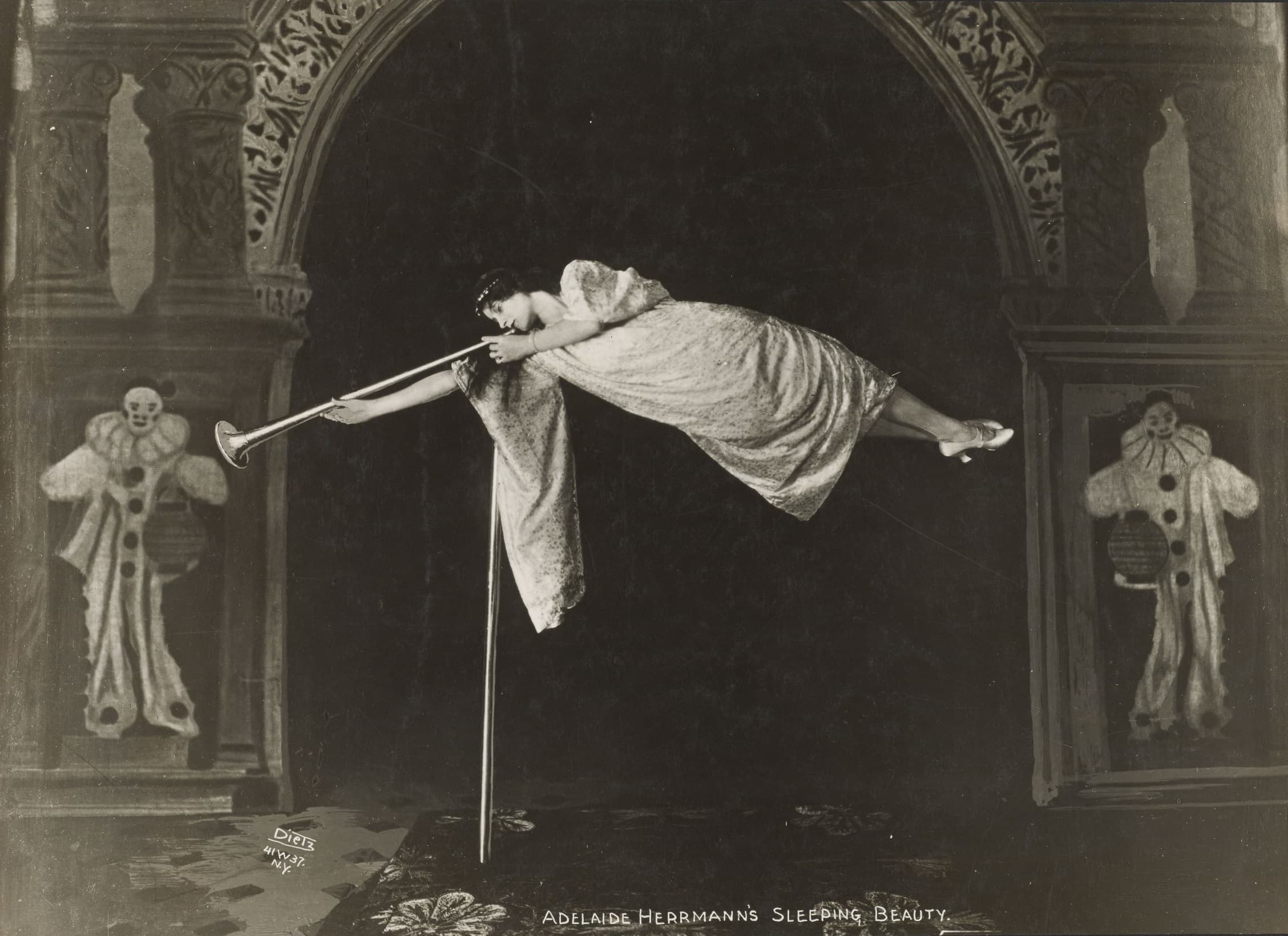
    Adelaide Hermann magicianHarvard_Theatre_Collection_-_Hermann_TCS_28
    FeatureArts & Culture

    Legendary magicians who made their Jewish identities disappear

    Nina Siegal

About the author

Aviva Lowy

Aviva Lowy

Aviva Lowy started her career as a radio journalist with 2JJJ and the ABC. She has written on a broad range of subjects, from food and travel to science and health.

More from the author

FeatureArts & Culture

The boys who lived

ReviewArts & Culture

Books: Noble orphan, a hotel nightmare and Miriam’s wisdom

ReviewArts & Culture

Books: Austrian ghosts, a New Yorker’s joyride, intrigue in Istanbul

ReviewArts & Culture

Books: 100 Israeli lives, German traitors, passion for romance