Published: 12 December 2023
Last updated: 13 March 2024
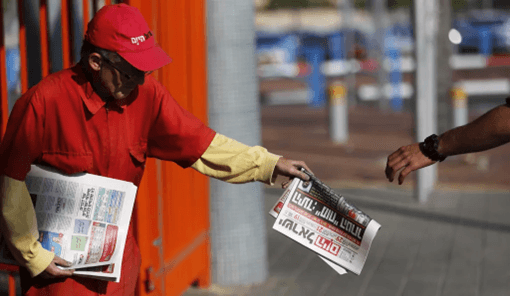
In the second of a three part series on Israel’s media landscape, ITTAY FLESCHER explores the world of print and website media.
Moments after the seat tally of Israel's 2015 elections was released, Haredi journalist and author Yitzik Crombie shared a tweet he called “the real election results". Instead of listing parties, it listed names of newspapers and how many each had “won” for their readers. Israel Hayom has obtained 30 seats for Likud, all the way down to Haaretz who managed four seats for Meretz.
The tweet went viral because it illustrated how Israel’s newspapers have essentially become cheer squads for certain parties or ideologies. Nuance or diversity is far less important than catering to one’s base.
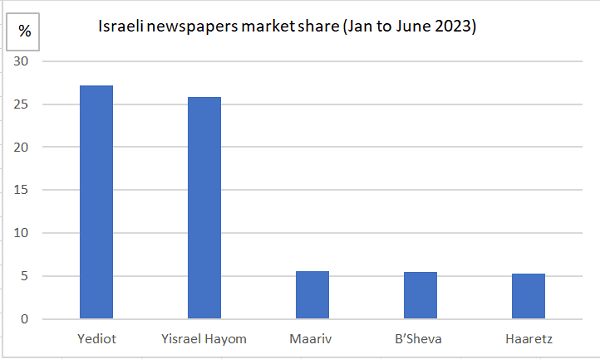
Israel's most popular newspapers and websites, in order, are Yedioth Achronot, Israel Hayom, Maariv, B’Sheva and Haaretz.
There are also smaller sector outlets that speak to the diversity of Israeli society. These include Hamodia and Yated Neeman (Haredi), Makor Rishon (Religious Zionist), Al Quds, Al Arab and Al-Ittihad (Arab/Palestinian), and Vesty and Novosti Nedeli (Russian language).
In English, the offerings range from +972 Mag (far left website), Haaretz (capitalist left) and Davar (workers’ left) to Times of Israel (centrist but Netanyahu- critical) to Jerusalem Post (right), and Israel National News (far right settler).