Aa
  • Read, Watch, Listen
  • TJI Series
  • Community Action
  • Events
  • Zedi
Follow us and continue the conversation
  • LinkedIn
  • Instagram
  • FaceBook
  • X
  • YouTube
Test yourself with the TJI Quiz!

Adjust size of text

Aa

Follow us and continue the conversation

  • LinkedIn
  • Instagram
  • FaceBook
  • X
  • YouTube

Your saved articles

You haven't saved any articles

What are you looking for?

Original reporting, insightful analysis and diverse views, delivered straight to your inbox

  • LinkedIn
  • Instagram
  • FaceBook
  • X
  • YouTube
Your support fuels our mission to inform, entertain and inspire.

The Jewish Independent is bound by the Standards of Practice of the Australian Press Council. If you believe the Standards may have been breached, you may approach The Jewish Independent or make a complaint to the Australian Press Council in writing at www.presscouncil.org.au. The Council may also be contacted on 1800 025 712.

  • Our Story
  • Contact us
  • Our Team
  • Support us
  • Guidelines
  • Pitch your idea
  • Republishing us
  • Community Action
  • Our Awards
  • LinkedIn
  • Instagram
  • FaceBook
  • X
  • YouTube
Aboriginal FlagTorres Strait Islanders Flag

The Jewish Independent acknowledges Aboriginal and Torres Strait Islander peoples as the Traditional Owners and Custodians of Country throughout Australia. We pay our respects to Elders past and present, and strive to honour their rich history of storytelling in our work and mission.

© The Jewish Independent 2026All Rights Reserved
Website design and development by Your Creative, MelbourneTerms & ConditionsPrivacy Policy
HomeRead, Watch, ListenIsrael
Israel Iran WarAnalysisIsrael

US-Iran deal leaves Israel in strategic bind

The agreement prioritises oil over nuclear capability, effectively handing Iran a win
Dror Doron
Print this
e Strait Of Hormuz

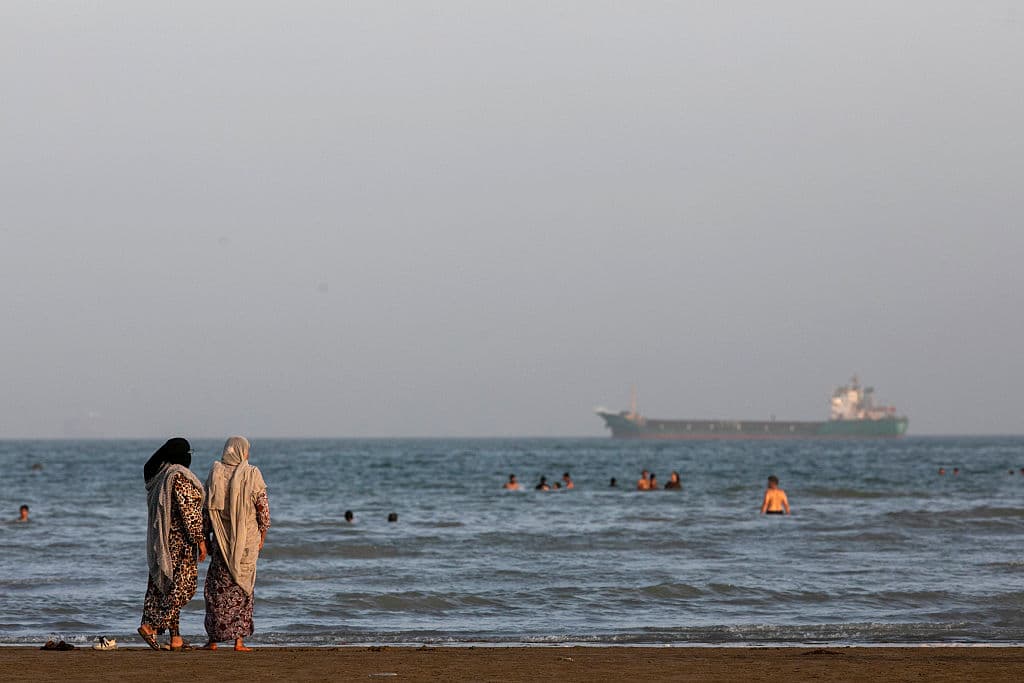
Daily life continued in Iran along the Strait of Hormuz while oil tankers like the one in the background were blocked from delivering oil to the West (Majid Saeedi/Getty Images)

Published: 17 June 2026

Last updated: 18 June 2026

US President Donald Trump has announced an end to the war with Iran, but there have been a flurry of contradictory reports as to the content of the Memorandum of Understanding (MOU) between the US and Iran.

This deal, it appears, is vaguely drafted. Senator Lindsey Graham, a close ally of President Trump, has notably expressed what seems to be a significant understatement, as he stated he is "somewhat concerned that Iran’s interpretation of the agreement differs from what the American negotiating team is claiming." In essence, this is the fundamental problem with the deal – each side perceives it entirely differently.

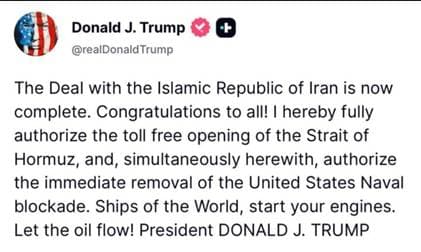
Immediately following the announcement of the deal, President Trump was quick to share his thoughts on his Truth Social media platform, stating: "Ships of the world, start your engines. Let the oil flow!" This message reflects what has become the top priority for the US administration in recent months: reopening the critical Strait of Hormuz. It is important to note that, according to official American data, US strategic oil reserves have fallen to their lowest level since 1983, which clearly elucidates Washington's strong motivation to end the conflict with Iran.
The Jewish Independent

That Washington's goals for the war shifted from neutralising Iran's nuclear capabilities to reopening the Strait of Hormuz and stabilising the global energy market represents a significant victory for Iran.

The regime in Tehran has not only survived but has also demonstrated its ability to strike Israel, Gulf states, and American forces up until the last day. Iran compelled the US to cease military action without offering any concessions regarding its nuclear capabilities – an issue that is set to be negotiated in the coming 60 days.
The Jewish Independent

CIA Director John Ratcliffe had reportedly warned President Trump and other officials that intelligence gathered by the US raised serious doubts about Iran's willingness to make concessions on its nuclear program in the final deal. The notion of using a "reliable military threat" as leverage – a strategy that had characterised previous US efforts to coerce Iran into negotiations – has now proven futile. This "one-time shot" has been squandered, resulting in unchecked Iranian self-confidence.

From Israel’s perspective, the latest developments present a significant strategic challenge, as none of the main declared objectives of the conflict were achieved. Iran continues to possess 440 kilograms of highly enriched uranium, bringing it perilously close to developing a nuclear weapon. Furthermore, Iran refuses to discuss any limitations on its ballistic missile capabilities that threaten Israel or its regional proxies – all of which remain active in Lebanon, Gaza, and Yemen.

Even more troubling, the American eagerness to end hostilities due to their impact on the global energy market, has been leveraged by Iran to demand that any cessation of hostilities in the Gulf also includes Israel halting its military campaign against Hezbollah in Lebanon. Both Iran and Pakistani mediators assert that the Lebanese issue is part of the agreed-upon MOU, although US officials deny this claim.

Israeli officials have adamantly rejected any attempts to restrict the Israel Defense Forces' (IDF) freedom of action against Hezbollah. However, this issue has now become a point of contention with the Trump administration, as evidenced by Trump's apparent frustration with Israeli Prime Minister Benjamin Netanyahu, following an IDF strike on Beirut just a day before the agreement was finalised.

Adding to the challenges, Israel faced another significant setback during the recent conflict. While operational military coordination with the US reached unprecedented levels, Israel’s strategic influence over Trump diminished. Reports indicate it was Turkish President Recep Tayyip Erdogan who persuaded Trump to abandon plans for using Kurdish forces as "boots on the ground" in Iran – an integral aspect of the Israeli war strategy aimed at destabilising the Iranian regime. Additionally, it was leaders of Qatar who pressed Trump to halt the conflict due to the damage inflicted by Iranian retaliation.

In the aftermath of a vague MOU, interpreted differently by each side, and with an increasingly radical Iranian regime displaying an unprecedented level of self-confidence after surviving a long-standing existential threat, Israel now finds itself in what appears to be a strategic “dead end.”

Decision-makers in Jerusalem must now focus on mitigating the losses from this unsuccessful military campaign, given the limited resources. They need to concentrate what remains of their influence and credibility in Washington to secure two key objectives: the extraction or verified dilution of the 440 kilograms of highly enriched Iranian uranium, and the preservation of the IDF's freedom of action against Hezbollah in Lebanon.

RELATED EVENT

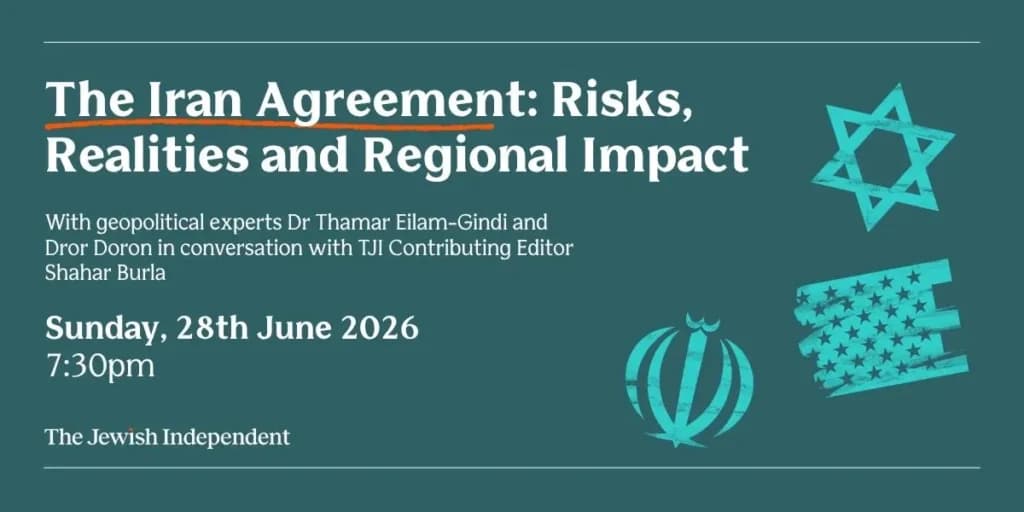
The Iran Agreement: Risks, Realities and Regional Impact

Join geopolitical experts Dr. Tamar Eilam-Gindin from the University of Haifa and Dror Doron from United Against Nuclear Iran in conversation with The Jewish Independent's Contributing Editor Shahar Burla to understand what the recent Iran deal means for the Iranian people, Israelis, the US and the broader Middle East region.

More information and registration here.

You might also like
  • ‘Israel is systemically eliminating Palestinian collective life’:  B’Tselem
    Deborah Stone
  • Tame apologises – but with little grace
    Deborah Stone
  • Confronting Richard Flanagan and the myth of the Israel lobby
    Mary Garden
logomark.67a07ee3
We believe in the free flow of information

Republish our articles for free, online or in print, by using our Creative Commons licence

You might also like

    Woman with land and houses behind her
    NewsAustralia

    Australia to increase sanctions against West Bank settlements

    Deborah Stone 2
    Erdogan Turkey
    AnalysisIsrael

    Turkey emerges as military threat to Israel

    Dror Doron
    Netanyahu
    Israel Hamas WarFeatureIsrael

    New evidence Netanyahu was warned about October 7

    Shahar Burla 2

About the author

Dror Doron

Dror Doron

Dror Doron is a senior political analyst specialising in the Middle East, and is a senior adviser at United Against Nuclear Iran (UANI) focusing on Hezbollah and Lebanon.

More from the author

AnalysisIsrael

Turkey emerges as military threat to Israel

AnalysisWorld

New Saudi-Pakistan-Turkey alliance driven by failure of US to subdue Iran

AnalysisIsrael

Trump’s Hamas disarmament deal a mirage that’s quickly faded

AnalysisIsrael

Syria reimagined: From military threat to geostrategic competitor

Comments1

  • Avatar of Mark Ian

    Mark Ian23 June at 12:38 am

    Israel will develop self -reliance with better defence and deterrence weapons such as laser and automated weapons .
    Energy Sources such as more efficient solar wind and tidal power are necessitated .
    Better underground shelters like Switzerland and Eastern Europe are a half Decade necessity .
    A Government of National Unity convincing some Haredim to serve is the wish of the hundreds of thousands of Reservists and their Families .