Published: 1 July 2026
Last updated: 1 July 2026
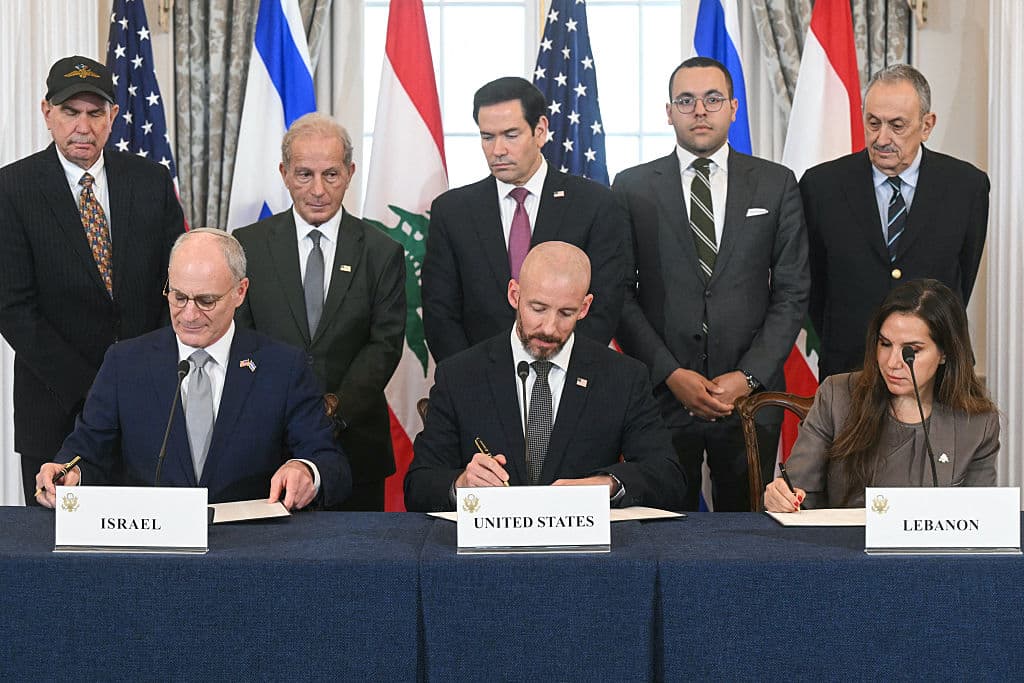
Israel and Lebanon’s representatives signed an agreement last week that marks the most significant diplomatic interaction between the two countries in decades. The agreement, which was sponsored by the Trump administration, calls for concluding the ongoing state of war between the two countries and formally affirms each other’s right to live in peace and security as neighbouring sovereign states.
The text also states the Lebanese government's commitment to disarm all non-state groups – a phrase pointing mainly at Hezbollah – and Beirut’s goal to achieve a full monopoly over the use of weapons on its soil. Israel, on its part, declared that it has no territorial ambitions in Lebanon, and upon the verified disarmament of local militias, Israel will withdraw all of its forces from Lebanon.
This diplomatic achievement is far from being an isolated event in the geostrategic landscape of the region, nor is it the first of its kind historically. Back in 1983, a pro-Western Lebanese government signed an agreement known as the “17th May Agreement,” which included much of the same content but was never implemented. A few months after the signing of that agreement, the government in Beirut collapsed due to foreign intervention by the Syrian regime and the civil war, which was raging in full force.
A challenge to Hezbollah
Today, it is Hezbollah, the Iranian regime’s most important regional proxy, which is leading the overwhelming rejection of the recently signed agreement. Hezbollah's officials point to it as a “surrender to American and Israeli dictates” and claim it is aimed at disarming Hezbollah through political pressure after Israel had failed to achieve this goal through military means.
![[[:fr:Fez (coiffure)|Fez]] rouge à gland noir, en feutre.](/_next/image/?url=https%3A%2F%2Fjewishindependent.yourcreativeagency.com.au%2Fwp-content%2Fuploads%2F2026%2F10%2Ffez-cap-eisenkot-netanyahu.jpg&w=3840&q=75)