Aa
  • Read, Watch, Listen
  • TJI Series
  • Community Action
  • Events
  • Zedi
Follow us and continue the conversation
  • LinkedIn
  • Instagram
  • FaceBook
  • X
  • YouTube
Test yourself with the TJI Quiz!

Adjust size of text

Aa

Follow us and continue the conversation

  • LinkedIn
  • Instagram
  • FaceBook
  • X
  • YouTube

Your saved articles

You haven't saved any articles

What are you looking for?

Original reporting, insightful analysis and diverse views, delivered straight to your inbox

  • LinkedIn
  • Instagram
  • FaceBook
  • X
  • YouTube
Your support fuels our mission to inform, entertain and inspire.

The Jewish Independent is bound by the Standards of Practice of the Australian Press Council. If you believe the Standards may have been breached, you may approach The Jewish Independent or make a complaint to the Australian Press Council in writing at www.presscouncil.org.au. The Council may also be contacted on 1800 025 712.

  • Our Story
  • Contact us
  • Our Team
  • Support us
  • Guidelines
  • Pitch your idea
  • Republishing us
  • Community Action
  • Our Awards
  • LinkedIn
  • Instagram
  • FaceBook
  • X
  • YouTube
Aboriginal FlagTorres Strait Islanders Flag

The Jewish Independent acknowledges Aboriginal and Torres Strait Islander peoples as the Traditional Owners and Custodians of Country throughout Australia. We pay our respects to Elders past and present, and strive to honour their rich history of storytelling in our work and mission.

© The Jewish Independent 2026All Rights Reserved
Website design and development by Your Creative, MelbourneTerms & ConditionsPrivacy Policy
HomeRead, Watch, ListenIsrael
PeacebuildingNewsIsrael

Co-existence activists are considering founding a peacebuilding party

As Standing Together celebrates 10 years, some members believe it is time for the organisation to enter electoral politics.
Ben Lynfield
Print this
Standing-Together-demo

Published: 16 February 2026

Last updated: 13 May 2026

Settler violence continues to worsen against Palestinians in the West Bank. Late 2025 saw the worst surge of attacks in almost 20 years with settlers torching a mosque and trapping Palestinian workers in a factory.  Last month, foreign activists were injured when they stood against settlers attacking a Bedouin village.  

Military violence is also worsening. In November, the IDF shot two Palestinians after they appeared to surrender.  

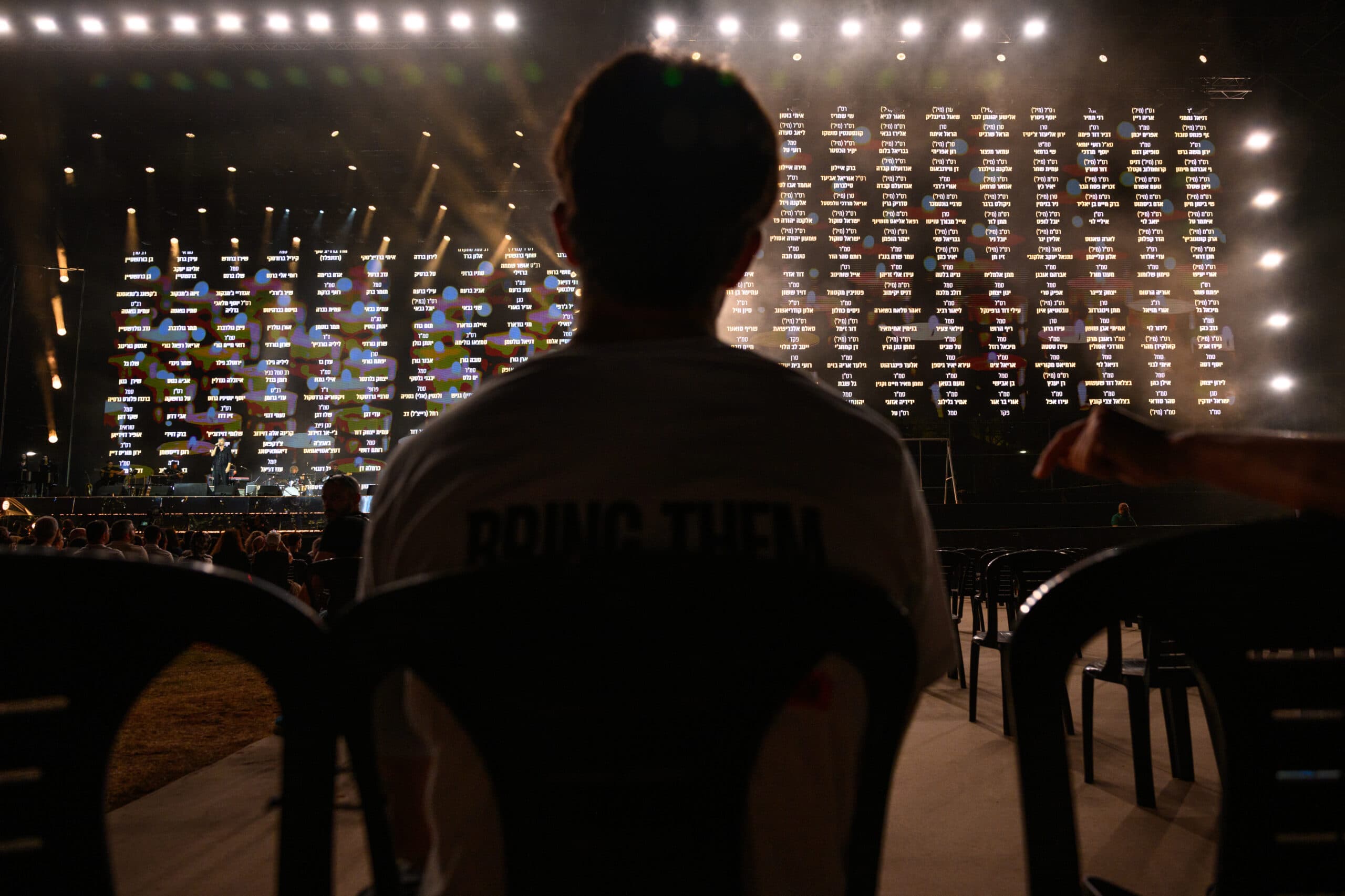
But there is also an alternative to these symptoms of a country in decay. Late last year, some 1500 activists of the left-wing Arab-Jewish movement Standing Together gathered to mark the 10th anniversary of the co-existence organisation.  

“It gives you energy to see a packed hall,” said Liza Couma, a Palestinian activist from Jaffa, who worked with Jewish activist Galit Massader to assist Arab and Jewish residents of that city who were impacted by Oct 7 and the start of the Gaza war. 
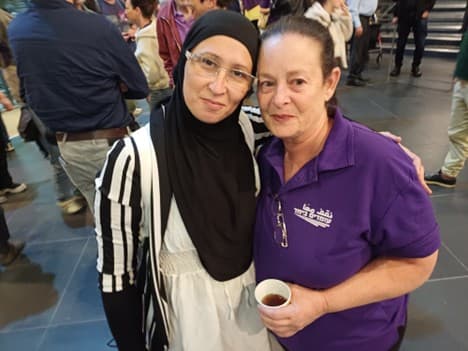
Palestinian activist Liza Couma (left) and Jewish activist Galit Massader

Considering party politics 

The movement, known in Hebrew as Omdim Beyachad and in Arabic as Naqef Ma’an, has always been premised on the idea that Palestinian and Jewish Israelis must work together to achieve peace and equality.  
But as it comes of age, it may be on course to lose its innocence and get its hands dirty in party politics. 

The Haifa gathering fueled talk of forming a political party to put peace with the Palestinians on the national agenda. The movement now has 7000 dues paying members, according to leaders, compared to 3500 before Oct 7. In addition to branches in cities, towns and universities in Israel, it has support groups overseas, including in Sydney. 

Referring to members’ trademark purple t-shirts, worn by many at the convention, Alon Lee Green, who co-directs the movement with Rula Daood, told the Jewish Independent, “There are a lot of people who want to see a ‘purple party’, a Jewish-Arab party that speaks about peace and equality. A lot of people believe there’s a void that none of the existing political parties are doing that. People want it.” 

“The movement itself will stay a grass roots movement, not be a political party, but maybe there will be something else, next to the movement,” he added. 

Massader supports the idea of launching a political party. “We need someone who will say peace is an option, and this simply doesn’t exist. Even Yair Golan [leader of the left-wing Democrats party] does not talk about it and says establishing a Palestinian state is a disaster. If you are so similar to Bibi, why should I vote for you? Peace and a Palestinian state need to be put on the table. Right now, they aren’t even on the menu.”

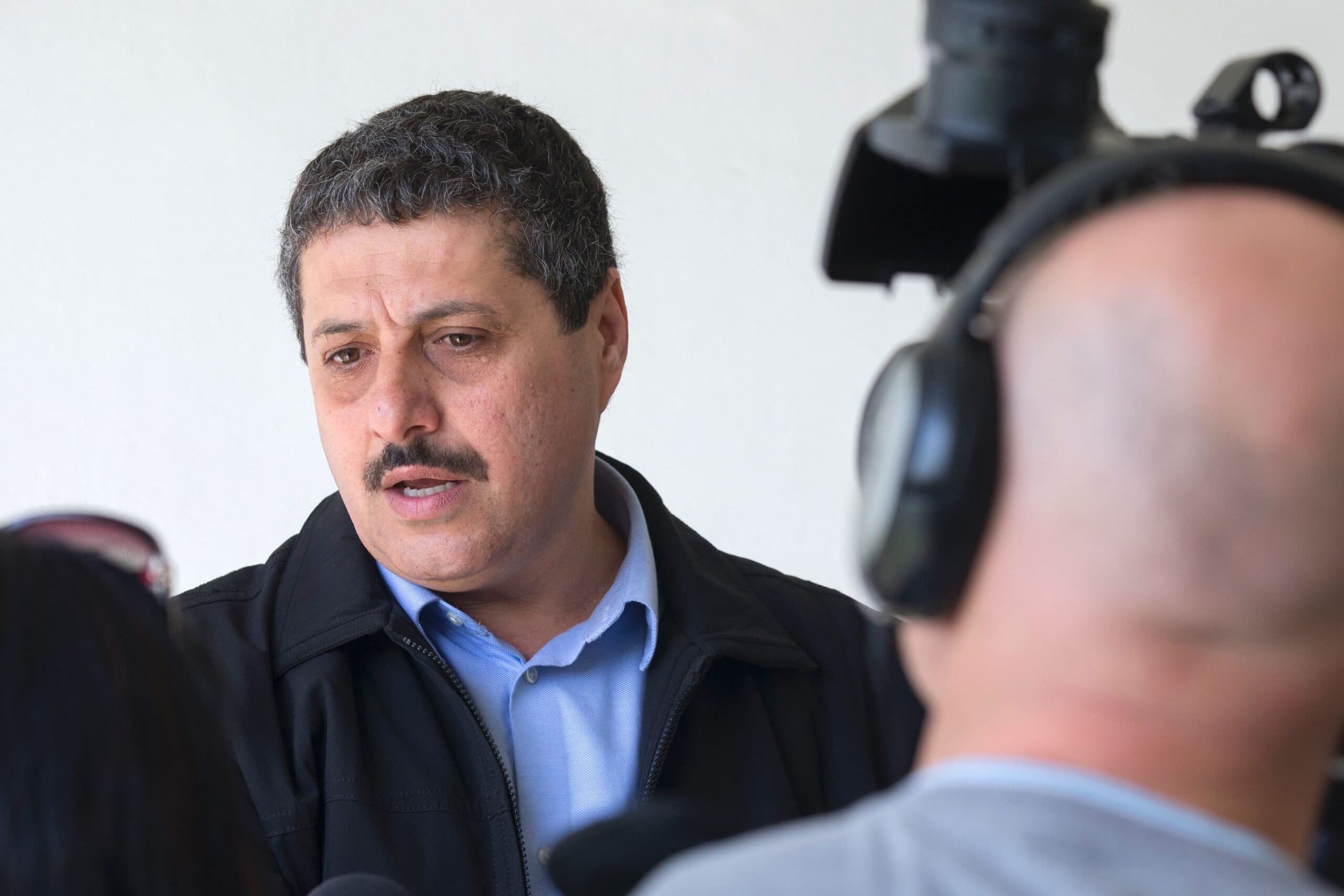
But Mohammed Mgadli, news editor at Nazareth’s Radio Nas, told The Jewish Independent that an electoral foray could backfire by further fragmenting the center-left camp and wasting votes. 

“There’s no doubt that they have strength, presence on the ground, admiration and activists, but all of this thus far is not enough to get them over the threshold [for entering the Knesset] based on the polling that I’m familiar with and what I see in the field.” He cautiously predicts the movement will come to realise this and will decide against taking an electoral route. 

Celebrating successes 

The anniversary  meeting, which was translated simultaneously among Hebrew, Arabic and sign language, was punctuated by applause and cheering as the movement’s mostly young leaders reviewed accomplishments and spoke of the future, making clear their view that the way ahead for Israel is a two-state solution and equality. 

With a large banner proclaiming “A Political Alternative” the gathering often seemed like a cross between a college reunion and a political rally, but it also had some very emotional moments. 

One of these came when Jumana Haj Ali broke down as she described how her brother had been murdered in Acre as part of the organised crime wave within Palestinian Israeli society. 

“It kills you. Our happiness that we had as a family vanished,” she said. “Thank God Standing Together was there,” she added. 

As well as working against organised crime, Standing Together's recent activities include a food drive for Gaza, a hotline to lessen Arab-Jewish tensions, and protecting Palestinian farmers from settler violence during the olive harvest.  It also organised a charity drive that led to the installation of twenty bomb shelters for Bedouins in southern Israel left unprotected by the government. 

A controversial movement 

Standing Together’s views and language are decidedly to the left of the mainstream. Its activists held up pictures of slain Gazan children at protests to stop the war that were otherwise focused largely on the need to retrieve Israeli hostages being held by Hamas. In August, activists disrupted a live reality show to protest Israeli media’s failure to cover the suffering and deaths of civilians in Gaza. 

As a Palestinian Israeli, Couma often faces hostility in her work. “At the start of the war, it was hard to leave Jaffa because of my head covering,” she said. “I stayed and cleaned shelters of Arabs and Jews. A missile struck near us. It was a direct hit, and Galit and I went around cleaning up. People were in such shock that they couldn’t clean the glass fragments or dirt in their houses. We had to help because people were living among the pieces of glass. We went from house to house.” 

She also helped organise escorts for Arabs who were afraid they would be attacked when traversing Jewish areas and for Jews who had the same fear about crossing Arab areas. 

Whether it creates a party or not, one problem Standing Together may have to get used to is surveillance. At the convention, police monitored the gathering and ordered the removal of a poster that included a call on Israel to leave Gaza. 

“There are a thousand people here, so we’re here to see that everything is okay and proceeding smoothly,” one of the officers told TJI. 

But Ghadir Hani, a leader from Acre who has been in the movement for nine years, said the police conduct was another step in the “political persecution” of Palestinian Israelis underway since the start of the Gaza war. “It’s an effort to silence us by police who are actually an arm of the government and Ben-Gvir,” she said. 

You might also like
  • Antisemitism, homophobia and a radical response to both
    Dennis Altman
  • Tame apologises – but with little grace
    Deborah Stone
  • Confronting Richard Flanagan and the myth of the Israel lobby
    Mary Garden
logomark.67a07ee3
We believe in the free flow of information

Republish our articles for free, online or in print, by using our Creative Commons licence

You might also like

    Arab Israeli Palestinian election vote
    Israel Votes 2026FeatureIsrael

    Fear of Netanyahu victory may drive big surge in Palestinian voter turnout

    Ben Lynfield
    haredi street guitar
    Photo EssayArts & Culture

    Jerusalemites through the lens

    Sharon Gabay
    Rozana Beit Oula
    PeacebuildingOpinionIsrael

    Peacebuilding through the eyes of a sceptic

    Ron Finkel

About the author

Ben Lynfield

Ben Lynfield

Ben Lynfield covered Israeli and Palestinian politics for The Independent and served as Middle Eastern affairs correspondent at The Jerusalem Post. He writes for publications in the region and has contributed to the Christian Science Monitor, Foreign Policy and the New Statesman.

More from the author

FeatureIsrael

Fear of Netanyahu victory may drive big surge in Palestinian voter turnout

NewsIsrael

Abuse by IDF soldiers humiliates Muslim Palestinians

OpinionIsrael

Qusra siege exposes shared agenda of IDF and settler extremists

AnalysisIsrael

IDF ordered to evict West Bank camp in election show of strength

Comments

No comments on this article yet. Be the first to add your thoughts.