Aa
  • Read, Watch, Listen
  • TJI Series
  • Community Action
  • Events
  • Zedi
Follow us and continue the conversation
  • LinkedIn
  • Instagram
  • FaceBook
  • X
  • YouTube
Test yourself with the TJI Quiz!

Adjust size of text

Aa

Follow us and continue the conversation

  • LinkedIn
  • Instagram
  • FaceBook
  • X
  • YouTube

Your saved articles

You haven't saved any articles

What are you looking for?

Original reporting, insightful analysis and diverse views, delivered straight to your inbox

  • LinkedIn
  • Instagram
  • FaceBook
  • X
  • YouTube
Your support fuels our mission to inform, entertain and inspire.

The Jewish Independent is bound by the Standards of Practice of the Australian Press Council. If you believe the Standards may have been breached, you may approach The Jewish Independent or make a complaint to the Australian Press Council in writing at www.presscouncil.org.au. The Council may also be contacted on 1800 025 712.

  • Our Story
  • Contact us
  • Our Team
  • Support us
  • Guidelines
  • Pitch your idea
  • Republishing us
  • Community Action
  • Our Awards
  • LinkedIn
  • Instagram
  • FaceBook
  • X
  • YouTube
Aboriginal FlagTorres Strait Islanders Flag

The Jewish Independent acknowledges Aboriginal and Torres Strait Islander peoples as the Traditional Owners and Custodians of Country throughout Australia. We pay our respects to Elders past and present, and strive to honour their rich history of storytelling in our work and mission.

© The Jewish Independent 2026All Rights Reserved
Website design and development by Your Creative, MelbourneTerms & ConditionsPrivacy Policy
HomeRead, Watch, ListenArts & Culture
FeatureArts & CultureIsrael

The PTSD novel that captured Israel’s wounded society

A combat veteran’s haunting experience led him to write a cathartic novel that resonated with many Israelis.
Peter Kohn
Print this
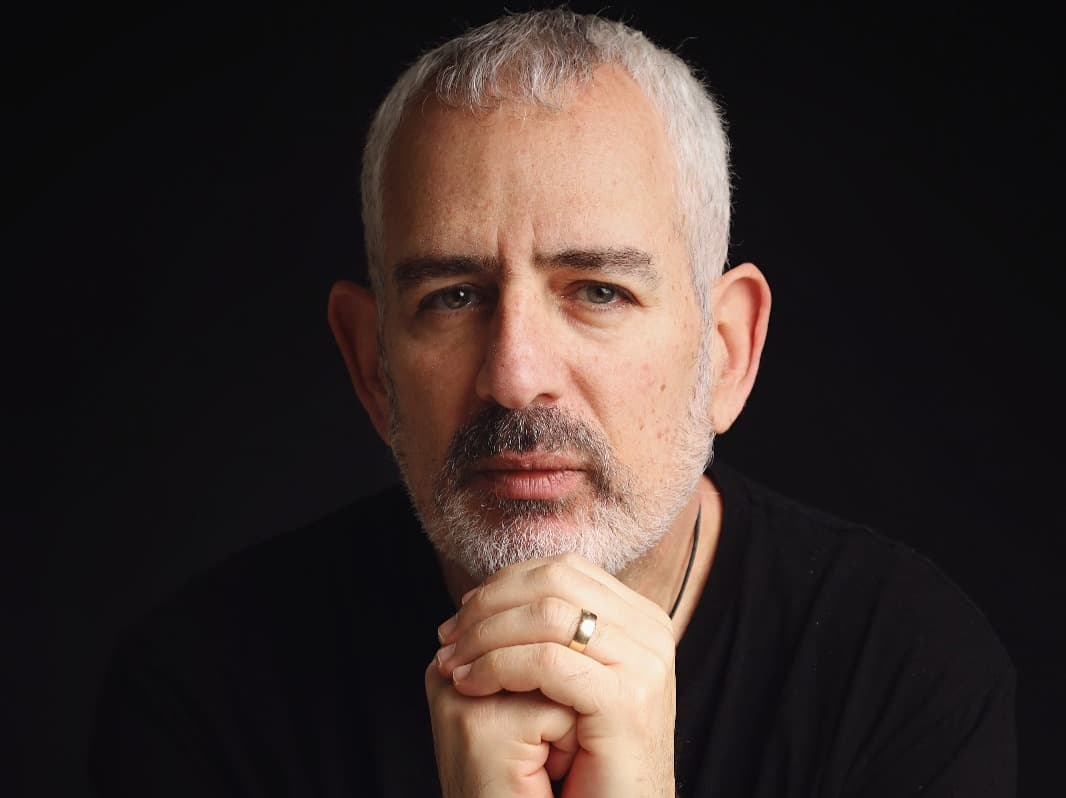
Yishay Ishi Ron

Yishay Ishi Ron, author of the bestselling Israeli novel Dog

Published: 5 January 2026

Last updated: 6 January 2026

It is real life Fauda. Under the cover of darkness, an IDF special ops unit proceeds on its mission in the West Bank. A shot rings out – and to his horror, Yishay Ishi Ron discovers he hasn’t shot a terrorist but a team member. 

The incident happened 35 years ago, but for Ron, it’s as stark as if it happened today. The IDF veteran recounts that night as one of the triggers of his decades-long struggle with Post-Traumatic Stress Disorder (PTSD). 

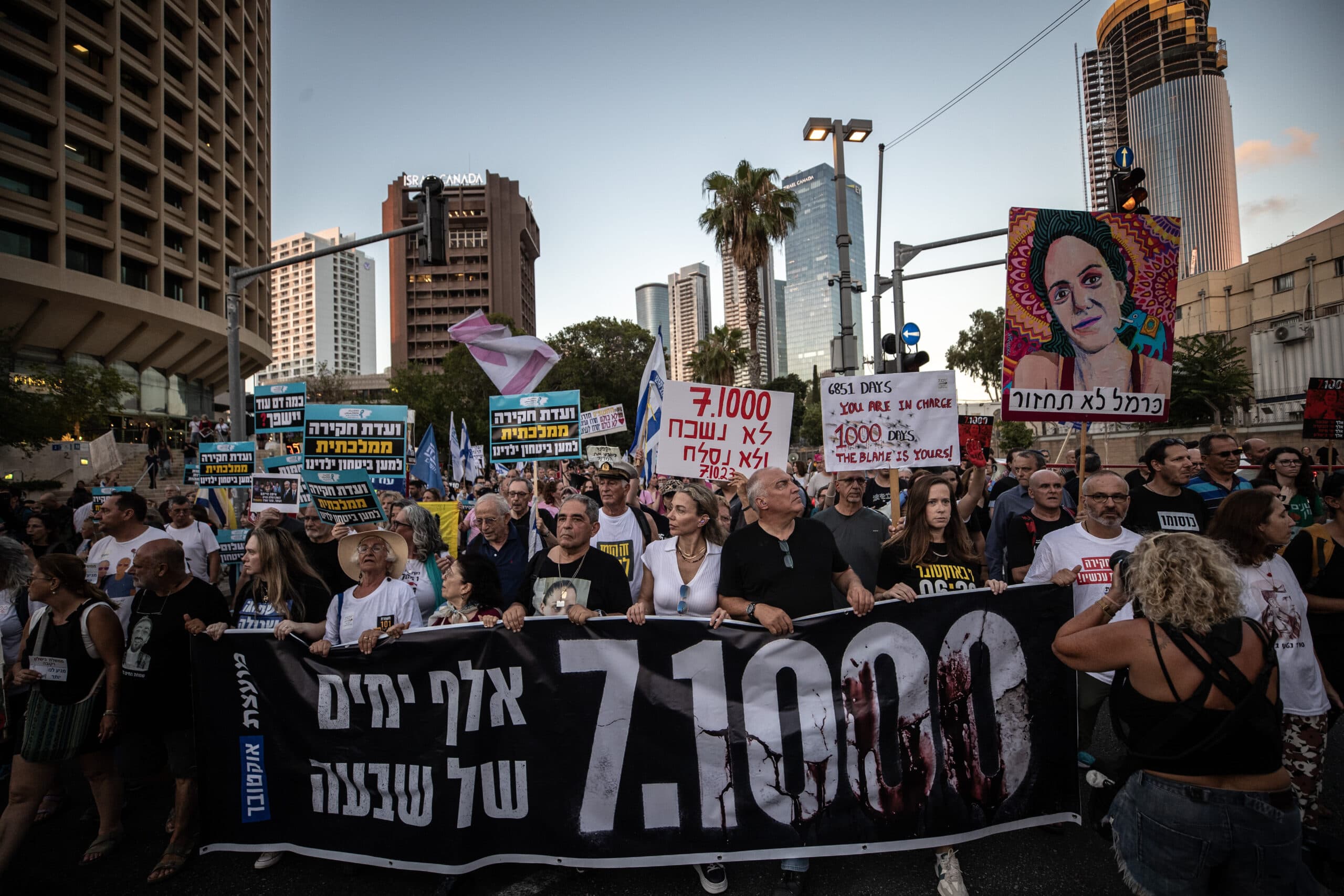
Israel’s security situation has made PTSD a widespread problem. A study published in The Lancet after October 7 estimated 30% of the population now suffers from the condition, which manifest in persistently reexperiencing the trauma, hyperarousal and emotional and physical distress. 

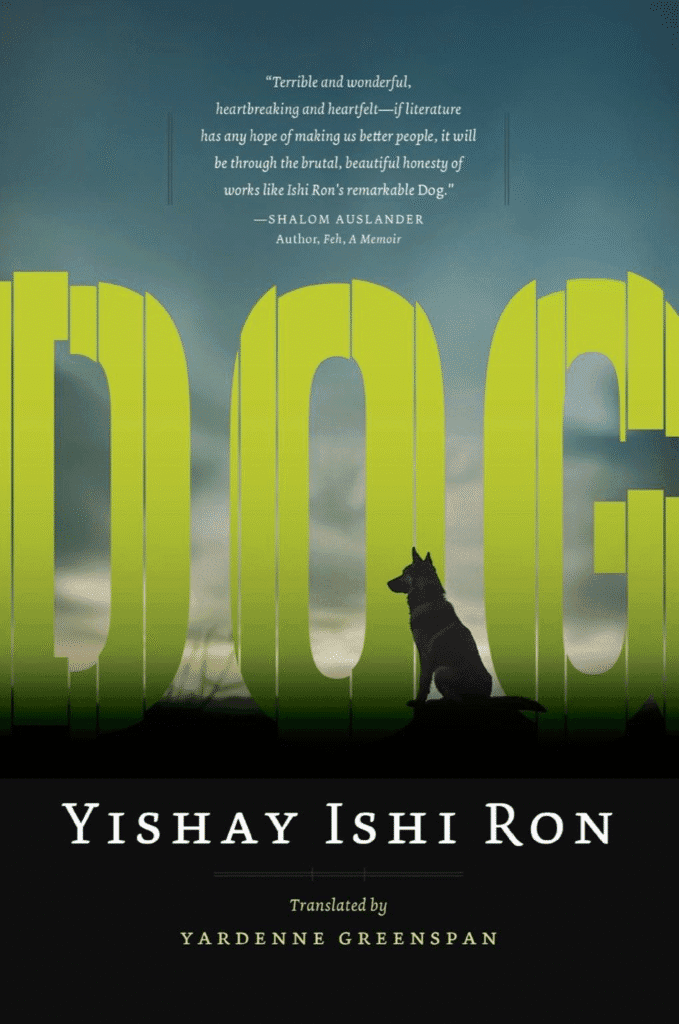
Ron's novel Dog, drawn from his experience of PTSD, struck a chord so widely in Israel that it became a bestseller and was nominated for the Sapir literature prize. An English-language version has now been published, and a film adaptation is in the works. Ron will visit Australia this year for Melbourne Jewish Book Week. 
The Jewish Independent

Speaking to The Jewish Independent, the Israeli author, former soldier and father of three recalls the incident the shooting of his comrade. “I saw him fall and realised I shot him. It was only seconds, but it felt long, drawn out. The wound looked bad. Would he lose his knee? I went to the hospital with him. He was continuing to bleed very badly. He survived but had to undergo many operations.” 

Ron was given a debrief with a superior officer, but it did not address the potential for PTSD. There was a calm recitation of facts, his commander wrote down something, then walked away. 
The incident was one of several that combined to trigger Ron’s condition.  

Sometimes it was a sense of his own life being in jeopardy, such as when his jeep was surrounded by a mob of Palestinians throwing rocks. When it was over, the soldiers were unharmed. “But relief didn’t come as expected,” he says. 

On other occasions, the trauma came from seeing what Israeli soldiers did to Palestinians. 

“In one operation, many Palestinians kids were accidentally shot in the line of fire,” he says. The words slow down. “Seeing all those kids bleeding and crying for their parents … one died before my eyes.”  

Again, there was the attempt at short-term closure, but Ron moved on unaware that the trauma was becoming a time bomb. “At the time, I didn’t feel very traumatised. I was in the middle of my army service and I suppressed it.” 

The PTSD only emerged years after he left active duty, when Ron began having panic attacks and nightmares. He self-medicated abusing alcohol and recreational drugs and then was medicated with prescribed drugs. “I did that for ten years, but after that, the substances stopped helping.” 

So, he sought psychiatric help. Some therapists were better and some worse. Some were steadfast in their professional discipline but offered no warmth. 

The nightmares got worse: Ron sometimes became violent in his sleep and once attacked his wife in bed next to him.  

Feeling shame, he held on until the Covid pandemic. The isolation made his symptoms worse.  

Then his IDF unit held a reunion, and he met the soldier he’d shot. After that gathering, he began experiencing flu-like symptoms that were really a mental breakdown. He remembers that time as a tangle of insomnia and anxiety attacks, “the worst time of my life”. 

The novel began when a psychiatrist suggested writing to process his trauma.  Ron poured himself into his fictional alter-ego Galer, and the process was cathartic.  

“The writer in me knew I had PTSD before I did,” he reflects.  

The writing began a process of healing. Nowadays Ron is broadly in control of his PTSD. “I understand I’ll have to live with it, but I hope to get it more stabilised.” 

The title Dog relates to one of PTSD’s nasty little tricks – it focuses the mind on a random act, while it goes to work undetected, corroding deep below the surface. In Ron’s case, the focus was a dog in a Gaza street that his commander shot dead. The killing of the animal became a vivid memory, while the human death toll was so horrific that Ron suppressed it. 

Israelis have a reputation for toughness and endurance. But Ron’s experience has exposed the double-standard, not only in Israel but worldwide, when it comes to mental health. “When you lose a hand or a leg, or you have cancer, you’re a hero, but mental problems are seen as weakness. You’re accused of inventing things and trying to be transferred out of the IDF.” 

Recent media reports show that some 56 per cent of IDF personnel have presented with PTSD. Since October 7, 2023, more than 70 Israelis have committed suicide.  

But he points out that the IDF now has a much better culture of acceptance and understanding of PTSD, particularly since the start of the 2023 war. For example, Zahal Disabled Veterans Organisation now has its Achiad program for PTSD sufferers.   

Ron emphasises that PTSD is not just a problem in the military, especially after October 7 and he is afraid Israel is unprepared for the post-traumatic symptoms that have yet to emerge.  

“PTSD in profound numbers will hit us in the coming decades and the system may not be capable of handling it.” 

For more information about Dog, visit www.yishayishiYishay.com. If any issues raised in this article have affected you personally,  you can contact Lifeline Australia for 24/7 crisis support by calling 13 11 14, texting 0477 13 11 14. 

You might also like
  • ‘Israel is systemically eliminating Palestinian collective life’:  B’Tselem
    Deborah Stone
  • Tame apologises – but with little grace
    Deborah Stone
  • Confronting Richard Flanagan and the myth of the Israel lobby
    Mary Garden
logomark.67a07ee3
We believe in the free flow of information

Republish our articles for free, online or in print, by using our Creative Commons licence

You might also like

    Eden Bahar
    InterviewArts & Culture

    ‘L’chaim for the next 1,500’: Israeli drummer celebrates Cirque Du Soleil milestone

    Gideon Cohen
    haredi street guitar
    Photo EssayArts & Culture

    Jerusalemites through the lens

    Sharon Gabay
    Netanyahu
    Israel Hamas WarFeatureIsrael

    New evidence Netanyahu was warned about October 7

    Shahar Burla 2

About the author

Peter Kohn

Peter Kohn

Peter Kohn is an Australian journalist who began his career at the Herald & Weekly Times. For 43 years, he was associated with The Australian Jewish News. For the past decade, he held the title of Senior Journalist at the newspaper. He is the author of two novels. Rachel’s Chance is the story of his family’s experiences as Jewish refugees in Shanghai during World War II, and View From A Sandcastle is based on his own story, growing up in Melbourne suburbia during the 1960s and 1970s.

More from the author

FeatureWorld

‘Your help is extremely needed’: Jewish aid group on the ground after Nepal flood

NewsAustralia

Strategies for cohesion final focus of Royal Commission hearings

NewsAustralia

Evidence of declining social cohesion and the efforts to turn it around

NewsAustralia

Hate preachers, polarised debate, counter-terrorism

Comments

No comments on this article yet. Be the first to add your thoughts.