Published: 3 February 2023
Last updated: 5 March 2024
Democracy defence demonstrators, anti-occupation activists, and high-tech workers worried about the economy are coalescing to form a noisy but diffuse protest movement.
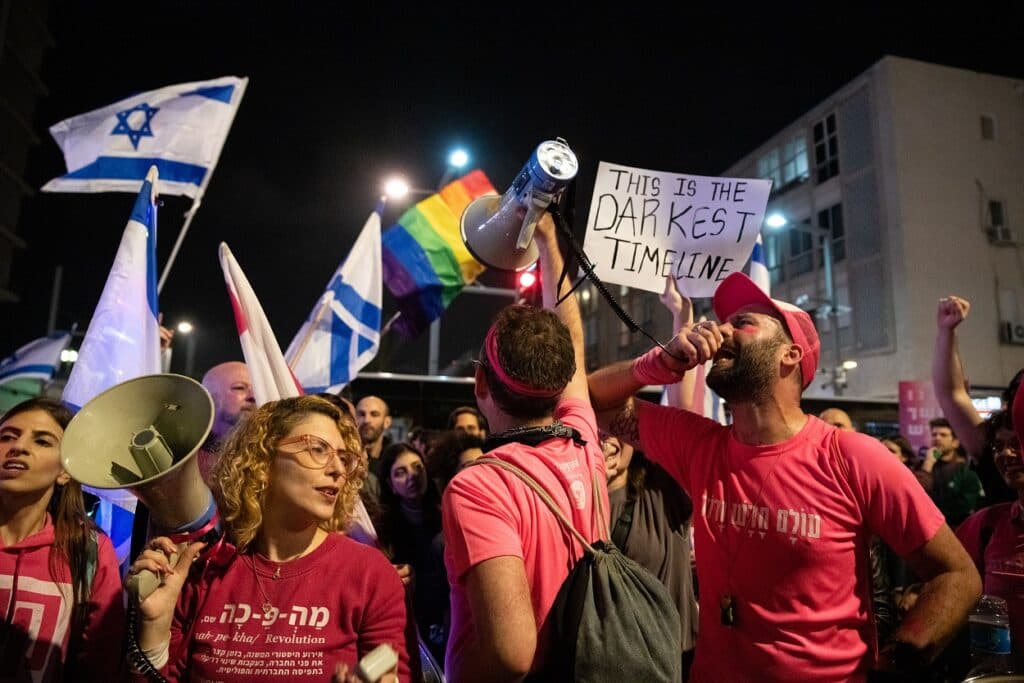
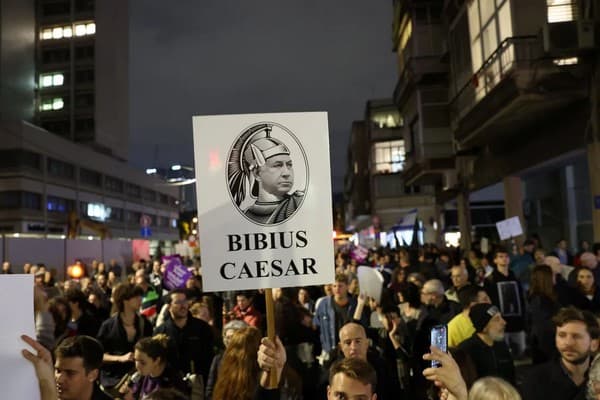
Last Saturday, January 28, tens of thousands of Israelis once again took to the streets in Tel Aviv, Jerusalem, Haifa and nearly a dozen other cities throughout the country to protest against the government's proposed attacks on Israel’s judicial, political and educational systems.
Over the past month, these demonstrations have become a regular weekly feature of Israeli life, attracting new groups and growing constantly. But since its inception, this embryonic “movement” has had to cope with tensions from within, including divisions between those who want to focus on the threat to democracy and those who draw a direct connection between these threats and the deeper injustice of the occupation.
The most recent demonstrations were more subdued than previous ones. Indeed, organisers had considered postponing them in the wake of the shootings in East Jerusalem, reflecting a deeply-rooted instinct, even among veteran activists, to tone down protests during escalating security situations and after terrorist attacks.
Guy Schwartz, a leader of a Jerusalem-based ad-hoc organisation, "Protecting our Shared Home," explains to The Jewish Independent that he does not want the protest movement to be seen as "dancing on the blood," citing a particularly barbed Israeli expression for making political gains out of terror and death.
“We must make it clear to the politicians that we will not allow them to continue to divide us by sowing hatred for their own political gains. We are in mourning, but we are here in hope that we can all find a way to live together."
The upcoming demonstrations this weekend are expected to return to their previous, rather noisy format, with songs and drums, and, according to police expectations, they are likely to be even larger.
Gadi Wolfsfeld, Professor of Political Communication at Reichman University, told The Jewish Independent: "The public is truly worried this government will turn Israel into an illiberal democracy like Hungary or Poland. There have been right-wing governments in the past, but they have always had a fig leaf; at least one party that assuaged people's fears.
![[[:fr:Fez (coiffure)|Fez]] rouge à gland noir, en feutre.](/_next/image/?url=https%3A%2F%2Fjewishindependent.yourcreativeagency.com.au%2Fwp-content%2Fuploads%2F2026%2F10%2Ffez-cap-eisenkot-netanyahu.jpg&w=3840&q=75)